This is the submitted version of an article accepted for publication in Sociology Lens (DOI: 10.1111/johs.12490)
Abstract Submitting an invited text for the Anthropology and Humanism festschrift “Hundreds for Katie,” I experienced cognitive dissonance between the objectives of ethnographic writing championed by Kathleen Stewart and the journal’s submission requirements. The insistence that every submission must contain keywords and an abstract signifies deeper issues with academic writing. Specific forms of writing enforce the disciplinary norms of Thomas Kuhn’s “normal science.” To “write difference” we may need to write differently. The paper draws inter alia on works by Kathleen Stewart, Lauren Berlant, Ludwig Wittgenstein, Peter Winch, Walter Benjamin, James Clifford, Georges Bataille, and members of the Mass–Observation group.
The Tyranny of the Abstract
In memory of Lesley Stern
Form follows function—that has been misunderstood. Form and function should be one, joined in a spiritual union.
Frank Lloyd Wright[1]
1
I was recently invited to participate in a project to honor the anthropologist Kathleen Stewart’s retirement from the University of Texas at Austin, titled “100s for Katie.” Though I was doubtful about what I could offer—this would be my first attempt at writing a “hundred”—I welcomed the chance to contribute. Katie is a friend whose work I have deeply admired since I first encountered A Space on the Side of the Road (1996), her ethnography of “an ‘other’ America that survives precariously among the ruins of the West Virginia coal camps and ‘hollers’ … as an excluded subtext to the American narrative of capitalism, modernization, materialism, and democracy.”[2] This was followed by Ordinary Affects (2007) and her jointly authored volume with Lauren Berlant, The Hundreds (2019). Running through all Katie’s writing is an abiding suspicion of what I call the violence of abstraction. I borrowed this concept from Karl Marx,[3] but it is a vice of which the intellectual left is far from innocent. “This book is set in a United States caught in a present that began some time ago,” Katie observes at the beginning of Ordinary Affects:
But it suggests that the terms neoliberalism, advanced capitalism, and globalization that index this emergent present, and the five or seven or ten characteristics used to summarize and define it in shorthand, do not in themselves begin to describe the situation we find ourselves in. The notion of a totalized system, of which everything is always already somehow a part, is not helpful (to say the least) in the effort to approach a weighted and reeling present. This is not to say that the forces these systems try to name are not real and literally pressing. On the contrary, I am trying to bring them into view as a scene of immanent force, rather than leave them looking like dead effects imposed on an innocent world.[4]
Throughout her career Katie has pushed the boundaries of academic discourse, exploring forms of writing that in her view are better attuned to grasping and expressing excluded subtexts (and marginalized subjects) than the research article or scholarly monograph. I emphasize forms of writing. What are we writing about, and how is it best captured? In Katie’s own words, “These works are experiments that write from the intensities in things, asking what potential modes of knowing, relating or attending to things are already being enacted and imagined in ordinary ways of living.” She seeks to give expression to “what might happen, what things in process might become, what something might be related to, a pattern” in everyday worldings.[5] Her starting points lie in “the forces that come into view as habit or shock, resonance or impact. Something throws itself together in a moment as an event and a sensation; something both animated and habitable.”[6] It is this something—something real, tangible, out there, in here, even if it is as yet inchoate and unnamed—that she strives to find ways of researching and articulating. This requires immersion rather than distance. “Ethnographic writing is ‘writing difference‘ through a process of participant observation—an attention to scenes you are somehow ‘in,'” Katie tells her students, whether these be “a group, an identity, a practice like running or caring for someone, or a brief situation like riding a bus.” “In writing culture, we are learning to describe with precision how a range of things impact lives. Write through details!” she urges, for “as a method of writing, ethnography composes with what’s already composed.”[7]
“Hundreds” are an experimental form of writing first developed by Emily Bernard and the 100-Word Collective at the University of Vermont in 2009, which Circe Sturm (who was a member of Bernard’s original group) introduced to colleagues in Austin in 2012 and applied to ethnographic writing. “In Emily Bernard’s approach,” explains Kim Tallbear, “a writer launches their piece from an idea, phrase, single word, or anything that resonates or sparks from the previous piece. There are no limitations for form, style, or subject.”[8] Sturm suggests that “One of the reasons so many of us are drawn to this abbreviated format is that it allows us to dialogue with other writers, even when our lives are extremely busy. We also feel freer to experiment with content, form and voice, and to risk vulnerability in our writing … Some ideas catch fire and never lose their burn. This seems to be one of them.”[9] Sturm, Stewart, and other members of the Austin Public Feelings group “brought [the 100s] to the concept of the new ordinary we’d been developing, and The Hundreds project took off.”
Berlant and Stewart provide the briefest of possible introductions (titled “Preludic”) to The Hundreds, leaving plenty space for the texts that follow to engage the reader as they may:
The constraint of the book is that our poems (makings) are exercises in following out the impact of things(words, thoughts, people, objects, ideas, worlds) in hundred-word units or units of hundred multiples. Honoring the contingency of the experiment, there is no introduction up front but distributed commentary throughout the book, plus reflection in many spots about how the writing attempts to get at a scene or process a hook. We don’t want to say much in advance about what kind of event of reading or encounter the book can become. We tried not to provide even this preliminary.[10]
2
Each contributor to “100s for Katie” was invited to write one hundred words on a topic of their choice, to be published in a special section in the American Anthropological Association (AAA) journal, Anthropology and Humanism. My contribution—in its entirety—read as follows:
Hundreds and Hundreds
Columbine, West Nickel Mines School, Virginia Tech, Northern Illinois U, Collier Township women’s aerobics class, U Alabama Huntsville, Chardon HS, Oikos U, Oak Creek Sikh temple, Sandy Hook ES, Isla Vista sorority house, Marysville Pilchuck HS, Emanuel African Methodist Episcopal Church, Umpqua Community College, Pulse nightclub Orlando, Sutherland Springs First Baptist Church, Stoneman Douglas HS, Santa Fe HS, Tree of Life synagogue, Borderline Bar Thousand Oaks, UNC Charlotte, Walmart El Paso, Texas A & M Greensville, Atlanta spas, Oxford HS, Top supermarket Buffalo, Robb ES Uvalde, U Virginia Charlottesville, Arts HS St Louis, Club Q Colorado Springs, Michigan State U …[11]
Anyone with a passing acquaintance with recent American history will immediately recognize at least some of these names as the locations of mass shootings.[12] They register forces that “come into view as habit or shock, resonance or impact”—or in this case all of the above—without my having to say another word.
Having made it through peer review—a standard academic procedure that felt distinctly out of place in this context—my text was accepted without revision. But when it came to proof stage, I was instructed to: “Add your Summary (up to 200 words) and up to five keywords below your address. Keywords, or something very close to them, should also appear in the Abstract itself to maximize searchability. In this case the Summary can be 1-2 sentences, e.g., ‘In this ‘hundreds’ in honor of Kathleen Stewart, I …'” This instruction was part of a set of Author Guidelines to which all contributions to Anthropology and Humanism (apart from poetry, which had its own separate guidelines) had to conform, irrespective of their subject matter. Among other things, these guidelines mandated that authors use American spellings, follow the Chicago Manual of Style, and leave one rather than two spaces after a period. It had apparently not crossed the minds of the editors of an ethnography journal that if, as Peter Winch once put it, “our language and our social relations are just two different sides of the same coin. To give an account of the meaning of a word is to describe how it is used; and to describe how it is used is to describe the social intercourse into which it enters,”[13] then “to describe with precision how a range of things impact lives” may sometimes require deviation from the Chicago Manual of Style. A rereading of Clifford Geertz’s classic essay on thick description, published fifty years ago, might not come amiss in this context.[14]
My particular concern here is with the demand to provide Keywords and Abstracts, which Anthropology and Humanism‘s guidelines treat as a merely formal, technical issue, a matter of making the text visible to internet search engines. It is also, I learned later, a result of major commercial publishers standardizing submission and typesetting templates across their journals in the service of automating (and offshoring) their production processes. Unfortunately for the social sciences and humanities, these templates more often than not reflect the priorities of the science journals that form the largest portion of the big journal publishers’ stables. But whatever technical and financial reasons journals may have for mandating Abstracts and Keywords, these elements cannot but function as paratexts that influence what kind of event of reading or encounter the text can become. They epitomize the kind of prescriptive framing Lauren and Katie’s “Preludic” takes pains to avoid. Gérard Genette, who coined the concept, describes a paratext as “a threshold, or—a word Borges used apropos of a preface—a ‘vestibule’ that offers the world at large the possibility of stepping inside or turning back. It is an ‘undefined zone’ between the inside and the outside, a zone without any hard and fast boundary on either the inward side (turned toward the text) or the outward side (turned toward the world’s discourse about the text), an edge, or as Philippe Lejeune put it, ‘a fringe of the printed text which in reality controls one’s whole reading of the text.'”[15]
As a longtime coeditor of another academic journal,[16] I am well aware that in today’s precarious funding environments metrics matter. Keywords are clickbait, comparable to headlines for news media. I duly provided my five: America, hate, homophobia, misogyny, racism. They were not inaccurate; my text did bear on all these topics. How useful they are to readers or researchers, given their abstraction, is another issue. I deliberately did not use the generic term “mass shootings,” which might seem the most obvious classification under which to file my piece, for reasons I shall explain more fully later. But I baulked at the absurdity of writing an Abstract or Summary of “1-2 sentences,” let alone of “up to 200 words,” to frame a 100-word text. This was not just a question of proportion. Like Katie and Lauren, I was loath to say anything in advance about what kind of event of reading or encounter my text could become. I did not want to circumscribe my potential readership or restrict the ways in which the text might be read by too narrow a prior summary of what my 100 words were “about.” My aim was to make people think—to open up what Katie calls “a contact zone for analysis”[17]—rather than telling them what to think. From this point of view, any summary would be too narrow. I concur with Roland Barthes that “a text is not a line of words releasing a single ‘theological’ meaning (the ‘message’ of the Author-God) but a multi-dimensional space in which a variety of writings, none of them original, blend and clash.”[18] No text can ever be closed, definitively pinned down in one interpretation—even its author’s interpretation. Especially, perhaps, its author’s interpretation. I wanted my words—words I did not invent, that came heavily freighted with cultural resonances of their own—to speak for themselves, through whatever they evoked for each individual reader. As a poem might.
I returned the proof without an Abstract, hoping it wouldn’t be missed. A couple days later the editor reminded me that I needed to provide one, within seven days please. Not wanting to get into an argument in which we would likely just talk past one another—after all it seemed such a trifling quibble, a storm in an academic teacup—I gave in. Keeping in mind George Bataille’s dictum that “A dictionary would begin starting from the moment when it no longer provided the meanings of words but their jobs,”[19] I did not attempt to summarize what my text says, so much as to inform readers what it tries to do. This was therefore not, strictly speaking, an Abstract. It read: “This contribution to the special section ‘100s for Katie’ attempts to communicate the depth and breadth of the hatred infecting contemporary America in one hundred words.”
Along with several other contributions, all of which were headed “Poetry” or “Creative Nonfiction” (as distinct from “Research Articles”), my hundred words were published online as a self-contained piece in Early View format, a week after I had delivered the corrected proof and months before publication of the special issue as a whole. Driven by an economy in which large commercial journal publishers increasingly make their money not from library subscriptions but open access payments (APCs)[20] or download fees for individual articles, this is a process of Spotification[21] that disrupts my text’s connection with the rest of the “100s for Katie” (I would never have written this text, in this way, outside of this context), networking it instead to whatever else is found by searching under its keywords. This too violates the spirit of the hundreds, which are typically written for writing groups whose members are variously stimulated by (rather than academically responding to) one another’s texts in the open-ended ways described by Kim Tallbear and exemplified by Katie and Lauren in The Hundreds. At least my omission of “mass shootings” from the keywords and abstract may deter searchers from subsuming my text under Criminology.
The visual design of the anthropology and Humanism Early View page acts as a further paratext.[22] What draws the eye in the layout of these articles, because of the size of the typeface and its placing in an indented box at the head of each text is—the Summary (heading in bold, font larger than the main text) and KEYWORDS (heading in bold capitals).[23] This pre-text stands out even more than it would in the case of a normal length article, because the text it introduces is so short: in my case, just eight lines. Everything conspires to suggest to the reader that the gist, the core, the meat, the heart, the message, the essence of the text is to be found here—in the Abstract. I am playing with words now, but with serious intent. As the Collins Dictionary explains, “When you talk or think about something in the abstract, you talk or think about it in a general way, rather than considering particular things or events.”[24] Abstraction is the polar opposite to what the hundreds set out to do. In Katie’s words, introducing Ordinary Affects, her writing:
tries to slow the quick jump to representational thinking and evaluative critique long enough to find ways of approaching the complex and uncertain objects that fascinate because they literally hit us or exert a pull on us. My effort here is not to finally “know” them—to collect them into a good enough story of what’s going on—but to fashion some form of address that is adequate to their form; to find something to say about ordinary affects by performing some of the intensity and texture that makes them habitable and animate. This means building an idiosyncratic map of connections between a series of singularities. It means pointing always outward to an ordinary world whose forms of living are now being composed and suffered, rather than seeking the closure or clarity of a book’s interiority or riding a great rush of signs to a satisfying end … From the perspective of ordinary affects, thought is patchy and material. It does not find magical closure or even seek it, perhaps only because it’s too busy trying to imagine what’s going on.[25]
3
The list of mass shootings in my “hundred for Katie” is far from comprehensive: from dozens of shootings over the same period listed in Wikipedia,[26] I chose a selection of those that seemed (to me) to speak to “what things in process might become, what something might be related to, a pattern.” The earliest shooting in my list took place when Eric Harris and Dylan Klebold donned their trench coats and gunned down twelve of their fellow students and one of their teachers at Columbine High School in Colorado on April 20, 1999. I began with Columbine because in the popular imaginary Columbine has become the paradigmatic, iconic, quintessential mass shooting, the event that “laid down the ‘cultural script’ for the next generation of shooters.”[27] The very word Columbine has acquired the totemic power of one of Roland Barthes’ myths, a self-sufficient sign that “abolishes the complexity of human acts, it gives them the simplicity of essences, it does away with all dialectics, with any going back beyond what is immediately visible, it organizes a world which is without contradictions because it is a world without depth, a world wide open and wallowing in the evident, it establishes a blissful clarity: things appear to mean something by themselves.”[28] The rest of my shootings all happened during the present century, beginning with the shooting of ten girls aged between six and thirteen (five were killed) at West Nickel Mines School, an Old Order Amish one-room schoolhouse in Lancaster County, PA, on October 2, 2006.
The form of my text—a bald, unadorned list—was integral to what I was trying to do. It is not an argument, an analysis, an explanation, a narrative, or a critique. As Katie says of her own work, it is “an attempt to find something to say about ordinary affects by performing some of the intensity and texture that makes them habitable and animate.” It maps a contemporary affectual terrain—a zone of fear and anxiety, of morbid fascination and perverse excitement, a scene that attracts like an accident on the highway—by enumerating some of its landmarks. These are names that resonate with significances. The text communicates through what its one hundred words evoke rather than anything it explicitly says. It says nothing, because these words are not linked in meaningful propositions. They don’t even form a coherent sentence. The impact of the text relies entirely on their connotations. If this hundred works (I accept that for many readers it may not), it does so by calling to mind “what’s already composed” in everyday worldings.
The very fact that I—or Wikipedia—can compile such a list shows how far this terrain has become part of the landscape of everyday American life; not to mention how peculiar America is in that regard, since nowhere else in the developed world would a list of mass shootings over this period get close to one hundred words.[29] The geographical spread of locations, from Buffalo to El Paso and from Orlando to Santa Barbara, and the variety of social sites in which the shootings occurred, underline not only the scale of these killings but their ordinariness, suggesting they could happen to anyone anytime anywhere. Full of juxtapositions as surreal as Lautréamont’s chance encounter of a sewing machine and an umbrella on an operating table—a women’s aerobics class in suburban Pennsylvania, a Sikh temple in Oak Creek, Wisconsin, a high school in Parkland, Florida, massage parlors in Atlanta, Georgia—the list is as non-sensical as the classification of animals in Borges’s imaginary Chinese Encyclopedia with which Michel Foucault begins The Order of Things. Like that classification, it shatters “all the familiar landmarks of … our thought, the thought that bears the stamp of our age and our geography—breaking up all the ordered surfaces and all the planes with which we are accustomed to tame the wild profusion of existing things.”[30] It disturbs, it disrupts, it deranges, it disorders. Only, it is unlikely to provoke laughter.
If we “slow the quick jump to representational thinking and evaluative critique” and pause to think about what these names conjure up, one by one, each in its singularity, their cumulative weight becomes unbearable—for me, anyway. As we go down the list, year by year, killing by killing, the recitation takes on the incantational cadences of a litany. For some, it may recall other occasions when names are ritually intoned: “At the going down of the sun and in the morning/We will remember them.”[31] But it is as likely to be met with a meh of world-weary ennui, the “blasé attitude” of Georg Simmel’s sophisticated modern urbanite for whom “the meaning and differing values of things, and thereby the things themselves, are experienced as insubstantial.” Recognizing what the names in the list are instances of soon enough, how many readers will stop reading long before they have reached the 100-word limit? What’s new? This indifference, Simmel argued, is born out of attempts to protect the personality against the barrage of novel stimuli in the metropolis; but “self-preservation … is brought at the price of devaluating the whole objective world, a devaluation which in the end unavoidably drags one’s own personality down into a feeling of the same worthlessness.”[32] Simmel was writing in 1903: in the multi-channel metaverse of 24-hour TV, internet, and social media, modernity’s assault on the senses, emotions, and intellect never ends. Just as it had no real beginning—there were after all dozens of mass shootings before Columbine—this list has no terminus either. The text concludes not with a period but an ellipsis, marking a space for the killings we know are still to come. Hundreds and hundreds of them.
This was an attempt to write from the intensities of things. “Your writing,” Katie tells her students, “though non-fiction, will be creative in its effort to evoke and speculate on worlds that are both real and actively mediated and composed both through your writing and through all kinds of modes of expression present in the everyday compositions of living.”[33] The worlds evoked by my hundred words are horribly real, and their expressions are ever-present in the highly mediated virtual forms through which most of us have experienced them—the everyday compositions of TV, newspapers, social media. Who has not been touched, however vicariously, by a Sandy Hook, a Parkland, an Uvalde, punching a hole in the armor of indifference? Or perhaps, depending on our race or gender or sexual orientation, the punctum that pierced the ordered surfaces and planes of our thought and our world was the killings at an Emanuel African Methodist Episcopal Church or a Tree of Life Synagogue, a sorority house in Santa Barbara or a Top supermarket in East Buffalo, a Club Q or a Pulse gay nightclub? Every one of these shootings took place in a particular location in a particular community. They are not just instances of a more general trend. Like a photograph, each name recalls specific moments of horror, dragging us back to “the absolute Particular, the sovereign Contingency, matte and somehow stupid, the This … in short, what Lacan calls the Tuché, the Occasion, the Encounter, the Real, in its indefatigable expression.”[34] The particulars refuse to dissipate into the lightness of generalization.
But this “idiosyncratic map of connections between a series of singularities” is something more than just an arbitrary list of unrelated events. While these shootings do not share any single common property or set of defining characteristics, what connects them, not just in my text but in the world, is akin to what Ludwig Wittgenstein called family resemblances—”a complicated network of similarities overlapping and criss-crossing; sometimes overall similarities, sometimes similarities of detail.”[35] These killings are sudden flares in a dark landscape of hate, eruptions of a volcanic underworld of horribly ordinary affects that “work not through ‘meanings’ per se, but rather in the way they pick up density and texture as they move through bodies, dreams, dramas, social worldings of all kinds.” “We look for a lesson in Columbine and its offshoots,” Katie writes, “But the kids, or the records they leave behind, tell stories that have their own complex trajectories … These stories don’t end in a moral but are left to resonate with all the other ways that intensities rise out of the ordinary and then linger, unresolved, until memory dims or some new eruption catches our attention … And we’re left with the visible signs of relays we can’t name or predict and don’t know what to do with.”[36]
My hundred words are a hook, an entry point, a way to open up Katie’s “contact zone for analysis”—a call to wrench the discourse away from indexing, classifying, defining, theorizing, explaining, in favor of the infinitely more difficult task of describing.
4
Like standardization of anything else in life from school curricula to flight attendants’ dress codes, the standardization of writing conventions cannot be a neutral process. It is never just a matter of mere stylistic preferences. Somebody has to set the standards. Taken as a whole, Anthropology and Humanism‘s guidelines (which are not untypical of contemporary social science journals) select, elevate, and hegemonize one form of writing—a very particular form of writing, which is bound up in a powerful apparatus of disciplinary institutions and practices—over all others. The fact that Anthropology and Humanism has separate categories for Creative Nonfiction and Poetry is itself revealing of the hierarchy of ways of knowing the world that is at play. We should probably be grateful that Anthropology and Humanism carries such forms of writing at all when many other journals do not: here, the subtexts are merely marginalized rather than wholly excluded as irrelevant to the scholarly enterprise. The archetypes of academic writing are the scientific paper or Research Article and, in the humanities and some areas of the social sciences, the scholarly monograph or book. A Research Article is decidedly not Creative Nonfiction and still less is it Poetry, from which it is categorically distinct in all senses of the word.[37] It has strict written and unwritten conventions (as does the academic book), some of which I and other contributors brushed up against in our contributions to “100s for Katie.” Depending on how you look at it, the Abstract is the epitome or the reductio ad absurdum of this power/knowledge regime.
The notion that we can abstract the essence (gist, core, meat, heart, message) of a text in a couple sentences without significant loss of content assumes a very definite kind of text. Nobody but a philistine would think we could abstract The Waste Land or summarize Ulysses. We might be able to summarize the plot of Ulysses, but to do so would provide few clues as to why anyone should want to read Joyce’s magnum opus.[38] A novel is no more reducible to its plot than a film is reducible to its screenplay or a musical performance to its score. We can regard an Abstract as an adequate summary of a Research Article only to the extent that the essence (gist, core, meat, heart, message) of the article is deemed to lie in its argument, for which any particulars serve merely as evidence or illustration. Physicists are not interested in the color or taste of Isaac Newton’s apple, but what its fall from the tree tells them about the laws of motion. A grotesque—but revealing—outcome of this assumption can be found in the Paper Summaries service academia.edu offers its premium subscribers, which promises to “scan the high quality papers on the site, find key words, phrases, and conclusions, and present them to you by paper section in a five-minute read.”[39] With this feature, academia.edu boasts, you can “read the central arguments of a paper” and “see the 10 key points in any paper,” so that you need “never waste time on a paper again.”[40] A similar “AI assistant,” which promises to “Summarize your docs in a click, ask questions to get quick answers, and level up your productivity,” is now offered as a (subscriber only) add-on to Adobe Acrobat, the popular software that generates the industry-standard PDF file format.[41]
Much the same applies mutatis mutandis to scholarly books: while readers of novels or poetry don’t expect an introduction telling them what the text is about, publishers of academic monographs invariably demand one. In both scholarly books and research articles, more or less obligatory literature reviews and rigorous citation practices situate the text in relation to wider disciplinary fields, as a contribution to ongoing academic debates. I vividly remember the editors of the venerable English historical journal Past and Present requiring me to add a superfluous footnote referencing “the standard literature on nationalism” in a lengthy article they had already reviewed and accepted, not because I was engaging with that literature but because, well, one should. I naively thought I could describe from primary sources how in nineteenth-century Prague speaking German or Czech shifted over the course of a century from a marker of class difference to a badge of national identity without doffing my cap to Benedict Anderson, Hobsbawm and Ranger, or Edward Said, but I was breaking an unwritten rule.[42] To its credit, at least back in 1998 Past and Present did not require articles to have an abstract; nowadays it does. The context for this form of writing is Thomas Kuhn’s puzzle-solving normal science—a “disciplinary matrix” of shared values, theories, methods, and exemplars that forms the framework within which scientists work and is questioned only in those relatively rare moments of crisis when the established paradigms break down.[43]
I quoted Peter Winch earlier to the effect that to give an account of the meaning of a word is to describe how it is used, and to describe how it is used is to describe the social intercourse into which it enters. The Concise Oxford Dictionary offers the following definition—a summary, of sorts—of ordinary usages of the word abstract:
abstract adj., v., & n. •adj. … 1 a to do with or existing in thought rather than matter, or theory rather than practice; not tangible or concrete (abstract questions rarely concerned him). b (of a word, esp. a noun) denoting a quality or condition or intangible thing rather than a concrete object. 2 (of art) achieving its effect by grouping shapes and colours in satisfying patterns rather than by the recognizable representation of physical reality. •v. … 1 tr. (often foll. by from) take out of; extract; remove. 2 a tr. summarize (an article, book.). b intr. do this as an occupation. 3 tr. & refl. (often foll. by from) disengage (a person’s attention, etc.); distract. 4 tr. (foll. by from) consider abstractly or separately from something else. 5 tr. euphem. steal. •n. … 1 a summary or statement of the contents of a book etc. 2 an abstract work of art. 3 an abstraction or abstract term.[44]
In colloquial speech and everyday intercourse, most of these uses of the word abstract are faintly pejorative. The abstract is the realm of the mental rather than the material, the theoretical rather than the practical, the intangible rather than the concrete; abstract paintings may be aesthetically pleasing, but they are not recognizable representations of reality. To abstract is to take away, to extract, to remove, to disengage, to distract—even, in one euphemistic usage, to steal.
Ordinary language tacitly recognizes that abstraction always impoverishes, because any process of abstraction involves loss. Only within the ivory towers of academe is it assumed that what is discarded in the process of abstraction is inessential—indeed, that not only can we abstract without loss, but that it is the act of abstraction itself that reveals what is essential. The young Karl Marx viciously satirized this “mystery of speculative construction” back in 1845:
If from real apples, pears, strawberries and almonds I form the general idea “Fruit,” if I go further and imaginethat my abstract idea “Fruit,” derived from real fruit, is an entity existing outside me, is indeed the true essence of the pear, the apple, etc., then in the language of speculative philosophy—I am declaring that “Fruit” is the “Substance” of the pear, the apple, the almond, etc. I am saying, therefore, that to be a pear is not essential to the pear, that to be an apple is not essential to the apple; that what is essential to these things is not their real existence, perceptible to the senses, but the essence that I have abstracted from them and then foisted on them, the essence of my idea—”Fruit.” I therefore declare apples, pears, almonds, etc., to be mere forms of existence, modi, of “Fruit.” My finite understanding supported by my senses does of course distinguish an apple from a pear and a pear from an almond, but my speculative reason declares these sensuous differences inessential and irrelevant. It sees in the apple the same as in the pear, and in the pear the same as in the almond, namely “Fruit.” Particular real fruits are no more than semblances whose true essence is “the substance”—”Fruit.”[45]
One is tempted to cut to the chase and conclude that this “contemptuous attitude toward the particular case,” as Wittgenstein described it, has its roots in a form of life in which, fancying themselves to be neutral outside observers rather than involved (and compromised) participants, academics abstract themselves from the worlds they study—but let that pass. “The idea that in order to get clear about the meaning of a general term one had to find the common element in all its applications,” Wittgenstein continues, “has shackled philosophical investigation; for it has not only led to no result, but also made the philosopher dismiss as irrelevant the concrete cases, which alone could have helped him understand the usage of the concrete term.”[46]
Wittgenstein goes on to suggest that “Our craving for generality has another main source: our preoccupation with the method of science”:
Philosophers constantly see the method of science before their eyes, and are irresistibly tempted to ask and answer questions in the way science does. This tendency is the real source of metaphysics, and leads the philosopher into complete darkness. I want to say here that it can never be our job to reduce anything to anything, or to explain anything. Philosophy really is ‘purely descriptive’.[47]
Anthropologists—and sociologists, and historians—should take heed of Wittgenstein’s warning, which does not apply just to philosophers but to students of human societies in general. Our interests lie in the differentia specifica that make social and cultural phenomena what they are and not anything else. And these, Katie Stewart suggests, “are not just dead social constructions that we can trace back to a simple origin, but rather are forms of contagion, persuasion, and social worlding”[48] that are always in flux, in statu nascendi. What we banish from the abstractions though which we think the world comes back in the ordinary affects through which we feel it. The problem for anthropologists and sociologists and historians—at this point, given the resonances of the term, I no longer want to describe us as social scientists—is how to grasp, articulate, and communicate these affects textually. The reason abstract concepts like neo-liberalism, advanced capitalism, and globalization “do not in themselves begin to describe the situation we find themselves in” is that in themselves they do not describe any thing at all. Which is of course why we have trouble reconnecting them with the world of everyday experience.
To describe the social world is to write difference. And to write difference may just require us to write differently.
5
There is a long tradition of research and writing, which until relatively recently remained mostly outside the academy, upon which we are able to draw. I can only scrape the surface here.[49] On January 30, 1937, a letter appeared in theNew Statesman and Nation under the headline “Anthropology at Home,” in which two members of the British Surrealist Group, the poet and sometime Daily Mirror journalist Charles Madge and the documentary filmmaker Humphrey Jennings, joined with the birdwatcher and amateur ethnographer Tom Harrisson, author of the Left Book Club bestseller Savage Civilisation,[50] to announce the formation of an enterprise that has since become legendary in the annals of social research. Mass–Observation proposed to recruit 5000 people from all walks of life to carry out “an anthropology of ourselves.”[51] Soon, over a thousand “coalminers, factory hands, shopkeepers, salesmen, housewives, hospital nurses, bank clerks, business men, doctors and schoolmasters, scientists and technicians” had applied to be mass–observers.[52] Their principal task was to compile “Day Surveys” in which they related everything they did from waking to sleeping on the twelfth day of every month.
“The original purpose of the Day Surveys,” wrote Madge and Harrisson, “was to collect a mass of data without any selective principle.” “Mass–Observation has always assumed that its untrained Observers would be subjective cameras, each with his or her distortion,” they added, who “tell us not what society is like, but what it looks like to them.”[53] The anthropological establishment of the time was appalled—not least, at the erosion of the boundary between observer and observed that is crucial to sustaining the illusion (and authority) of scientific objectivity. Though Bronislaw Malinowski applauded Mass–Observation’s objectives, he criticized their “rough and perhaps crude empiricism,” “inchoate observation of everything,” and “inability to make a clear distinction between the relevant and the adventitious.”[54] As it turned out, the Day Surveys that formed the basis for Mass–Observation’s first book fell on the day of George VI’s coronation. In May the Twelfth, complained Raymond Firth (who succeeded Malinowski as Professor of Social Anthropology at the London School of Economics in 1944), “description of Coronation activities is interlarded continuously with remarks on the weather, accounts of people’s health, or babies or toilet, or argument about women cyclists or art,” with the result that “what to an anthropologist are essential phases of the phenomenon, namely the complex ritual involved, the religious and moral precepts associated with kingship, and the political structure which gives the framework for the ceremony” are buried under “masses of irrelevant crude fact.”[55] It seems not to have occurred to him that the rituals he deems essential are his and his anthropological colleagues’ abstractions, while the remarks on the weather and arguments about women cyclists and art were equally constitutive of the coronation day as a social event—comprised of a simultaneous multiplicity of worldings. To distinguish between “the sociological law of universal validity on the one hand, and sundry happenings and subjective reactions on the other” is harder than Malinowski supposes.[56] Ironically, social historians have been mining Mass–Observation’s archive as an unparalleled source on the everyday life of the period ever since.
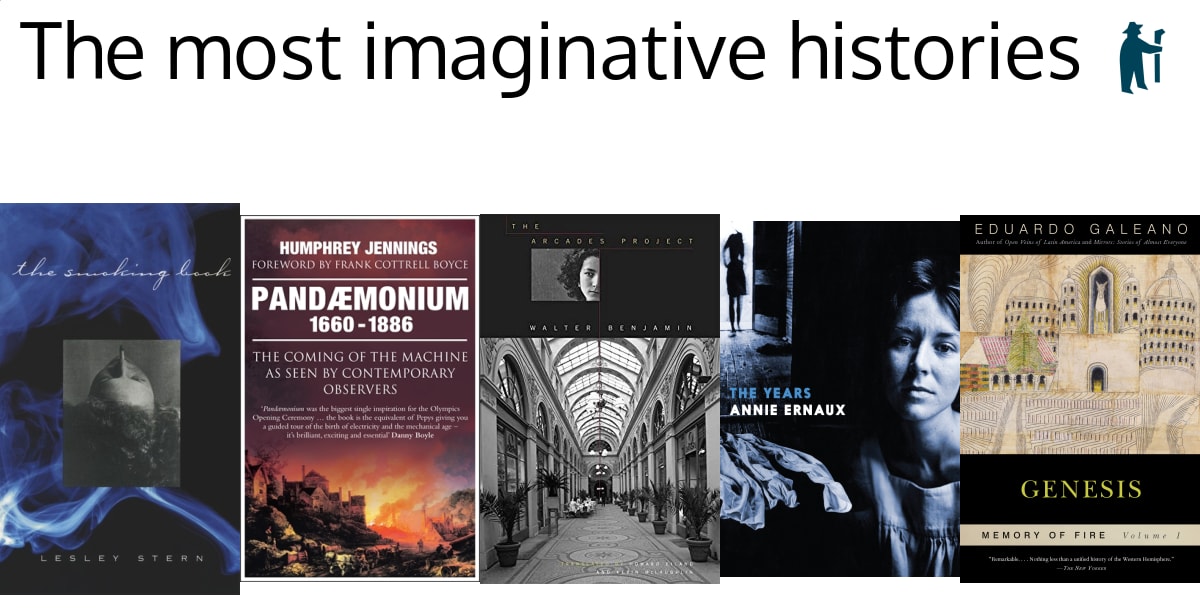
Around the same time, on the other side of the English Channel, the exiled German critic Walter Benjamin was deep into his Arcades Project, an investigation of the dreamworlds of nineteenth-century Paris through its surviving material fabric and cultural artifacts that he had begun to research in 1927. When he fled Paris to escape the German advance in 1940, Benjamin left the manuscript in the safekeeping of his friend Georges Bataille, who hid it in the stacks of the Bibliothéque Nationale for the duration of the war. Benjamin committed suicide on the Spanish border to avoid being repatriated to occupied France in September 1940. The Arcades Project was not published in the original German and French until 1982 or translated into English until 1999. Alongside other belatedly translated texts like his Berlin Childhood around 1900 and One-Way Street,[57] it offers an approach to writing history that is equally respectful of the intensities in things. “Must the Marxist understanding of history necessarily be acquired at the expense of the perceptibility of history?” Benjamin asks himself, wondering “in what way is it possible to conjoin a heightened graphicness to the realization of the Marxist method?” His answer draws upon one of the most formally revolutionary innovations of twentieth-century art. “The first stage in this undertaking will be to carry over the principle of montage into history,” he writes. “That is, to assemble large-scale constructions out of the smallest and most precisely cut components. Indeed, to discover in the analysis of the small individual moment the crystal of the total event.”[58]
Benjamin’s large-scale construction bears no resemblance to the grand narratives toward which, says Jean-François Lyotard, our postmodern era feels only incredulity, or the metahistories criticized by Hayden White as “a narrative prose discourse that purports to be a model, or icon, of past structures and processes in the interest of explaining what they are by representing them.”[59] “This work has to develop to the highest degree the art of citing without quotation marks,” Benjamin observes; “Its theory is intimately related to that of montage.”[60] The text of the Arcades Project is made up of hundreds of numbered individual passages quoted verbatim from the most heterogeneous primary sources, which Benjamin gathers into loose folders or “convolutes” without providing any overarching sense-making narrative under which they could be subsumed. Though the text is spattered with his own often gnostic observations, Benjamin does not try to systematize these into an argument. There are a multitude of ways through this labyrinth, connections within and across the convolutes, to which he provides no signposts or map. He is confident that the details will speak for themselves. “I needn’t say anything. Merely show,” he writes. “I shall purloin no valuables, appropriate no ingenious formulations. But the rags, the refuse—these I will not inventory but allow, in the only way possible, to come into their own, by making use of them.”[61]
Humphrey Jennings’s Pandaemonium 1660-1886: The Coming of the Machine as Seen by Contemporary Observers adopts a methodology of composing from fragments that is remarkably similar to Benjamin’s Arcades Project, even though the likelihood is that the two men never met.[62] Pandaemonium assembles a vast panorama of extracts from diaries, letters, poems and novels, newspapers, scientific journals, speeches, and government reports, arranged chronologically, once again with minimal commentary. “In this book I present the imaginative history of the Industrial Revolution,” the co-founder of Mass–Observation explains. “I say ‘present’, not describe or analyse, because the Imagination is a function of man whose traces are more delicate to handle than the facts and events and ideas of which history is usually constructed … I present it by means of what I call Images“:
These are quotations from writings of the period in question … which either in the writing or in the nature of the matter itself or both have revolutionary and symbolic and illuminatory quality. I mean that they contain in little a whole world—they are the knots in a great net of tangled time and space—the moments at which the situation of humanity is clear—even if only for the flash time of the photographer or the lighting …
And these images—what do they deal with? I do not claim that they represent truth—they are too varied, even contradictory, for that. But they represent human experience. They are the record of mental events. Events of the heart. They are facts (the historian’s kind of facts) which have been passed through the feelings and mind of an individual and have forced him to write … They are all moments in the history of the Industrial Revolution, at which clashes and conflicts suddenly show themselves with extra clearness, and which through that clearness can act as symbols for the whole inexpressible uncapturable process … [T]his window-opening quality … differentiates these pieces of writing from purely economic or political, or social analyses. Theirs is a different method of tackling, of presenting the same material, the same conflicts, the method of poetry.[63]
6
Both Walter Benjamin and Mass–Observation were directly influenced by the surrealists, who André Breton insisted in the first Surrealist Manifesto were “simple receptacles of so many echoes, modest recording instruments” rather than creative artists.[64] In retrospect, the surrealists’ battery of techniques—collages, automatic writing, dérives, found objects, games of chance, and the rest—were all attempts at composing with “what’s already composed.”[65] It is time Louis Aragon’s Paris Peasant, Philippe Soupault’s Last Nights of Paris, and André Breton’s Nadja were seen as experiments in ethnographic writing, and not simply as works of literature—precursors of the anthropology of Pierre Clastres, Michel de Certeau, and Marc Augé (not to mention the remarkable writings of Annie Ernaux, which shatter the boundaries between biography and history, participant and observer, the thought and the felt).[66] James Clifford was one of the earliest Anglo-American scholars to recognize the importance of this surrealist legacy for anthropology in his 1981 essay “On Ethnographic Surrealism,” in which he argued that surrealism and ethnography are complementary facets of the cultural crisis unleashed by the civilizational dislocation of World War I, in which “Reality is no longer a given, a natural, familiar environment” and “The self, cut loose from its attachments, must discover meaning where it may.” Where ethnography “suggests a characteristic attitude of participant observation among the artifacts of a defamiliarized cultural reality,” he goes on, surrealism “tended to work in the reverse sense, making the familiar strange.”[67]
Surrealism and ethnography came together explosively in the pages of Bataille’s journal Documents, whose “basic method,” Clifford writes, “is juxtaposition—fortuitous or ironic collage” in which “the proper arrangement of cultural symbols and artifacts is constantly placed in doubt … Its images, in their equalizing gloss and distancing effect, present in the same plane a Châtelet show advertisement, a Hollywood movie clip, a Picasso, a Giacometti, a documentary photo from colonial New Caledonia, a newspaper clip, an Eskimo mask, an Old Master, a musical instrument.”[68] Documents was an exercise in what Bataille and Leiris’s “Critical Dictionary” called l’informe(formless):
formless is not only an adjective having such and such a meaning, but a term serving to declassify [déclasser], requiring in general that everything should have a form … For academics to be satisfied, it would be necessary, in effect, for the universe to take on a form. The whole of philosophy has no other aim; it is a question of fitting what exists into a frock-coat, a mathematical frock-coat. To affirm on the contrary that the universe resembles nothing at all and is only formless, amounts to saying that the universe is something akin to a spider or a gob of spittle.[69]
Interviewed for a symposium on l’informe in 2021, Michael Taussig argued that “Clifford not only presented a new history of anthropology but one that opened the gates to a surrealist anthropology that challenged the hegemony that still holds in France, the UK, and the USA”:
Anthropology, like anything else, goes through its fashions—functionalism, structuralism, post-structuralism, the literary turn, anti-colonialism, the ontological turn, etc.—but there is an unwritten law not to mess with form. Clifford’s essay held out the possibility of new writing by exposing and exploring the historical roots of a para-anthropology centered on ‘surrealism’ involving Bataille among others. To me it seemed like an invitation to think more creatively about the experience of one’s fieldwork, to allow the strange to wreak havoc with our normal, and to create a new feeling as to reality itself.[70]
We are a long way from Malinowski and Firth—and Kuhnian normal science.
These once heretical perspectives have had greater currency in the Anglophone academy during the last thirty years than at any time during the preceding century. Walter Benjamin’s star, in particular, has never shone brighter. It is, then, supremely ironic—part comic, but mostly tragic—that this is the moment when commercial journal publishers choose to standardize their templates along the lines of natural science models, seemingly regardless of the intellectual consequences. A specific ideal of academic writing is being coercively materialized in the very technologies of journal production in ways that cannot but marginalize or exclude alternative forms and voices. The irony is compounded by the fact that in more sensitive hands, these same digital technologies could be used to broaden the scope of ethnographic and historical writing, whether through the creative employment of hypertext and intertext or the combination of text with audio or visual elements, in ways that Benjamin or the surrealists could only have dreamed of.[71]
Given the continuing importance of research article publication in both universities’ tenure and promotion procedures and national research assessment exercises like the UK’s Research Excellence Framework (REF),[72] this may have serious consequences both for the shape of future knowledge and for individuals’ careers. Unless there is some recognition of the problem by journal editors and effective resistance to this creeping standardization—not least on the part of professional associations like the American Anthropology Association—some of our most innovative writers, especially younger scholars working in these long-marginalized intellectual traditions, will find it increasingly difficult to publish their work in academically respectable venues at all—to their individual detriment, and to our collective loss.
[1] Quoted in “Form Follows Function,” at https://www.guggenheim.org/teaching-materials/the-architecture-of-the-solomon-r-guggenheim-museum/form-follows-function (this and all other on-line resources cited in this article accessed on 19 July 2023 unless stated otherwise).
[2] Kathleen C. Stewart, A Space on the Side of the Road: Cultural Poetics in an “Other” America. Princeton: Princeton University Press, 1996. I quote from the book’s jacket description.
[3] Derek Sayer, Marx’s Method: Ideology, Science and Critique in ‘Capital ‘ (Brighton: Harvester Press and Atlantic Highlands, NJ: Humanities Press, 1979); and The Violence of Abstraction: The Analytic Foundations of Historical Materialism (Oxford and New York: Blackwell, 1987).
[4] Kathleen Stewart, Ordinary Affects. Durham, NC, and London: Duke University Press, 2007, p. 1. My emphasis.
[5] Kathleen C. Stewart, University of Texas at Austin website, at https://liberalarts.utexas.edu/anthropology/faculty/kcs. My emphasis.
[6] Ordinary Affects, p. 1.
[7] I quote from Kathleen Stewart’s description of her UT Austin course ANT 324L Ethnographic Writing, at https://liberalarts.utexas.edu/anthropology/faculty/kcs. My emphasis.
[8] Kim Tallbear, “Prairie Relations 100S,” Unsettle, February 2, 2022, at https://kimtallbear.substack.com/p/prairie-relations-100s#details.
[9] Circe Accurso Sturm, “100-Word Collective,” Voices in Italian Americana, Vol. 24, Nos. 1-2, 2013, p. 95. In the context of issues I raise later in this paper, it is interesting to compare this with earlier surrealist practices of group work and, in particular, such “games” as the exquisite corpse. See further Derek Sayer, Making Trouble: Surrealism and the Human Sciences (Chicago: Prickly Paradigm Press, 2017).
[10] Lauren Berlant and Kathleen Stewart, The Hundreds. Durham, NC, and London: Duke University Press, 2019, p. ix. My emphasis.
[11] Derek Sayer, “Hundreds and Hundreds,” Anthropology and Humanism 00(0): 1, 2023. Open access, available at https://doi.org/10.1111/anhu.12447 (Early View). Published under CC BY-NC-ND 4.0 license.
[12] As defined by the Gun Violence Archive, “Mass Shootings are, for the most part an American phenomenon. While they are generally grouped together as one type of incident, they are several different types including public shootings, bar/club incidents, family annihilations, drive-by, workplace and those which defy description but with the established foundation definition being that they have a minimum of four victims shot, either injured or killed, not including any shooter who may also have been killed or injured in the incident.” https://www.gunviolencearchive.org/explainer
[13] Peter Winch, The Idea of a Social Science and Its Relation to Philosophy. London: Routledge and Kegan Paul, 1963, p. 123.
[14] Clifford Geertz, “Thick Description: Toward an Interpretive Theory of Culture,” in his The Interpretation of Cultures. New York: Basic Books, 1973.
[15] Gérard Genette, Paratexts. Thresholds of Interpretation. Trans. Jane E. Lewin, Cambridge: Cambridge University Press, 1997, p. 2. My emphasis.
[16] The Journal of Historical Sociology, published quarterly from 1988 to 2022 by Basil Blackwell Publishers, subsequently Wiley. See https://journals.scholarsportal.info/browse/09521909 (accessed 3 December 2024).
[17] Ordinary Affects, p. 5.
[18] Roland Barthes, “The Death of the Author,” in his Image Music Text. Ed. and trans. Stephen Heath, London: Fontana, 1977, p. 146.
[19] Georges Bataille, “Informe,” Documents, No. 7, December 1929, p. 382. My translation.
[20] On APCs see Royal Society of Chemistry, “Open Access Payments and Funding,” at https://www.rsc.org/journals-books-databases/open-access-publishing/open-access-payments-apcs-and-funding/.
[21] I am alluding to the music streaming service Spotify, which—for good or ill—alters the experience of listening to an album by abstracting individual tracks, which can then be infinitely recombined in playlists.
[22] See Genette, Paratexts, Ch. 2.
[23] See https://anthrosource.onlinelibrary.wiley.com/doi/epdf/10.1111/anhu.12447
[24] “Definition of ‘in the abstract,’ Collins Dictionary, at https://www.collinsdictionary.com/dictionary/english/in-the-abstract#google_vignette
[25] Ordinary Affects, pp. 4-5. My emphasis.
[26] “List of Mass Shootings in the United States,” Wikipedia, at https://en.wikipedia.org/wiki/List_of_mass_shootings_in_the_United_States.
[27] Malcolm Gladwell, “Thresholds of Violence: How School Shootings Catch On,” New Yorker, October 19, 2015, quoting Ralph Larkin.
[28] Roland Barthes, Mythologies. Trans. Annette Levers, New York: Farrar, Straus, Giroux, l991, p. 143.
[29] The US accounted for 73 percent of mass shootings that occurred in thirty-six developed countries between 1998 and 2019. America’s 101 shootings led to 816 deaths. France had the next highest number of shootings with eight, leading to 179 deaths. Half the countries surveyed had no mass shootings at all, and only ten had more than one: Belgium, the Czech Republic, Italy, the Netherlands and Switzerland had two, Finland three, Canada four, and Germany five. See Jason R. Silva, “Global mass shootings: comparing the United States against developed and developing countries,” International Journal of Comparative and Applied Criminal Justice, online publication 28 December 2022. I put the term “developed” under erasure (writing it as “developed“), in Jacques Derrida’s sense, to indicate that it is a word I need to use here because of its referents but do not consider adequate as a concept.
[30] Michel Foucault, The Order of Things: An Archaeology of the Human Sciences. Trans. Alan Sheridan, New York: Vintage, 1994, p. xv.
[31] Lawrence Binyon, “For the Fallen,” at https://www.poetryfoundation.org/poems/57322/for-the-fallen
[32] “The Metropolis and Mental Life,” in The Sociology of Georg Simmel, ed. and trans. Kurt H. Wolff. Glencoe, IL: The Free Press, 1950, p. 415.
[33] Course description for ANT 324L Ethnographic Writing.
[34] Roland Barthes, Camera Lucida: Reflections on Photography. Trans. Richard Howard, New York: Hill and Wang, 1981, p. 4. I am using the term punctum in the sense Barthes gives it in the same book: a “sting, cut, little hole—and also a cast of the dice. A photographer’s punctum is that accident which pricks me (but also bruises me, is poignant to me” (p. 27).
[35] Ludwig Wittgenstein, Philosophical Investigations. Trans G. E. M. Anscombe, second edition, Oxford: Blackwell, 1958, p. 32.
[36] Ordinary Affects, pp, 3, 74.
[37] “Categorical” is defined in Merriam-Webster Dictionary as “1 Absolute, unqualified”; and “2 a. of, relating to, or constituting a category,” or “b. involving, according with, or considered with respect to specific categories.” https://www.merriam-webster.com/dictionary/categorical
[38] See here Sally Rooney’s excellent essay “Misreading Ulysses,” in Paris Review, December 27, 2022, at https://www.theparisreview.org/blog/2022/12/07/misreading-ulysses/
[39] https://support.academia.edu/hc/en-us/articles/360045673953-What-is-Summaries-
[40] Promotional email from academia.edu headed “You would have saved 6,864 minutes with Summaries,” 29 July 2023.
[41] “Chat with your docs. Meet Acrobat AI Assistant.” https://www.adobe.com/acrobat/generative-ai-pdf.html (accessed December 13, 2014).
[42] See Derek Sayer, “The Language of Nationality and the Nationality of Language: Prague, 1780-1920,” Past and Present, No. 153, p. 182, note 67.
[43] Thomas S. Kuhn, The Structure of Scientific Revolutions. Second edition, enlarged, Chicago: University of Chicago Press, 1970, p. 182.
[44] The Concise Oxford Dictionary. Ninth Edition, ed. Della Thompson. Oxford: Clarendon Press, 1995, p. 6.
[45] K. Marx and F. Engels, The Holy Family, in Marx–Engels Collected Works, Vol. 4, London: Lawrence and
Wishart, 1975, pp. 57-8.
[46] Ludwig Wittgenstein, The Blue and Brown Books. Oxford: Blackwell, 1958, p. 20. Emphasis added.
[47] Blue and Brown Books, p. 17. Emphasis added.
[48] Ordinary Affects, p. 65.
[49] I have discussed these and other examples at greater length in Making Trouble: Surrealism and the Human Sciences. See note 9.
[50] Tom Harrisson, Savage Civilisation. London: Victor Gollancz, Left Book Club edition, third
impression, 1937.
[51] Tom Harrisson, Humphrey Jennings, and Charles Madge, “Anthropology at Home,” New Statesman and Nation, 30 January 1937, p. 155.
[52] Humphrey Jennings and Charles Madge with T. O. Beachcroft, Julian Blackburn, William Empson, Stuart Legg, and Kathleen Raine, eds., May the Twelfth: Mass-Observation Day-Surveys 1937 by over two hundred observers. London: Faber and Faber, 1937, pp. ix–x.
[53] Charles Madge and Tom Harrisson, The First Year’s Work. London: Lindsay Drummond, 1938, p. 66. First emphasis added.
[54] Bronislaw Malinowski, “A Nationwide Intelligence Service,” in Madge and Harrisson, The First Year’s Work, pp. 85–86.
[55] Raymond Firth, “An Anthropologist’s View of Mass-Observation,” Sociological Review, Vol. 31, no. 2 (1939), pp. 178–179.
[56] “A Nation-wide Intelligence Service,” p. 85.
[57] Walter Benjamin, One-Way Street and Other Writings, trans. J. A. Underwood (London: Penguin, 2009); Berlin Childhood Around 1900: Hope in the Past, trans. Howard Eiland (Cambridge, MA: Harvard University Press, 2006).
[58] Walter Benjamin, The Arcades Project. Trans. Howard Eiland and Kevin McLaughlin, Cambridge, MA: Harvard University Press, 1999, pp. 460-61.
[59] Jean-François Lyotard, The Postmodern Condition: A Report on Knowledge, trans. Geoff Bennington and Brian Masumi (Manchester: Manchester University Press, 1984), p. xxiv; Hayden White, Metahistory: The Historical Imagination in Nineteenth-Century Europe(Baltimore: Johns Hopkins University Press, 1973), p. 2.
[60] Arcades Project, p. 458.
[61] Arcades Project, p. 460. My emphasis.
[62] For an extended discussion see Michael Saler, “Whigs and Surrealists: the ‘Subtle Links’ of Humphrey Jennings’s Pandaemonium,” in George K. Behlmer and Fred M. Leventhal, eds., Singular Continuities: Tradition, Nostalgia, and Identity in Modern British Culture (Stanford, CA: Stanford University Press, 2000).
[63] Humphrey Jennings, Pandaemonium 1660-1886: The Coming of the Machine as Seen by Contemporary Observers, ed. Marie-Louise Jennings and Charles Madge. London: Icon Books, 2012, p. xiii. My emphases. The text compiled posthumously and published in 1985 runs to 376 pages; according to Marie-Louise Jennings, this was “around one third of the original text” (p. xxviii). Jennings’s use of “present” here is analogous to Katie Stewart’s use of “perform.”
[64] André Breton, “Manifesto of Surrealism,” in his Manifestoes of Surrealism, trans. Richard Seaver and Helen R. Lane (Ann Arbor, MI: University of Michigan Press, 1972), p. 28.
[65] As Ben Highmore has also argued, surrealism was “a form of social research into everyday life,” whose products should be seen “not as works of art but as documents of this social research. In this way artistic techniques such as collage become methodologies for attending to the social.” Everyday Life and Cultural Theory: An Introduction. London: Routledge, 2002, p. 46.
[66] Louis Aragon, Paris Peasant (London: Cape, 1987); Philippe Soupault, Last Nights of Paris (Cambridge, MA: Exact Change, 1992); André Breton, Nadja (New York: Grove Press, 1960); Pierre Clastres, Society Against the State: Essays in Political Anthropology (London: Zone, revised edition, 1990); Michel de Certeau, The Practice of Everyday Life (Berkeley: University of California Press, 3rd edition, 2011); Mark Augé, In the Metro (Minneapolis: University of Minnesota Press, 2002); Annie Ernaux, The Years (New York: Seven Stories Press, 2017).
[67] James Clifford, “On Ethnographic Surrealism,” Comparative Studies in Society and History, Vol. 23, No. 4, 1981, p. 541. A revised version of this essay was included as Ch. 4 of Clifford’s The Predicament of Culture: Twentieth-Century Ethnography, Literature, and Art(Cambridge, MA: Harvard University Press, 1988).
[68] Clifford, Predicament of Culture, pp. 120-21.
[69] Bataille, “Informe.” Yve-Alain Bois and Rosalind E. Krauss translate déclasser as “to bring things down in the world” in their book Formless: A User’s Guide (New York: Zone, 1997), unpaginated front matter; for Bois, the term has “the double sense of lowering and taxonomic disorder” (p. 18). See further Karen Engle and Yoke-Sum Wong, “Thinking Feeling,” introduction to their edited book Feelings of Structure: Explorations in Affect (Montreal and Kingston/London/Chicago: McGill-Queens University Press, 2018.
[70] “Michael Taussig in conversation with Nancy Goldring,” November, Vol. 1, 2021, at https://www.novembermag.com/content/michael-taussig. My emphasis. See also, in this context, Taussig’s book Walter Benjamin’s Grave (Chicago: University of Chicago Press, 2006).
[71] See for example the websites of Writing with Light (http://www.writingwithlight.org) and the Bureau for Experimental Ethnography (https://bureauxethnography.dwrl.utexas.edu) (both accessed 3 December 2024).
[72] I have discussed the latter at length in Derek Sayer, Rank Hypocrisies: The Insult of the REF, London: Sage, 2015.






 coasts of bohemia