The big men are all deaf; they don't want to hear the little squeaking as they walk across the street in cleated boots (Sylvia Plath, 11 September 1950)
US President Donald Trump in the White House Rose Garden. Photo by Daniel Torok.
A non-political civil service, diversity, equity and inclusion (DEI) programs, USAID, the National Endowment for the Humanities, Fulbright Scholarships, federal funding for scientific and medical research—the Washington Post, the Kennedy Center, the National Gallery of Art, the Smithsonian Institution, Ivy League universities, “big law”—the great institutions of liberal America are falling to Trump like dominoes, one by one. Those with the biggest reputations have all too often capitulated, starting with the Fourth Estate.
Anticipatory obedience
Obeying in advance began well before Trump’s inauguration on January 15. Last October Washington Post owner Jeff Bezos, the billionaire founder and ex-CEO of Amazon, sniffed the way the wind was blowing and intervened to cancel the editorial board’s proposed endorsement of Kamala Harris in the upcoming presidential election.
The owner’s interference in the editorial independence of the storied paper whose journalists ended Richard Nixon’s presidency provoked the resignation of Editor-at-Large Robert Kagan and the loss of over 250,000 subscribers. Editorial board members David Hoffman and Molly Roberts and columnist Michele Norris, the first Black female host for National Public Radio (NPR), followed Kagan out the door.
The Los Angeles Times also backed out of endorsing any candidate on the orders of billionaire owner Patrick Soon-Shiong, which led Editorials Editor Mariel Garza to quit, together with editorial board members Karin Klein and Robert Greene. When Soon-Shiong’s 31-year-old daughter, Nika Soon-Shiong, claimed that the family declined to endorse Harris “to repudiate justifications for the widespread targeting of journalists and ongoing war on children” in Gaza, her father hastened to deny any such suggestion.
Early in January, the Washington Post refused to publish a cartoon by Pulitzer Prize-winner Ann Telnaes that depicted Bezos, Soon-Shiong, and tech billionaires Mark Zuckerberg (founder and CEO of Meta) and Sam Altman (co-founder and CEO of OpenAI) offering “bags of money to a larger-than-life Trump statue standing on a decorated pedestal with its head just out of view.” Telneis resigned from the Post, where she had worked since 2008, in protest at this blatant act of political censorship.
Zuckerberg and Bezos have had their disagreements with Trump in the past. But along with other billionaires, both were a prominent presence at his inauguration. So was Elon Musk. Well before their current bromance bloomed, Musk had tried to ingratiate himself with Trump by reinstating his account on X (formerly Twitter). His Latin comment “Vox populi, vox dei” (the voice of the people is the voice of God) reads ominously in retrospect.
Meta hastened to pay $25 million to settle a lawsuit Trump filed after his banning from Facebook following the January 6, 2020 assault on the Capitol, and obligingly replaced independent fact-checkers on Facebook and Instagram with X-style user-generated “community notes.” Independent fact-checkers were “too politically biased,” explained Zuckerberg, and it was “time to get back to our roots around free expression.”
On February 26 Bezos instructedWashington Post editorial staff that from now on only opinions supportive of “personal liberties” and “free markets” would be accepted for the opinion pages of the paper, and that “viewpoints opposing those pillars will be left to be published by others.” The Post’s opinion editor, David Shipley, promptly resigned. Bezos says he asked Shipley whether he wanted to stay on, suggesting “if the answer wasn’t ‘hell yes,’ then it had to be ‘no.’” Ain’t free expression great?
Billionaires have much to gain from cozying up to Trump—like a $4.5 trillion tax cut and a bonfire of environmental and other regulations—and even more to lose if they don’t. For those less willing to kiss the ring, the administration has other means of persuasion.
Muzzling the media
Speaking at the Conservative Policy Action Conference (CPAC) on February 23, 2024, MAGA cheerleader Kash Patel urged:
We [must] collectively join forces to take on the most powerful enemy that the United States has ever seen, and no it’s not Washington, DC, it’s the mainstream media and these people out there in the fake news. That is our mission!
A year later, MAGA’s war against the media is raging on all fronts.
Among other “intimidation tactics” (as the New York Times rightly describes them) designed to control the news, the Trump administration has removedAssociated Press reporters from the White House press pool; stripped the White House Correspondents’ Association of its historic role in deciding which journalists have access to the president; and attempted to dismantleVoice of America, Radio Free Europe, and Radio Free Asia, which Trump accuses of a “leftist bias” and failing to project “pro-American” values.
The New York Times may complain about Trump vilifying its star correspondents, but it is not above self-censorship when it matters. Per CNN, on April 5, “1,400 “Hands Off!” mass-action protests were held at state capitols, federal buildings, congressional offices, Social Security’s headquarters, parks and city halls throughout the entire country,” and involved “millions of people.” One of the largest marches stretched for 20 city blocks on New York’s Fifth Avenue. The Times reported it on page 18 of its Sunday print edition.
The DOGE Subcommittee of Congress, headed by Trump’s ally Marjorie Taylor Greene, has threatened the public broadcast networks NPR and PBS, whose CEOs it summoned on March 26 “to explain why the demonstrably biased news coverage they produce for an increasingly narrow and elitist audience should continue to be funded by the broad taxpaying public.”
Trump has meanwhile extorted $15 million from ABC News in an out-of-court settlement of a defamation case over its reporting of the E. Jean Carroll trials, and his campaign is suing the Daily Beast for defamation in “a transparent attempt to intimidate The Beast and silence the independent press.” Other intimidatory litigation is ongoing against CBS News, the Des Moines Register, and the Pulitzer Board.
“Hands Off!” protesters rally against the second administration of President Donald Trump in Washington, DC, April 5, 2025. Photo by G. Edward Johnson/Wikimedia Commons.
Mugging the lawyers
Trump has used executive orders to go after several top law firms who have taken cases and represented clients he doesn’t like. An order against the law firm Jenner & Block, for example, punished it for pro bono representation of transgender people and immigrants. The sanctions imposed on this and other practices include removing their lawyers’ security clearances, barring federal agencies from doing business with them, and excluding them from federal government buildings—including the courts.
An executive memorandum of March 22, aimed at immigration lawyers in particular, directs “the Attorney General to seek sanctions against attorneys and law firms who engage in frivolous, unreasonable, and vexatious litigation against the United States,” rendering pursuit of any lawsuit against any government agency a risky proposition.
While Jenner & Block and two other firms are challenging these orders in court, four other “big law” outfits—Paul Weiss, Skadden Arps, Milbank, and Willkie Farr—have not only caved to Trump’s demands, but agreed to commit millions of dollars in pro bono legal work to causes that Trump supports in order to avoid being sanctioned. Best keep on the right side of the boss, even if the boss is clearly on the wrong side of the law.
Defending “all firms and lawyers who fight against this president’s lawless executive actions,” senior partners of the law firm Keker, Van Nest & Peters wrote:
We sympathize. We take seriously our obligations to our clients, our associates, our staff and their families. But at this crucial moment, clients need to find their courage, too. And partners at big firms—who often earn millions a year—must be willing to take financial risks when the fate of our nation, the future of our profession and the rule of law itself are at stake.
You can support a lawyer’s right to represent unpopular clients and causes against powerful forces—essentially the oath we all took when becoming members of the bar. Or you can sit back, check your bank balance and watch your freedoms, along with the legal system and the tripartite system of government we should not take for granted, swirl down the drain.
Playing the terrorism card
Citing a provision of the 1952 Immigration and Nationality Act that empowers the government to deport people if there are “reasonable grounds” to believe their presence in the country “would have potentially serious adverse foreign policy consequences for the United States,” ICE agents arrested Mahmoud Khalil, a US permanent resident and recent graduate student at Columbia University, in front of his eight-months pregnant wife—who is an American citizen—and have since detained him first in New Jersey, then in Louisiana. The only thing preventing him from being deported is a court challenge.
Khalil’s offense is the leading role he played in last year’s protests at Columbia University against Israel’s genocide in Gaza. However, as his lawyers emphasize:
Mr. Khalil has never been accused, charged or convicted of any crime. He was ripped from his home, detained and threatened with deportation in retaliation for his political beliefs. His case represents a clear attempt by the Trump administration to silence dissent, intimidate our universities and attack our freedom.
Tufts University PhD student Rümeysa Öztürk, who is in the US on an F-1 visa, was snatched off the street by masked and anonymous ICE agents, transferred to a detention facility 1,500 miles away with no access to a lawyer, and threatened with deportation for no other “crime” than that she coauthored an op-ed for the school’s student newspaper whose contents Secretary of State Marco Rubio doesn’t like.
According to his own testimony, Rubio has since retrospectively revoked the visas of hundreds other foreign student “lunatics” on grounds that their social media posts show them to be a threat to national security, leaving them liable to deportation without due process, “potentially to countries other than a student’s homeland” (my emphasis).
This is exactly what happened to 238 Venezuelan migrants, who have been deported to El Salvador and imprisoned without trial in the notoriously brutal Terrorism Confinement Center in Tecoluca. They were alleged members of the “terrorist” criminal gang Tren de Aragua, but this has never been established in court. In this case Trump has perverted the 1798 Enemies Alien Act to define Tren de Aragua as “invaders” of the United States. The sole “evidence” connecting the gay makeup artist Andry José Hernández Romero with the gang was his crown tattoos—which are traditional in his Venezuelan hometown.
The message is: keep your head down, your nose clean, and your mouth shut and you’ll be OK. Don’t say you weren’t warned.
Against this backdrop, Trump’s appointment of Kash Patel as FBI director has set many alarm bells ringing. Patel’s resumé is long on “counter-terrorism,” and boasts of “working with our nation’s tier one special forces units to conduct collaborative global targeting operations in almost every theater of war worldwide.” Now he’s bringing it all back home. Specious associations of “terrorism” are being used to launch a real reign of terror.
The Trump Kennedy Center
On February 7, Trump posted a surprise announcement on Truth Social regarding the John F. Kennedy Center for the Performing Arts, whose annual awards ceremony he had ostentatiously shunned during his first term in the White House:
At my direction, we are going to make the Kennedy Center in Washington D.C., GREAT AGAIN. I have decided to immediately terminate multiple individuals from the Board of Trustees, including the Chairman, who do not share our Vision for a Golden Age in Arts and Culture. We will soon announce a new Board, with an amazing Chairman, DONALD J. TRUMP!
Trump went on to fire two dozen members of the traditionally bipartisan board and replaced them with MAGA loyalists, including the wives of Vice President J.D. Vance and Commerce Secretary Howard Lutnick, White House Chief of Staff Susie Wiles (and her mother Cheri Summerall), mega-donor Patricia Duggan, Fox News personalities Laura Ingraham and Maria Bartilomo, and the spouses of several business allies.
Trump then had the trustees elect him chairman in place of billionaire philanthropist David Rubenstein; ousted the center’s long-serving director Deborah Sutter and other senior staff members; and installed Richard Grenell, a former acting director of national intelligence, as interim president. Grenell told CPAC that his vision for the center was “to make art great again,” with “a big, huge celebration of the birth of Christ at Christmas.”
Trump promised his supporters that “Just last year, the Kennedy Center featured Drag Shows specifically targeting our youth—THIS WILL STOP.” Instead, he wants the center to stageCamelot, Hello Dolly!, Fiddler on the Roof, Cats, and The Phantom of the Opera. The fact that only Phantom is currently playing in North America—these respectively premiered in 1960, 1963, 1964, 1981, and 1986—seems not to have deterred him.
Meantime, in one of those richly symbolic details where the devil likes to lurk, records of the 2023 production of 1776, in which a multiracial cast of female, trans, and non-binary performers donned breeches, buckle shoes, and wigs to impersonate America’s all-white Founding Fathers, have been disappeared from the center’s website.
A dozen center staff, including Ellen Palmer, vice president of corporate engagement, and Leslie Miller, the senior vice president of development, quit over the MAGA takeover. Actor Issa Rae, TV producer (of Scandal and Bridgerton fame) Shonda Rhimes, opera singer Renée Fleming, and musicians Rhiannon Giddens and Ben Folds and other artists cut ties with the center or canceled upcoming performances.
Lin-Manuel Miranda’s hit musical Hamilton, which had been scheduled to run for several weeks in 2026—and would likely have been the highest-grossing event of the season—was pulled by its producer. Miranda explained: “The Kennedy Center was not created in this spirit, and we’re not going to be a part of it while it is the Trump Kennedy Center.”
Donations are drying up, ticket sales have plummeted, and revenues have tanked. No matter. The Great American Cultural Revolution must go on.
Inside the museums diversity goes up on trial
Back in 2021, the National Gallery of Art in Washington, DC announced that its “strategic priority” was to “focus on diversity, equity, access and inclusion throughout our work to diversify the stories we tell, the ways in which we tell them, and our staff.”
Metrics for measuring the plan’s success included increasing gender, racial, and ethnic diversity in acquisitions, as well as “progress toward special exhibitions and installations of the permanent collection … that tell non-Euro-centric art stories … [and] include a significant percentage of non-white artists and women artists.”
Over the next three years the museum “hired its first curator of African American art, recruited trustees of color to the board and began mounting more shows by women and artists of color.” That process of liberal enlightenment has now come to an abrupt halt.
In response to Trump’s executive order of January 20 banning “illegal and immoral discrimination programs, going by the name ‘diversity, equity, and inclusion’ (DEI)” in all agencies and entities of the federal government, the NGA announced that it had “closed its office of belonging and inclusion and removed related language from our website.”
The NGA is not an agency or entity of the federal government, and the US is not the Soviet Union or North Korea. The president cannot (yet) simply decree what the NGA and other museums are permitted to exhibit. But the NGA receives 80 percent of its operating budget from the federal government and was hardly in a position to argue.
Fears of losing federal funding likely also explain why the National Endowment for the Arts has eliminated Challenge America grants designed to “extend the reach of the arts to underserved groups/communities,” instead prioritizing “projects that celebrate the nation’s rich artistic heritage and creativity by honoring the semiquincentennial of the United States of America (America250).” Discretion is the better part of valour.
Whitewashing the past
Perhaps the most ominous piece of MAGA cultural regulation to date is Trump’s March 27 executive order titled “Restoring Truth and Sanity to American History.” Trump begins:
Over the past decade, Americans have witnessed a concerted and widespread effort to rewrite our Nation’s history, replacing objective facts with a distorted narrative driven by ideology rather than truth. This revisionist movement seeks to undermine the remarkable achievements of the United States by casting its founding principles and historical milestones in a negative light. Under this historical revision, our Nation’s unparalleled legacy of advancing liberty, individual rights, and human happiness is reconstructed as inherently racist, sexist, oppressive, or otherwise irredeemably flawed.
Remembering, perhaps, the widespread interrogation of exactly whose histories were being commemorated in public spaces that followed the Black Lives Matter protests of 2020, the order directs the secretary of the interior to:
take action … to ensure that all public monuments, memorials, statues, markers, or similar properties within the Department of the Interior’s jurisdiction do not contain descriptions, depictions, or other content that inappropriately disparage Americans past or living (including persons living in colonial times), and instead focus on the greatness of the achievements and progress of the American people.
Trump reserves his fiercest fire for the Smithsonian Institution—whose 21 museums, 21 libraries, and 14 education and research centres in Washington, DC make it one of the largest and most influential knowledge complexes on the planet. He is appalled that:
the Smithsonian American Art Museum today features “The Shape of Power: Stories of Race and American Sculpture,” an exhibit representing that “[s]ocieties including the United States have used race to establish and maintain systems of power, privilege, and disenfranchisement.” The exhibit further claims that “sculpture has been a powerful tool in promoting scientific racism” and promotes the view that race is not a biological reality but a social construct, stating “Race is a human invention.”
The clear implication is that if white people dominate American society, the reasons must lie in the biological superiority of the white “race,” not in a history built on the twin pillars of genocide of Native Americans and enslavement of millions of Africans. The undisguised fascist roots of Trump’s worldview are on display here for all to see.
The order goes on to direct J.D. Vance, in his capacity as a member of the board of regents, to “remove improper ideology” from the Smithsonian and “ensure that future appropriations … prohibit expenditure on exhibits or programs that … promote programs or ideologies inconsistent with Federal law and policy.”
The Smithsonian has yet to formally respond. But again, though it is not part of any branch of US government, two-thirds of the institution’s $1.25 billion annual budget comes from federal allocations. Secretary Lonnie Bunch, who founded the National Museum of African American History and Culture (NMAAHC), faces a difficult choice.
NMAAHC was another target of Trump’s executive order. The poet Kevin Young, Bunch’s successor as NMAAHC director, was put on indefinite leave on March 10. He resigned “to focus on his writing” on April 4.
The war on science and education
The administration started softening up America’s universities early in Trump’s second term, with cuts to federal research funding causing hiring freezes, lab closures, layoffs, cuts in graduate admissions, and the withdrawal of job offers. MIT, Stanford, Johns Hopkins, and the University of Pennsylvania were among the schools affected.
At the National Institutes of Health (NIH), which now falls under the jurisdiction of vaccine skeptic Robert Kennedy Jr., grant review panels were suspended, blocking millions of dollars in funding for medical research.
On March 27, Kennedy announced 10,000 job losses, including leaders of divisions regulating food and drugs, studying chronic diseases and the risks of environmental disasters, and targeting HIV prevention. Among those fired were eleven principal investigators, who lead research teams. One senior NIH scientist predicted the result would be “chaos,” with cutting-edge neurological research particularly at risk.
It speaks volumes that the hundreds of “words federal agencies are now discouraged from using” (per a New York Timescompilation of government documents) include not only Black, disabilities, equality, gender, historically, indigenous community, transgender, and women, but also clean energy, climate crisis, and climate science.
During the night of April 3, state humanities councils and recipients of grants from the National Endowment for the Humanities (NEH) began receiving emails telling them their funding was ending immediately because the agency would be “repurposing its funding allocations in a new direction in furtherance of the president’s agenda.”
The new acting director of the agency, Michael McDonald, who was appointed after his predecessor Sally Lowe was forced to resign “at the direction of president Trump,” told senior NEH staff that upward of 85 percent of the agency’s current grants would be canceled. In the future, NEH would focus on “patriotic programming.” The New York Times had previously reported that DOGE wanted to cut 80 percent of NEH’s 180 staff.
Though the NEH is not about to find a cure for cancer—that prospect just grew a lot more distant thanks to the cuts at the NIH—we should be in no doubt of the magnitude of the stakes here. According to its website:
NEH is the only federal agency in the United States dedicated to funding the humanities. Since its founding in 1965, NEH has awarded over $6 billion in grants to museums, historic sites, colleges, universities, K–12 teaching, libraries, public television and radio stations, research institutions, independent scholars, and to its humanities council affiliates in each of the nation’s 56 states and jurisdictions. Panels of independent, external reviewers examine and select top-rated proposals to receive grants.
Who needs experts? On this as on everything else, the self-professed stable genius in the White House knows best.
The antisemitism canard
Alongside these cuts, Trump’s administration has attacked academic freedom under cover of combatting “antisemitism”—which in Trump’s America, like in Biden’s America, has been redefined to encompass virtually any criticism of Israel’s “plausibly genocidal” actions in Gaza, even when the critics are Jewish.
On March 7, Trump’s so-called Federal Task Force to Combat Antisemitism announced the immediate cancellation of $400 million in federal grants and contracts to Columbia University in New York “due to the school’s continued inaction in the face of persistent harassment of Jewish students.” The statement went on:
The decisive action by the DOJ, HHS, ED, and GSA to cancel Columbia’s grants and contracts serves as a notice to every school and university that receives federal dollars that this administration will use all the tools at its disposal to protect Jewish students and end anti-Semitism on college campuses.
On March 10, the Department of Education—a body Trump is committed to abolishing, but which in the meantime has its uses—put sixty elite institutions on notice that they were under investigation for “antisemitic discrimination and harassment.”
In fact, under President Minouche Shafik, who resigned under Republican pressure in August 2024, and her successor Katrina Armstrong, Columbia bent over backwards to protect Jewish students.
Among other measures, the university restricted access to campus to those carrying Columbia ID; tightened up event policies; revamped procedures “to report allegations of hate speech, harassment, and other forms of disruptive behavior, including antisemitic behavior”; “enhanced reporting channels … supplementing internal resources through a team of outside investigators”; established an antisemitism task force; banned student societies, including Jewish Voice for Peace; twice invited NYPD armed riot police onto campus to break up protests, leading to scores of arrests; disciplined student protestors; removed three deans for allegedly antisemitic text messages; and forced law professor Katherine Franke into early retirement for her claim that “students who “come right out of their military service” have “been known to harass Palestinian and other students on our campus”—a reference to a case in which ex-IDF Columbia students sprayed protestors with an unknown substance, sending several of them to hospital.
It is difficult to see what more the university could reasonably have done to protect its Jewish community—many of whose members were (and are) active in the protests. But facts (and Jews) are not what matter here. It’s all about messaging.
As New York Congressmen Jerry Nadler and Adriano Espaillat wrote in a joint statement:
Revoking federal grants to Columbia University isn’t about combating anti-Semitism; it’s about the Trump administration’s war on education and science … Today’s announcement does nothing to keep Jewish students safe and sends a chilling message that universities must align with the MAGA agenda or face financial ruin.
The administration has since threatened to axe billions of dollars in federal funding from Princeton, Harvard, Brown, and other elite universities over their alleged tolerance of antisemitism, and has suspended $175 million in research grants to the University of Pennsylvania over a transgender swimmer who last represented the school in 2022.
Bending the knee
Faced with the threat of further cuts in funding, Columbia caved to Trump’s blackmail, agreeingamong other measures to ban face masks, hire 36 “special officers” to arrest individuals, and install a “senior vice-provost” to take over running the Department of Middle Eastern, South Asian and African Studies and the Center for Palestine Studies, with a mandate to “review all aspects of leadership and curriculum.”
Scores of schools, including UCLA, the University of Florida, Georgia Tech, Iowa State University, the University of Michigan, Texas A & M, the United States Naval Academy, the University of Virginia, and the entire University of North Carolina and University of Texas systems hastened to close DEI offices, dismantle DEI programs, and purge DEI statements from their websites.
Harvard—the richest university in the world, with an endowment of $53.2 billion—suspended its research partnership with Birzeit University in the West Bank and dismissed the director and associate director of its Center for Middle Eastern Studies, Cemal Kafadar and Rosie Bsheer. NYU cancelled a talk on challenges in humanitarian crises by Dr Joanne Liu, a former head of Médecins Sans Frontières, over the content of some of her slides. They dared to mention casualties in Gaza and cuts at USAID.
Yale fired the Iranian legal scholar Helyeh Doutaghi, a prominent critic of Israel’s war in Gaza, for her alleged connections with a Palestinian charity the US government has designated as a fundraiser for terrorism. Johns Hopkins instructed faculty, staff, and students not to obstruct ICE officers if they try to arrest any member of the university community on campus, nor tip off anyone that ICE was hunting them, “or engage in any behavior in an effort to enable them to leave the premises or hide.”
A few brave holdouts like Brown, Tufts, the Rutgers University Senate, and one lonely University of Michigan dean at the Penny W. Stamps School of Art & Design have stood up against the Trump administration’s pressure, but many more institutions have not.
Even Barack Obama—who like former Presidents Bill Clinton, George Bush, and Joe Biden has kept disgracefully quiet about Trump’s assault on liberal America—was moved to comment:
If you are a university, you may have to figure out, are we in fact doing things right? Have we in fact violated our own values, our own code, violated the law in some fashion?
If not, and you’re just being intimidated, well, you should be able to say, that’s why we got this big endowment.
The chickens come home to roost
With a handful of exceptions—the most notable being Alexandra Ocasio Cortez, Ilhan Omar, Rashida Tlaib, Summer Lee, and other members of “the Squad”—the Democrats have mounted no significant opposition to Trump’s blitzkrieg.
Rather than boycotting—or even showing up and turning their backs on—Trump’s address to both houses of Congress on March 3, Hakeem Jeffreys called upon his colleagues to maintain a “strong, determined and dignified” presence. Under the leadership of Chuck Schumer, enough Senate Democrats voted with the Republicans to confirm almost all Trump’s appointments and pass a funding bill House Democrats characterized as “an assault on critical programs for vulnerable Americans.”
Kamala Harris made herself notorious for shutting up hecklers who dared protest her policy on Gaza during the election campaign with her catchphrase “I’m speaking”—a stance that may well have cost her the election. A YouGov poll released on January 20 showed that “29 percent of Americans who voted for Biden in 2020 and didn’t vote for Harris in 2024 cited ‘ending Israel’s violence in Gaza’ as their reason for withholding their vote.” This may have been enough to tip the balance in the key swing states of Michigan, Wisconsin, and Pennsylvania, which would have put Harris in the White House had the vote gone the other way. Now, the only speaking Harris is doing is to real estate conventions in Australia (where she is listed as giving “no interviews” to the media).
The high point of the Democrats’ “resistance” is Cory Booker’s 25-hour Senate speech, which beat the previous record for bloviating set by the arch-segregationist Strom Thurmond filibustering the Civil Rights Act in 1957. In all of that time Booker did not once mention the genocide in Gaza—or the repression of protests in the US.
Two days later Booker voted against Bernie Sanders’ attempt to block $8.8 billion in new arms sales to Israel, including more than 35,000 2000-pound bombs whose sale the Biden administration had suspended. His two motions were defeated by majorities of 83-15 and 82-15. Only 14 Democrats (out of 45) strayed from the party line.
And here, in a nutshell, is the problem. The Democrats cannot credibly lead resistance to Trump’s trampling on democratic norms and the rule of law in America because that is exactly what the Biden–Harris administration—along with most other Western governments—had been doing in relation to Gaza for the last 18 months.
In the words of the activist writer Ta-Nehisi Coates, speaking to an audience of students at the University of Michigan on February 21:
We are in a moment right now where people are asking themselves, ‘Why can’t the Democratic Party defend this assault on democracy?’” However you take the state of democracy in America to be … I would submit to you that if you can’t draw the line at genocide, if you can’t fight for something that is so blatantly and obviously unjust, if you can’t oppose the 2,000 [pound] bombs dropped on schools and on hospitals, what does everything else mean?
In 2024 I published a series of articles on the Israel–Hamas conflict for Canadian Dimension (CD), many of which were translated into Czech and republished by Britské listy (BL). Most have also been reposted to this website. They are as follows:
A clarifying moment. Canada and the ICJ ruling on genocide in Gaza. CD January 30. French translation, Presse-toi à gauche, February 6.
Eyeless in Gaza. Paratexts, Contexts, and the Weaponization of October 7. CD, February 9.
An extreme act of protest. Aaron Bushnell, Jan Palach, and resisting the normalization of the unthinkable. CD March 3/BL March 5.
A moral crossroads for the West. Is Benjamin Netanyahu about to cross his Rubicon? CDMarch 14.
The threshold of intent. Closing in on a ‘final solution’ in Gaza. CD March 26.
Powerful stories. Facts, fictions, and fabrications regarding Israel’s ‘Black Sabbath.’ CD April 2/BL April 3.
All the perfumes of Arabia. Israel’s human targeting software and the banality of evil. CD April 18.
First we take Manhattan. The student protests and the Gaza genocide. CD May 1/BL May 2.
The measure of our evil. Observations on the deadliest attack on the Palestinian people since the Nakba. CD August 5/BL August 7.
States of exception. Is it ‘antisemitic’ to accuse Israel of genocide in Gaza? CD August 28/BL August 30.
Our dead don’t seem to count the same way. ‘Unwavering support’ versus ‘ironclad commitment’—a tale of two strategies. CD October 1/BL October 3.
Is the West finally seeing sense on Gaza? The Blinken-Austin letter could be a game-changer, or just another electoral gimmick. CD October 15/BL October 16.
Not even the main event. As America votes, the genocide in Gaza goes on—and on and on. CD November 4/BL November 5.
I’m speaking! (and you’re not). Nowhere was the suppression of Palestinian voices and erasure of the Gaza genocide more evident than in Harris’s campaign. CD November 21/BL November 22.
One law for the West and another for the rest? A presidential pardon and the killing fields of Gaza. CD December 10/BL December 30.
First published on Derek’s Substack on November 06, 2024, but it seems apt to archive this as we enter into season 2 of the Trump saga. Please do not forget what led up to it.
There will be plentiful post mortems. I’ll keep this one short.
It’s awful. It’s also chickens coming home to roost. There are many reasons for Trump’s win, but it also has to be said, and forcefully, that the Democrats did much to bring this on themselves. Not just in the election campaign, but over the years.
I don’t think Gaza was in itself the decisive issue, except maybe in Michigan, where both Trump and Stein beat Harris in Dearborn, which Biden took with 88 percent of the vote in 2020, and the Dems managed to lose most every college town.
But Harris’s “I’m speaking!,” the exclusion of Palestinian speakers from the DNC stage, and Bill Clinton’s condescending intervention were all symptomatic of a wider mindset that affects the Democrats’ approach to (or ignoring of) other issues too—the arrogant, cynical, contemptuous mindset of an entrenched, entitled political elite that has long lost touch with the American people, including the Democrats’ own party base.
Gaza was also important in another respect. If you campaign on “ironclad support” for Israel’s genocide and ethnic cleansing in Palestine, you are saying there are no moral limits on the means you use so long as the ends are worthy. Don’t be surprised if people then conclude it’s OK to vote for mass deportations, internment camps, jailing of political opponents, and using the military to quash dissent at home in support of THEIR (decent, Christian, patriotic) agenda. Sow the wind, reap the whirlwind.
In its contempt for the rule of law in international affairs, the Biden/Harris administration has helped prepare the ground for the coming Trump tyranny at home. Trump’s victory could be seen as Gaza’s revenge for the Democrats’ indifference to—not to say enabling of—Palestinian suffering. Now liberal America will suffer too.
On December 1 Joe Biden, acting under the authority conferred upon presidents under the US Constitution, granted to his son Hunter Biden a “Full and Unconditional Pardon”:
For those offenses against the United States which he has committed or may have committed or taken part in during the period from January 1, 2014 through December 1, 2024, including but not limited to all offenses charged or prosecuted (including any that have resulted in convictions) …
Hunter Biden had already been charged and convicted of three federal gun and nine federal tax charges, for which he was due to be sentenced on December 12 and 16 respectively. He could have served up to 25 years in federal prison on the gun charges and 17 years on the tax charges, though the general expectation was of leniency.
Other US presidents, including George H.W. Bush, Bill Clinton, and Donald Trump, have also (ab)used this power to pardon associates, including friends and relatives. But the only precedentfor a pardon this open-ended (it covers all offenses that Hunter may have committed or taken part in over 11 years), is the pardon Gerald Ford granted to Richard Nixon following the latter’s resignation after the Watergate scandal.
Even if evidence surfaced proving that Hunter committed murder during this timeframe, he could not be prosecuted federally for it, because Dad has pardoned him in advance.
A loving father?
Biden appended a personal statement to the official announcement of Hunter’s pardon, explaining why, despite having promised on several occasions not to do so (“I abide by the jury decision. I will do that and I will not pardon him,” he said in June), he had taken so extraordinary a step.
He maintained that Hunter was treated differently than people who commit the same crimes typically are, and the reason for this was political vindictiveness by the GOP.
His statement concludes:
I believe in the justice system, but as I have wrestled with this, I also believe raw politics has infected this process and it led to a miscarriage of justice—and once I made this decision this weekend, there was no sense in delaying it further. I hope Americans will understand why a father and a President would come to this decision.
Biden’s action has sharply divided Americans. Most people understand why a father might wish to pardon his son in these circumstances. Fewer accept that paternal love justifies their president taking the law into his own hands to overrule the courts.
Republicans have predictably accused Biden of nepotism and hypocrisy, with MAGA attack dog Arkansas Senator Tom Cotton gleefully proclaiming: “Democrats can spare us the lectures about the rule of law when, say, President Trump nominates Pam Bondi and Kash Patel to clean up this corruption.”
That Senator Cotton can say this with a straight face, when a convicted (though never sentenced) felon who appointed his daughter Ivanka and son-in-law Jared Kushner to (very lucrative) positions in his first administration is about to re-enter the White House—a felon who avoided sentencingand escaped other trials for election interference and stealing confidential documents only because his hand-picked Supreme Court justices manufactured a new definition of presidential immunity—boggles the mind.
But it is also beside the point. The issue here is not Trump (of whom nothing better is to be expected) but Biden—who made a “sacred pledge” that “the defense, protection and preservation of American democracy would remain, as it has been, the central cause of my presidency.” A cornerstone of any democracy is the rule of law.
Democratic dilemmas
Hunter Biden’s pardon has split the Democrats, who are already reeling from Kamala Harris’s electoral defeat.
Some—many of them progressives—have cheered Biden’s decision on the realpolitik grounds that Trump has made it clear he will not play by the rulebook and will weaponize the Department of Justice to exact revenge on his political opponents, including Hunter Biden. Why should Joe abandon his son to the mercies of a judicial system the incoming administration has made clear it intends to pervert?
Biden is now reportedly facing calls to extend a similar preemptive pardon to others on the Trump hit list, including Adam Schiff, Liz Cheney, Anthony Fauci, special prosecutor Jack Smith, and former Chair of the Joint Chiefs of Staff Mark Milley.
Others—who are mostly, though not all, on the more “moderate” wing of the party—worry about the precedent Biden has set and erosion of respect for the law.
“I’m disappointed,” admitted Colorado representative Jason Crow. “He promised he would not do this. I think it will make it harder for us going forward when we talk about upholding democracy.” Biden’s “decision put personal interest ahead of duty and further erodes Americans’ faith that the justice system is fair and equal for all,” agreed Colorado senator Michael Bennet. Senator Gary Peters of Michigan said that “A president’s family and allies shouldn’t get special treatment … This was an improper use of power, it erodes trust in our government, and it emboldens others to bend justice to suit their interests.”
In a biting editorial, the New York Times editorial board agreed:
This was a significant misstep that could leave lasting damage. It will not only tarnish Mr. Biden’s own record as a defender of democratic norms, it will also be greedily embraced as justification for Donald Trump’s further abuses of pardon power and broader attacks on the integrity of the justice system.
Trump is already hinting at using Biden’s pardon of Hunter to justify pardoning at least some of those jailed for the January 6 insurrection (as he likely intended to do anyway).
Other critics have pointed out that there are many other miscarriages of justice in the American system, including inmates sitting on federal death row convicted on dubious evidence and thousands of mostly Black prisoners jailed for minor drug offences or non-violent crimes, who are at least as deserving of a presidential pardon as Hunter Biden. Trump has already promised a spree of executions should he regain the presidency.
What better way of signaling that there is one law for the rich and powerful and another for everyone else?
A basket of deplorables
On December 3, two days after Biden pardoned Hunter, the US—presumably on the president’s instructions, and certainly with his knowledge—voted against a UN General Assembly resolution titled “Peaceful settlement of the question of Palestine,” which was designed to reinforce the organization’s commitment to a two-state solution. Despite American opposition, the resolution was adopted with the overwhelming support of the international community—157 votes in favor, eight against, and seven abstentions.
The resolution was unambiguous. It also concerned the rule of law, in this case laws governing relations between states and the conduct of war:
By terms of that text, the 193‑member organ stressed the need to urgently commit to a Middle East peace process. Israel, the occupying Power, must comply with international law, including ceasing all settlement activities and evacuating settlers from the Occupied Palestinian Territory.
Apart from the US and Israel, the only states opposing the motion were far-right populist Javier Milei’s Argentina; Viktor Orban’s “illiberal democracy,” Hungary; and the US client states of Micronesia, Nauru, Palau, and Papua New Guinea (which signed a defense pact with the US in May 2023). A basket of deplorables, one might say. The seven abstainers were Cameroon, the Czech Republic, Ecuador, Georgia, Paraguay, Ukraine—whose arms supply for its war with Russia relies on continuing American goodwill—and Uruguay.
All members of the G7 except the US supported the motion, as did all EU and/or NATO members except the US, Hungary, and the Czech Republic. Australia and New Zealand were on board. These countries—the so-called “Western democracies,” whatever their geographical location—have been among Israel’s strongest backers historically and throughout the fourteen months of its current assault on Gaza.
In supporting the motion, Canada was breaching its “years-long policy” of siding with Israel in all UN votes.
Whatever their past positions (or present evasions, including on enforcing ICC arrest warrants for Benjamin Netanyahu and Yoav Gallant for war crimes should either set foot on their territory), the UK, France, Germany, Canada, Australia, and New Zealand’s votes calling for Israel to comply with international law put them on a collision course with the US.
If Donald Trump’s recent pronouncements and proposed appointments (Marco Rubio as secretary of state; Mike Waltz as national security advisor; Elise Stefanik as ambassador to the UN; Mike Huckabee as ambassador to Israel) are anything to go on, this rift will likely grow even wider under the incoming US administration.
For some unfathomable reason—though America’s habitual arrogance, insularity, and bottomless faith in its own exceptionality might have something to do with it—the Biden administration’s complicity in enabling Israel’s war crimes, crimes against humanity, and (“plausible”) genocide in Gaza and the other occupied Palestinian territories does not arouse the same outrage among US politicians and pundits as Hunter Biden’s pardon.
Indeed, these crimes are seldom seriously debated at all outside university campuses and fringe media, and any attempt to raise them is likely to be met with accusations of antisemitism and support for terrorism by Republican and Democratic politicians alike.
Yet the same legal, moral, and political questions of respect for democratic institutions and the rule of law arise in both instances.
The ICJ provisional measures
A number of judgments over the last year from the world’s two highest courts, the International Court of Justice (ICJ) set up by the UN in 1946, and the International Criminal Court (ICC) established by the Rome Statute in 2002, have put it beyond any doubt that both Israel’s continuing occupation of the Palestinian territories and the manner in which it has conducted its military campaign against Gaza since October 7, 2023, are contrary to international law.
On January 26, the ICJ delivered an interim ruling on South Africa’s case against Israel for genocide (which will likely take years to arrive at a final judgment).
The court imposed six “provisional measures” on Israel aimed at “preserving … the right of the Palestinians in Gaza to be protected from acts of genocide and related prohibited acts.” The judges ruled that this right to protection was “plausible” (§54) because there was “a real and imminent risk” (§74) that genocide could occur before the ICJ delivered its final judgment unless steps were actively taken to stop it happening.
The ICJ required Israel to:
take all measures within its power to prevent … (a) killing members of the group [Palestinians]; (b) causing serious bodily or mental harm to members of the group; (c) deliberately inflicting on the group conditions of life calculated to bring about its physical destruction in whole or in part; and (d) imposing measures intended to prevent births within the group (§78).
The court also instructed Israel “to take immediate and effective measures to enable the provision of urgently needed basic services and humanitarian assistance to address the adverse conditions of life faced by Palestinians in the Gaza Strip” (§80).
Benjamin Netanyahu protested that “the very claim that Israel is committing genocide against Palestinians is not just false, it is outrageous, and the court’s willingness to discuss it at all is a mark of disgrace that will not be erased for generations.”
Israel’s Defense Minister Yoav Gallant—who on 9 October 2023 ordered “a complete siege on the Gaza Strip” in which “There will be no electricity, no food, no fuel, everything is closed. We are fighting human animals and we are acting accordingly”—complained that “The ICJ in The Hague went above and beyond, when it granted South Africa’s antisemitic request to discuss the claim of genocide in Gaza, and now refuses to reject the petition outright.”
The US stood behind Israel, asserting that “We continue to believe that allegations of genocide are unfounded and note the court did not make a finding about genocide or call for a ceasefire in its ruling and that it called for the unconditional, immediate release of all hostages being held by Hamas.”
Further ICJ measures on Gaza
On further petitioning from South Africa, on March 28 the ICJ ordered Israel to:
(a) take all necessary and effective measures to ensure, without delay, in full co-operation with the United Nations, the unhindered provision at scale by all concerned of urgently needed basic services and humanitarian assistance … to Palestinians throughout Gaza, including by increasing the capacity and number of land crossing points and maintaining them open for as long as necessary; and (b) ensure with immediate effect that its military does not commit acts which constitute a violation of any of the rights of the Palestinians in Gaza … including by preventing, through any action, the delivery of urgently needed humanitarian assistance (§45).
Revisiting the case for a third time on May 24, the ICJ ordered that “Israel must immediately halt its military offensive, and any other action in the Rafah Governorate, which may inflict on the Palestinian group in Gaza conditions of life that could bring about its physical destruction in whole or in part”; “take effective measures to ensure the unimpeded access to the Gaza Strip of any commission of inquiry …mandated by competent organs of the United Nations to investigate allegations of genocide”; and “submit a report to the Court on all measures taken to give effect to this Order” (§57).
Remember Rafah? It was one of Joe Biden’s “red lines,” which did not stop the IDF expelling its population and reducing it to ruins. Joe caved, of course. His fatherly concern evidently does not extend to the 17,400 Palestinian children killed—mostly by US bombs—in Gaza, or the thousands more who have been maimed or orphaned.
Israel did not comply with any of the January, March or May ICJ orders. The Rafah offensive continued. So did massacres of civilians. This was followed by a renewed IDF seige of North Gaza, which even the onetime Likud Defense Minister Moshe Ya’alon characterizes as an exercise in “ethnic cleansing.” In October and November the flow of humanitarian aid into Gaza hit its lowest levels since the beginning of the war.
Instead of cooperating with the UN—let alone permitting it to conduct an inquiry into allegations of genocide—Israel has prohibited UN Secretary-General Antonio Guterras from entering the country and has conducted a vicious smear campaign to discredit the UN’s special rapporteur on the occupied Palestine territories, Francesca Albanese.
In an ultimate snub to the ICJ, on October 28 the Israeli parliament adopted two laws designating UNRWA—the principal channel for distributing humanitarian aid in Gaza—as a “terrorist organization,” banning it from operating in Israel or the occupied territories.
The US breaks its own laws for Israel
Once again the US fully supported Israel in its defiance of the court and continued to supply it with arms. Having suspended funding in January, the US banned all funding to UNRWA for a year on March 25, with substantial bipartisan support from Congress.
In late April, US Secretary of State Antony Blinken ignored both a US Agency for International Development (USAID) memo claiming that Israel was “subjecting US humanitarian aid destined for Gaza to ‘arbitrary denial, restriction and impediments,’” and misgivings within the State Department over whether Israel’s use of US-supplied weaponry in Gaza was “consistent with all applicable international and domestic law and policy,” and certified Israel’s own assurances as “credible and reliable.”
This was arguably contrary to both the Biden administration’s own National Security Memorandum (NSM) 20, a measure adopted on February 8 with the declared aim of ensuring accountability, and the Leahy Laws “prohibiting the US Government from using funds for assistance to units of foreign security forces where there is credible information implicating that unit in the commission of gross violations of human rights.”
This pattern repeated itself even after the US presidential election. In what was clearly in retrospect an electoral ploy, the US had put Israel on 30 days notice that if it did not show “a sustained commitment to implementing and maintaining” concrete measures “to reverse the downward humanitarian trajectory” in Gaza, there might be “implications for US policy under NSM-20 and relevant US law (weapons supply).”
On November 12—despite massive evidence to the contrary—the State Department announced it “has concluded that Israel is not currently impeding assistance to Gaza and therefore is not violating US law.” Bernie Sanders and Elizabeth Warren co-sponsored a Senate motion of disapproval on the administration’s continuing to supply arms to Israel in these circumstances, which gained only 20 votes in the 100-member assembly.
President Joe Biden at Ben Gurion Airport in Tel Aviv, Israel. Photo by Adam Schultz/White House/Flickr.
The ICJ advisory opinion on the occupation
In a development that is independent of South Africa’s genocide case, on July 19 the ICJ delivered a far-reaching advisory opinion on the “Legal Consequences Arising from the Policies and Practices of Israel in the Occupied Palestinian Territory” (including Gaza).
While ICJ advisory opinions are not binding, they “carry great legal weight and moral authority … [and] contribute to the elucidation and development of international law and thereby to the strengthening of peaceful relations between States.” To ignore the court’s advice is to undermine a central pillar of the post-war international legal order.
The judges concluded that “Israel’s continued presence in the Occupied Palestinian Territory is unlawful,” and it must therefore “end its unlawful presence … as rapidly as possible”; ”cease immediately all new settlement activities, and … evacuate all settlers from the Occupied Palestinian Territory”; and “make reparation for the damage caused to all the natural or legal persons concerned in the Occupied Palestinian Territory.”
Importantly, the ICJ judgment also made it emphatically clear to Israel’s supporters that:
all States are under an obligation not to recognize as legal the situation arising from the unlawful presence of the State of Israel in the Occupied Palestinian Territory and not to render aid or assistance in maintaining the situation created by the continued presence of the State of Israel in the Occupied Palestinian Territory.
Israeli reaction was furious. Foreign Minister Israel Katz damned the ICJ judgment as “fundamentally warped, one-sided, and wrong.” Israel Gantz, head of one of the largest settler councils, the Binyamin Regional Council, argued that it was “contrary to the Bible, morality and international law.” Benjamin Netanyahu posted to X:
The Jewish people are not occupiers in their own land, including in our eternal capital Jerusalem nor in Judea and Samaria (West Bank), our historical homeland. No absurd opinion in The Hague can deny this historical truth or the legal right of Israelis to live in their own communities in our ancestral home.
National Security Minister Itamar Ben-Gvir said the ICJ conclusions “prove for the thousandth time that this is a clearly political and anti-Semitic organization,” while his fellow far-right cabinet member, Finance Minister Bezalel Smotrich, said the appropriate response to the ICJ’s decision is to “impose sovereignty (over the West Bank) now.”
As an original signatory of the statute that established the ICJ (though one that has since had a fractious relationship with the court, withdrawing from its compulsory jurisdiction in 1986), the US was more measured in its response—while making its disapproval of the ICJ’s unwanted interference in its plans for the Middle East clear.
Expressing “concern” that that “the breadth of the court’s opinion will complicate efforts to resolve the conflict,” the State Department said that the demand for Israel to withdraw as soon as possible from the occupied territories was “inconsistent with the established framework” for resolving the conflict—i.e., the “peace process” established by the Oslo Accords of 1993 and 1995, which Benjamin Netanyahu has proudly sabotaged—and warned all parties not to use the ICJ advisory opinion “as a pretext for further unilateral actions that deepen divisions or for supplanting a negotiated two-state solution.”
The ICC arrest warrants
The most damning legal indictment of Israel’s conduct of its offensive in Gaza came on November 21, when the pre-trial Chamber of the International Criminal Court issued arrest warrants for Israeli Prime Minister Benjamin Netanyahu and then-Israeli Minister of Defense Yoav Gallant.
The court stopped short of charging Netanyahu and Gallant with genocide, accusing them only (!) of “the war crime of starvation as a method of warfare; and the crimes against humanity of murder, persecution, and other inhumane acts.”
Among (many) other things, the ICC pre-trial chamber asserts:
both individuals intentionally and knowingly deprived the civilian population in Gaza of objects indispensable to their survival, including food, water, and medicine and medical supplies, as well as fuel and electricity … [as well as] impeding humanitarian aid in violation of international humanitarian law and their failure to facilitate relief by all means at its disposal …
Needless to say, reaction in Israel—though not always among the Jewish community internationally—was uniformly hostile. Netanyahu’s office denounced the chamber’s decision as “antisemitic,” while Gallant claimed it “sets a dangerous precedent against the right to self-defense and moral warfare.” Opposition politicians concurred. Benny Gantz said the decision was a “shameful stain of historic proportion that will never be forgotten,” and Yair Lapid called it a “prize for terror.” Not to be outdone, Itamar Ben-Gvir urged Israel to annex the West Bank by way of reply.
Unlike most Western democracies—and together with Israel, Russia, China, and India—the US is not a party to the Rome Statute that established the ICC in 2002, and is not one of the 124 countriesthat accept its jurisdiction. This did not stop it from welcoming the same court’s issue of an arrest warrant in March 2023 against Vladimir Putin for war crimes in Ukraine (which Joe Biden said was “justified” and “makes a very strong point”).
But for Israel—as usual—it is a different story. “We fundamentally reject the court’s decision to issue arrest warrants for senior Israeli officials,” said White House Press Secretary Karine Jean-Pierre. “We remain deeply concerned by the prosecutor’s rush to seek arrest warrants and the troubling process errors that led to this decision.” In fact, the court took months longer to issue arrest warrants for Netanyahu and Gallant than it had for Putin. “The United States has been clear that the ICC does not have jurisdiction over this matter,” the US national security council added.
It is telling that these statements focus on questions of the court’s jurisdiction—which the Chamber actually considered in its decision—and process, and avoid addressing the substance of the charges entirely.
Republicans outdid one another in macho belligerence. Mike Waltz posted that “The ICC has no credibility and these allegations have been refuted by the US government,” adding “You can expect a strong response to the antisemitic bias of the ICC and UN come January.” Invoking the 2002 so-called Hague Invasion Act, which authorizes the use of military force to free Americans or allied citizens detained by the ICC, Tom Cotton declared that “The ICC is a kangaroo court and [ICC prosecutor] Karim Khan is a deranged fanatic. Woe to him and anyone who tries to enforce these outlaw warrants.”
Trump’s ally South Carolina Senator Lindsey Graham—who ironically is a former Chair of the Senate Committee on the Judiciary—not only called on the US government to impose sanctions against ICC personnel (as the previous Trump administration did), but threatened “To any ally, Canada, Britain, Germany, France, if you try to help the ICC, we’re going to sanction you. If you are going to help the ICC as a nation enforce the arrest warrant against Bibi and Gallant … I will put sanctions on you.”
Democratic majority leader Chuck Schumer didn’t go so far as to threaten America’s allies, but urged the Senate “to pass the bipartisan legislation that came from the House sanctioning the Court for such an outrage and President Biden needs to sign it.”
As ever, US support for Israel—even against charges of war crimes and crimes against humanity—was bipartisan. Among other Democrats, Florida Congressman Jared Moskowitz accused the ICC of “antisemitic double standards,” Nevada Senator Jacky Rosen urged Biden to “use his authority to swiftly respond to this overreach,” and New York Congressman Ritchie Torres accused the ICC of “criminalizing self-defense.”
Pennsylvania Senator John Fetterman posted on X, “No standing, relevance, or path. Fuck that,” accompanied by an emoji of the Israeli flag.
Questions of equivalence
More chilling than any of this all-American bluster was the official White House response from Joe Biden. Here is his presidential statement—in full:
The ICC issuance of arrest warrants against Israeli leaders is outrageous. Let me be clear once again: whatever the ICC might imply, there is no equivalence—none—between Israel and Hamas. We will always stand with Israel against threats to its security.
Though Justin Trudeau promised that Canada would abide by the ICC ruling, he had advanced the same line of argument back in May, when ICC prosecutor Karim Khan first requested arrest warrants against Netanyahu and Gallant (as well as three Hamas leaders whom Israel has since assassinated). What the Canadian prime minister found “troubling,” in his words, was “the sense of an equivalency between the democratically elected leaders of Israel and the bloodthirsty terrorists that lead up Hamas.”
Trudeau’s Special Advisor on Jewish Community Relations and Antisemitism, Anthony Housefather, similarly condemned drawing “moral equivalency … between the leaders of a recognized terrorist organization and the elected leaders of a democratic state.” Then-UK Prime Minister Rishi Sunak got on the same high horse, pontificating that “There is no moral equivalence between a democratic state exercising its lawful right to self defense and the terrorist group Hamas. It is wrong to conflate and equivocate between those two different entities.” In similar vein, on November 24 the Washington Postcondemned the ICC for “putting the elected leaders of a democratic country with its own independent judiciary in the same category as dictators and authoritarians.”
It suffices to recall that Adolf Hitler was the duly elected leader of a Western democratic state to see the fundamental flaw in these arguments. The issue is not the standing of the accused—democratically elected politicians as against “terrorists” (as designated by the West though not in this case by much of the rest of the world)—but the equivalency of the crimes they are charged with having committed, no matter who they are.
To argue that democratic regimes should be exempt from prosecution for war crimes, crimes against humanity, and genocide simply because they are democracies is to say that there should be one law for the West and another for the rest.
Lindsey Graham obligingly let the cat out of the bag, when he told a Turkish broadcaster that “The Rome Statute doesn’t apply to Israel, the United States, France, Germany, or Great Britain because it wasn’t conceived to come after us.”
Kind of like US law doesn’t apply to Hunter Biden because his loving Dad pardoned him.
Where ignorant armies clash by night
It is not only Palestinians that are dying on the killing fields of Gaza. The genocide exacts a toll on its perpetrators too. Israel and its Western enablers—principally, but no means exclusively, the United States—are committing two kinds of crime in Gaza.
The first are the war crimes, crimes against humanity, and genocidal acts that have led to the ICJ and ICC rulings discussed here. Though the mainstream Western media has for the most part denied, distorted, deflected from, or simply not reported these crimes, there can be no excuse for continuing to ignore them. The evidence is overwhelming.
Apart from the courts’ own documents, Israel’s crimes have been copiously documented in reports published over the last year from UN agencies and rapporteurs, human rights organizations like Amnesty International and Human Rights Watch, NGOs like Oxfam and Save the Children, and research units like Forensic Architecture.
A particularly rich and detailed—and extremely harrowing—source is the Israeli historian Lee Mordechai’s online database of Israeli war crimes in Gaza, which:
[C]ontains over 1,400 footnotes referencing thousands of sources. It details instances of Israeli troops shooting civilians waving white flags, abusing individuals, captives and corpses, randomly firing their weapons, gleefully destroying houses, burning books and defacing Islamic symbols.
I quote a lengthy article on Mordechai’s database in the newspaper Haaretz—Israel’s longest-running daily newspaper (it was founded in 1918), with which the Netanyahu government has now banned its employees from having any contact.
To dismiss all of these as “antisemitic propaganda” is risible—and disingenuous in the extreme.
The second kind of crime, with which I have been more concerned here, are crimes against the rule of law. These may prove to be no less consequential. Or genocidal.
For over a year now, the West has been tearing up the legal and institutional fabric on which the post-war international order and its increasingly threadbare claims to moral authority rest—in much the same way as Joe Biden has overridden the US judicial system in order to grant his wayward son an unprecedented pardon and Donald Trump promises to weaponize the same system to settle scores with his political enemies.
An old-new Wild West beckons, only this time with nukes and 2,000-pound bunker-buster bombs and hellfire missiles and AI-guided quadcopters and drones in place of Colt 45s. A lawless future is a bleak future. For everybody except the rich and powerful.
The closing lines of Matthew Arnold’s “Dover Beach,” written in 1867, the same year Karl Marx published Capital, come to mind:
And we are here as on a darkling plain
Swept with confused alarms of struggle and flight,
Kamala Harris speaking with attendees at the 2019 Iowa Democratic Wing Ding at Surf Ballroom in Clear Lake, Iowa. Photo by Gage Skidmore/Flickr.
Red lines? What red lines?
If anyone has any remaining doubts about the outgoing Biden-Harris administration’s support for Israel’s genocide in Gaza—even after Kamala Harris lost the election to Donald Trump—they can safely put them to rest. As Joe Biden reminded his longtime “personal friend” and “friend to our nation” Israeli President Isaac Herzog in the Oval Office on November 12, “the United States’ commitment to Israel is ironclad.”
That same day Biden made good on his promise, as he has repeatedly done—at whatever cost to Palestinians and to the Democrats’ electoral prospects—throughout the last year. Joe may be a lame duck president, but nothing is going to stop him from going the extra mile for his Zionist buddies while he still can.
A month prior, US Secretary of State Antony Blinken and Secretary of Defense Lloyd Austin had warned Israel that unless within 30 days it demonstrated “a sustained commitment to implementing and maintaining” concrete measures “to reverse” what they euphemistically termed “the downward humanitarian trajectory” in Gaza, there might be “implications for US policy under NSM-20 and relevant US law (weapons supply).”
This was widely reported as a threat to cut off, or at least to limit, the flow of American arms unless Israel dramatically improved its treatment of Palestinian civilians, especially in north Gaza, which the IDF had been brutally besieging since early October.
Key demands in the letter included expediting (rather than blocking) the flow of aid into Gaza; facilitating “humanitarian pauses” in the fighting to allow aid to be distributed; allowing the Red Cross to visit Palestinian detainees in Israeli prisons “in light of reports of abuse”; and ending “the isolation of northern Gaza Strip” and “officially announc[ing]” that Israel “has no policy of forced evacuation of Palestinians from northern Gaza Strip to the southern Gaza Strip.”
These were indeed—for the first time—concrete, measurable benchmarks by which to assess Israeli progress in meeting the US’s alleged concerns.
The timing of this “leak” of what the White House claimed was “a private diplomatic communication” raised widespread suspicions at the time that this might be no more than an electoral ploy designed to stem the hemorrhage of Muslim, Arab, and youth support for Harris shown by the “uncommitted” movement in key swing states.
Now that the election has come and gone, the doubters have been proved right. As the 30-day deadline expired on November 12, the State Department announced it “has concluded that Israel is not currently impeding assistance to Gaza and therefore is not violating US law.” The flow of American weapons to Israel continues as before.
A post-apocalyptic environment
Israel’s own figures show that less aid entered Gaza in the last month than at any time since December 2023. While the Blinken-Austin letter demanded that Israel allow 350 aid trucks to enter Gaza per day, ”with five days remaining in the 30-day review period, just over 1,000 total trucks had crossed into Gaza, an average of just 42 trucks a day.”
I quote here from a “Gaza Scorecard” drawn up by independent experts on behalf of eight humanitarian groups, including Save the Children, MercyCorps, and Oxfam. The report shows that of 19 US benchmarks set out in the letter, Israel failed to comply with 15 and only partially complied with four.
Meanwhile, “Israel … concurrently took actions that dramatically worsened the situation on the ground, particularly in Northern Gaza. That situation is in an even more dire state today than a month ago.”
Speaking to CNN’s Christiane Amanpour on November 14, UNRWA chief Philippe Lazzarini described Gaza today as “a post-apocalyptic environment,” with “people just waiting to be killed, either by airstrike, by disease, or even by hunger.”
Ignoring another demand in Blinken and Austin’s letter, on October 28 the Israeli parliament overwhelmingly passed two laws criminalizing UNRWA—the only body with the resources, experience, and staff capable of coordinating any competent relief effort in Gaza—as a “terrorist organization” and banning it from operating in Israel, including within the occupied territories of East Jerusalem, the West Bank, and Gaza. The Israeli government has since confirmed that these laws will take effect within 90 days.
Lazzarini warned that “dismantling UNRWA will collapse the United Nations humanitarian response [in Gaza], which relies heavily on the Agency’s infrastructure.” EU High Representative for Foreign Affairs Josep Borrell Fontelles was another who urged “Israeli authorities to reconsider, in order to prevent disruptions to UNRWA’s life-saving services and ensure continued and unhindered humanitarian access for UNRWA to the Palestine refugees that it was set up to serve,“ adding for good measure: “This legislation stands in stark contradiction to international law.” These appeals fell on deaf ears.
On November 5, IDF Brigadier General Itzik Cohen let slip what was really going on. “There is no intention of allowing the residents of the northern Gaza Strip to return to their homes,” he told Israeli reporters. “Humanitarian aid would be allowed to ‘regularly’ enter the south of the territory but not the north, since there are ‘no more civilians left.’”
The Israeli daily Haaretz had no hesitation in calling a spade a spade. Its lead editorial on November 10 proclaimed:
The Israeli military is conducting an ethnic cleansing operation in the northern Gaza Strip. The few Palestinians remaining in the area are being forcibly evacuated, homes and infrastructure have been destroyed, and wide roads in the area are being built and completing the separation of the communities in the northern Strip from the center of Gaza City.
Two important independent studies published on November 14 concur. In a damning report starkly titled “Hopeless, Starving, and Besieged”: Israel’s Forced Displacement of Palestinians in Gaza, Human Rights Watch concluded that “the Israeli government’s acts of forced displacement … amount to a crime against humanity. Israel’s actions appear to also meet the definition of ethnic cleansing.”
The latest report of the UN Special Committee to Investigate Israeli Practices Affecting the Human Rights of the Palestinian People went still further, concluding that “Israel is intentionally causing death, starvation and serious injury, using starvation as a method of war and inflicting collective punishment on the Palestinian population,” all of which are methods of warfare “consistent with the characteristics of genocide.”
I won’t speculate here on how far Israel’s recent actions are an attempt to implement the so-called General’s Plan (to depopulate North Gaza prior to turning it into a free-fire zone) or form a prelude to resettling the area with Jewish settlements, West Bank–style, as has been advocated by the more extreme members of the Israeli government.
Suffice it to say that the US State Department’s claim that Israel is “making progress” in meeting the demands set out in the Blinken-Austin letter is a sick joke.
So too are the repeated assurances that Joe Biden and Kamala Harris are “working tirelessly” “around the clock” for a ceasefire in Gaza and a solution to the Palestinian–Israeli conflict. On November 20—for the fourth time—the US used its veto to block a UN Security Council resolution mandating an immediate and unconditional ceasefire in Gaza. The other 14 members of the council all voted in favour of the resolution.
It is not reality on the ground that matters here. As Guardian columnist Owen Jones succinctly puts it, “no matter what the people of Gaza endure, the narrative prevails.”
The most moral army in the world
Honed in the hasbara factories of Tel Aviv, parroted by Western politicians across the spectrum, and amplified by Western media ad nauseam, the narrative to which Jones refers has more than a whiff of Orwellian doublethink (“the power of holding two contradictory beliefs in one’s mind simultaneously, and accepting both of them”) about it.
While this narrative affirms the sanctity of supposed Western values of national self-determination, democracy, human rights, and the international rule of law, it defends gross violations of these same principles with equal passion in the case of Israel. The IDF, we are assured after every massacre, is “the most moral army in the world.”
This doublethink requires us to believe that this is a war of “children of light” against “children of darkness,” of civilization against barbarism, of the enlightened West against the benighted rest. It requires us, in short, to buy into the most racist tropes of the Western colonialist heritage in order to defend a present-day colonialist genocide.
“War is peace, freedom is slavery, ignorance is strength,” ran the party’s slogan in George Orwell’s Nineteen Eighty-Four. “The Party told you to reject the evidence of your eyes and ears. It was their final, most essential command.”
Winston Smith goes on to say “Freedom is the freedom to say that two plus two make four. If that is granted, all else follows.”
In many Western countries today, the freedom to say that two plus two make four is no longer always granted—at least, not in relation to speech concerning Israel and Palestine. The prevailing narrative prevails not because it is true but because other voices, other stories, have been drowned out.
If—with the imprimatur, let us remember, of the UN, the International Court of Justice (ICJ), leading international NGOs (Oxfam, Save the Children, Human Rights Watch, Amnesty International, etc.), and a growing number of Western nations (Ireland, Spain, Norway, Belgium, among others)—you dare to reject the doublethink and insist that irrespective of the undoubted war crimes Hamas committed on October 7, Israel is guilty of war crimes, crimes against humanity, and (by now more than “plausible”) genocide in Gaza on an infinitely greater scale, you are likely to pay dearly.
It may cost you your job, your opportunity to publish, exhibit, or perform, and even put you behind bars.
Last month in Britain, pro-Palestinian journalists were woken by dawn police raids and had their phones and computers confiscated under “terrorism” legislation. Canadian authorities soon emulated their UK colleagues by sending a SWAT team to the Vancouver home of the international coordinator of the Samidoun Palestinian Prisoner Solidarity Network, which they recently (and controversially) declared a “terrorist entity.” In both cases the intent seems to be to intimidate: no charges have yet resulted from either raid.
Across North America, university authorities have called in baton-wielding police to break up protest encampments and disciplined hundreds of students and faculty for doing no more than exercising their right to say two plus two make four. Some now have criminal records, while others merely lost their housing, health insurance, and degrees.
This week’s Joe Biden prize for doublethink must surely go to Harvard Divinity School, which has just suspended students from using its library for two weeks after 55 graduate students, many of whom are Jewish, held a “pray-in” there. “In and of itself, advocacy for the cause of people under duress—whether in Israel, Gaza, or other parts of the world—is noble,” explained the Dean. So what exactly was the problem?
In Canada, MP Anthony Housefather, “senior advisor to prime minister Trudeau on antisemitism,” announced in July that he was working with Deborah Lyons, former Canadian ambassador to Israel and “Canada’s special envoy on preserving holocaust remembrance and combatting antisemitism,” to put pressure on Windsor University to cancel an agreement it had made with its own students to consider their demands for divestment from Israel in exchange for their peacefully ending their encampment.
The German parliament is currently considering a government resolution that would enforce the IHRA definition of antisemitism (which has been widely condemned for conflating criticism of Israel or of Zionism with antisemitism) and remove state funding for artistic and scientific endeavours from any individuals or organizations supporting boycotts of Israel. The same IHRA definition forms the basis of a new “handbook” for combatting antisemitism issued in October under the auspices of Heritage Canada.
Though the handbook, prepared by Lyons’ office, assures us that it is “non-legally binding” and “does not constitute a legal opinion or a legislative interpretation of antisemitism”—best cover your ass against future Charter of Rights challenges, eh?—its recommendations add up to a chillingly totalitarian apparatus of moral regulation.
Among its suggestions are “Incorporating the definition into school policies and campus codes of conduct—helping administrators and institutions draw the line as to what is and what is not antisemitism.”
Since October 7 state power has been mobilized across the “free world” to suppress dissent and ensure that the prevailing narrative continues to prevail. There is little doubt about who can speak and whose voices are not to be heard.
I’m speaking!
Nowhere was this suppression of Palestinian voices and erasure of the Gaza genocide more evident than in Kamala Harris’s campaign for the US presidency.
Ahmad Ibsais, who describes himself as a “first generation Palestinian American and law student,” summarized the experience of Palestinian, Arab, and Muslim Americans during the 2024 election. These American communities certainly didn’t feel the “joy” that was—obscenely, some might think, given the circumstances—touted as Harris’s hallmark.
Just look at how the Democrats campaigned in the state I live in, Michigan. A crucial swing state where elections can hinge on mere thousands of votes, Michigan is home to some 200,000 Muslim Americans. Over the past year, these voters made it clear, in every way they could, that their vote was conditioned on the party pledging to end its financial, political and military support of massacres of Palestinians, Lebanese and Yemenis. The “uncommitted” campaign—looking to end the Democratic Party’s support for Israel’s genocide—secured more than 100,000 votes in the state’s Democratic primary.
The Democratic Party did not listen. Harris not only refused to abandon Biden’s staunchly pro-Israel policies on Palestine but also personally supported continued bloodshed in Gaza by publicly insulting anti-genocide campaigners in the state. When pro-Palestinian protesters interrupted a Harris rally in Detroit by simply stating that they “won’t vote for genocide”, she shut them up with her catchphrase, “I’m speaking”. She then sent former President Bill Clinton to the state to deliver a speech that tried to justify the mass killing of Palestinians. Liz Cheney, the Republican daughter of Iraq war architect and war criminal Dick Cheney, also made an appearance in the state to campaign for Harris. Congressman Ritchie Torres, who spent the past year accusing anyone demanding an end to the bloodshed in Gaza of being an anti-Semitic terrorist, was another surrogate Harris sent to Michigan.
As a result, understandably, Muslims in Michigan did not vote for Harris.
Palestinian voices were kept off the stage at the Democratic National Convention in August in Chicago, despite the uncommitted movement offering to endorse Harris’s candidacy as well as having their representative’s speech vetted in advance.
“I’ve had some pretty crushing days, but to be honest today took the cake,” Ruwa Romman, a Georgia State representative who was one of the speaker candidates uncommitted submitted to the Harris campaign, posted on X. “I do not understand how there’s room for an anti-choice Republican [presumably Liz Cheney] but not me in our party. I need someone to explain to me what to do now.”
Jamaal Bowman, the pro-Palestinian New York congressman whom the American Israel Public Affairs Committee (AIPAC) and other superpacs spent a reported $23 million to unseat in a special election in June, says he offered to campaign for Harris in Michigan (where he is popular) but his offer was declined in favor of Cheney, Clinton, and Torres.
Steve Salaita, who was hounded out of the tenured position he had been offered and accepted as a Professor of American Indian Studies at the University of Illinois after a series of tweets criticizing Israel’s 2014 bombardment of Gaza—this “war” did not begin on October 7—gets to the heart of things:
Liberals can tolerate you only when you behave: vote (as per their demands), show up for diversity photoshoots, ease up on the religion, and don’t make too much noise about Palestine. They see you as children to be marshalled into civic duty every few years according to their own convenience. The moment you reject their delusions of lesser evilism, even when the supposedly lesser evil is incinerating your kin and leading the world to the brink of catastrophe, they no longer feel obliged to maintain decorum. It’s now obvious that liberals were itching for an excuse to unleash a lot of deep-seated animosity. All it took was your principled rejection of genocide.
Harris’s electoral collapse
Although some votes still remain to be counted, as of November 19 Kamala Harris had won 73,966,464 votes (48.3 percent) in the November 5 election as against Donald Trump’s 76,581,025 (50 percent). This gave Trump a majority of 312 to 226 in the Electoral College, beating Biden’s 306 to 232 score in 2020. Trump also won the popular vote, the only Republican candidate to do so since 1988, apart from George W. Bush in 2004.
Nevertheless, 2024 is less an election Trump won than an election that Harris lost—spectacularly. Despite it being widely billed as a “historic” election that Americans considered “the most important in their lifetime,” overall turnout was down by nearly three million over 2020, from 65.8 to 63.5 percent. A lot of folks chose to stay home, and the numbers suggest that many of them were Biden voters in 2020.
In Cook County, Illinois, which includes Chicago, turnout was down by a whopping 20 percent. Trump matched his 2020 vote, but Harris’s total was more than 417,000 votes adrift of Biden’s.
Though Trump’s share of the national vote rose from 46.9 percent in 2020 to 50 percent in 2024, he increased the actual number of his votes by only a modest 2.3 million (from 74,224,319 to 76,581,025)—in an election in which an additional four million eligible voters were added to the rolls since 2020. Harris’s vote, by contrast, fell precipitously. It was down by more than seven million on Biden’s 81,284,666 total in 2020.
These patterns hold both nationally and in the seven battleground states that decide the outcome of most American presidential elections, and in particular in the three “blue wall” states that Trump took from the Democrats in 2016 and Biden recovered in 2020—Pennsylvania, Wisconsin, and Michigan.
This year Trump won all seven battleground states by narrow but clear majorities, and posted margins of 1.8 percent in Pennsylvania, 0.9 percent in Wisconsin, and 1.4 percent in Michigan. This compares with Biden’s margins of 1.2 percent in Pennsylvania, 0.6 percent in Wisconsin, and 2.8 percent in Michigan. These were all tight races and small swings, but Michigan—where Abdul Ibsais and 200,000 other Muslim Americans live—registered the biggest shift.
Where Biden racked up 2,804,040 votes in Michigan in 2020, Harris managed 2,724,029—a net loss of some 80,000 votes. A significant part in this loss was clearly due to Arab American and Muslim voters either abstaining, voting for third-party anti-war candidate Jill Stein, or shifting their vote to Trump.
In the Detroit suburb of Dearborn, where 55 percent of the residents are of Middle Eastern descent and Biden got 69 percent of the vote in 2020, Trump won 42.48 percent of the vote, Harris 36.26 percent, and Stein 18.37 percent. In Dearborn Heights, where 39 percent of the residents are of Middle Eastern descent, Trump defeated Harris by 44 to 38.3 percent, with Stein at 15.1 percent. In Hamtramck, the first majority-Muslim city in the US, Harris got 46.2 percent—as compared with Biden’s 85 percent in 2020—while Trump got 42.7 percent and Stein 8.96 percent. Lost Muslim votes are also likely to have impacted Democrat performance in Pennsylvania and Wisconsin.
Had Harris won the three blue-wall states and the rest of the results stayed the same, she, not Donald Trump, would now be US president-elect.
It is significant, then, that Trump’s combined margin of victory over Harris in Michigan, Pennsylvania, and Wisconsin—and therefore, the difference between the Democrats’ holding or losing the White House—was a razor-thin 232,000 votes. Additionally, Jill Stein got 91,475 votes, many of which might otherwise have gone to the Democrats had they moderated their stance on Gaza.
These numbers by no means prove that Gaza was the only factor in Harris’s collapse, but they certainly show that it cannot be ignored.
We might reasonably ask whether, if Harris had been less adamant in her insistence that “I’m speaking!” and more willing to move on Israel, she might have persuaded enough of Biden’s 2020 voters—not only Muslim Americans, but college kids, other young people, and progressives who campaigned hard for the Democrats in 2020 but were nauseated by Biden’s policies on Gaza—to support her. Instead, they flipped or stayed home.
Gaza’s revenge?
I suppose it is heartening to see Bernie Sanders and Elizabeth Warren, who endorsed and campaigned for Kamala Harris whatever their reservations on Gaza, co-sponsoring a Senate motion of disapproval on the Biden administration’s continuing to supply arms to Israel despite the latter’s failure to meet the conditions set out in the Blinken-Austin letter.
Sanders now thunders: “There is no longer any doubt that Netanyahu’s extremist government is in clear violation of US and international law as it wages a barbaric war against the Palestinian people in Gaza.” Warren now warns: “The failure by the Biden administration to follow US law and to suspend arms shipments is a grave mistake that undermines American credibility worldwide.”
Really, senators? What took you so long? Even some of your less performatively progressive colleagues like Tim Kaine and Chris Van Hollen (who told Zeteo: “President Biden’s inaction, given the suffering in Gaza, is shameful. I mean, there’s no other word for it”) have long demanded conditioning on the supply of offensive weapons to Israel.
Unsurprisingly, the motion failed. But at least 18 Senate Democrats seem to be belatedly developing a conscience, now that it is too late to influence policy.
US support for Israel’s genocide was important not only because it cost Harris substantial support in battleground states—we’ll never know how much, because exit polls by definition don’t capture the reasons millions of voters stayed home—but also as the most conspicuous symptom of a deeper sickness in the Democratic Party.
And the country.
Exploring how and why the election result has left him “disappointed, fearful, numb,” prize-winning author Viet Thanh Nguyen puts it well. The source of his disappointment and fear is not just the prospect of a second (and likely much worse) Trump term:
Donald Trump does not represent something new in the United States. Instead, he is part of a fundamental contradiction that the United States was born from, a contradiction that has never gone away. On the one hand, the beauty of democracy, opportunity, freedom, and equality (for some). On the other hand, the brutality that made that beauty possible: colonization, genocide, enslavement, occupation, and war. Some willingly embrace the brutality, others are willing to look away from it. That is why the Democratic Party’s loss of its moral compass on Gaza and calling what Israel is doing a genocide was not simply a “single issue,” but a symptom of the rot within a party that hoped that the beauty of multiculturalism and diversity would somehow be enough to overcome the brutality.
There are limits to doublethink. If you campaign on “ironclad support” for Israel’s genocide and ethnic cleansing in Palestine, you are saying there are no moral limits on the means you use so long as the ends are worthy. Don’t be surprised if people then conclude it’s fine to vote for mass deportations, internment camps, jailing of political opponents, and using the military to quash dissent at home in support of their (decent, Christian, patriotic) doublethink agendas. Sow the wind, reap the whirlwind.
In its contempt for the rule of law in international affairs, not to mention its acquiescence in domestic suppression of free speech on Palestine, the Biden-Harris administration has helped prepare the ground for the coming Trump tyranny at home.
Trump’s triumph will not stop Israel’s assault on Gaza. Palestinians know that very well, and they do not need Pennsylvania’s Democrat junior senator John Fetterman to lecture them (“Congratulations, you’re going to love the next Muslim ban,” he sneered) on the dire consequences of their refusing to vote as Bill Clinton told them to.
The election result could be seen as Gaza’s revenge for the Democrats’ hypocritical indifference to Palestinian suffering while campaigning on abortion rights, the price of eggs and gas, and “saving American democracy.” Now liberal America will suffer too.
Palestinians mourn their relatives killed during an Israeli airstrike in southern Gaza. Photo by Abed Rahim Khatib.
An eternity ago, back in March, accepting his Academy Award for The Zone of Interest, director Jonathan Glazer coined the concept of an “ambient genocide.”
The Zone of Interest focuses on the everyday life of Auschwitz commandant Rudolf Höss and his wife and children in a palatial home and beautiful garden immediately adjacent to the camp walls. The only indications of the genocide going on behind the walls and out of sight lie in the film’s soundtrack, in which “the ambient noise generated by the horrors within the camp is evoked with a suffocating intensity that matches the choking pall of smoke billowing continuously from the Auschwitz furnace chimneys.”
Commenting on both the film and Glazer’s speech (which got him denounced as a kapo and antisemite by Zionists), Naomi Klein applied the concept to present-day events:
More than five months into the daily slaughter in Gaza, and with Israel brazenly ignoring the orders of the international court of justice, and Western governments gently scolding Israel while shipping it more arms, genocide is becoming ambient once more—at least for those of us fortunate enough to live on the safe sides of the many walls that carve up our world. We face the risk of it grinding on, becoming the soundtrack of modern life. Not even the main event.
After a year of bombardment, and with all eyes on the US presidential election, Gaza has become exactly what Klein feared—part of the soundtrack to everyday life, background noise we can all too easily tune out. But while life goes on as normal on our side of the walls, the genocide continues, barely within earshot.
A week is a long time in genocides
On October 15, in a letter whose convenient leaking many suspected had more to do with trying to salvage the Democrats’ electoral chances in Michigan than changing US policy on Gaza, Secretary of State Antony Blinken and Defense Secretary Lloyd Austin put Israel on notice that if it did not take “concrete measures” to ensure the safety of Palestinian civilians in Gaza within 30 days—taking us to November 15, and therefore after the US election—its supply of American weapons might be in jeopardy.
So far, at least—assuming it was ever anything more than a cynical electoral ploy in the first place—this latest (alleged) US attempt to rein in Israeli aggression appears to have had zero effect.
The last few weeks have seen significant escalation in the Middle East conflict with Israeli assassinations of Hamas and Hezbollah leaders; bombardment and invasion of Lebanon (where at least 3,000 people have now been killed); air strikes on Syria, Yemen, and Iran; and growing settler and IDF violence against Palestinians in the West Bank.
In the Gaza Strip, the last three weeks have been among the bloodiest for civilians since the early days of the war.
Writing in the Guardian on October 29, Peter Beaumont details how,
Israel’s current offensive in northern Gaza, which began on October 7, has killed more than 700 people in a little over three weeks, with nearly 300 of those deaths, mainly in the north, occurring in the past nine days alone.
By November 4, according to the Palestinian civil defence agency, that figure had risen to over 1,300 deaths. These figures are—it is always necessary to add—almost certainly a considerable underestimate. Many more bodies will be rotting beneath the rubble.
Earlier, on October 29, Beaumont filed another report on a single incident, describing how that morning the IDF had bombed apartment blocks in Beit Lahiya in Northern Gaza for the second time in nine days. In the earlier attack, on October 20, “At least 87 people were killed overnight when an Israeli airstrike hit several multi-storey buildings … Images suggested two or three big blocks of flats were demolished in the strike.” This time,
Scores of Palestinians, including many women and children, were killed in an Israeli airstrike on a crowded block of flats in Beit Lahiya. Gaza’s civil defence agency said 93 people had been killed and 40 were missing, as emergency workers dug through the rubble on Tuesday looking for the dead and injured. Many of those in the block were members of the extended Abu Nasr family as well as Palestinians displaced from elsewhere.
According to the UN Human Rights Office, the airstrike “left 93 dead or missing including at least 25 children, making it one of the deadliest single attacks in Gaza in nearly three months.”
The Israeli human rights organization B’Tselem demanded that “Israel’s campaign of vengeance and destruction in the Gaza Strip must cease immediately”:
Whoever gave the order to bomb a building where sheltering civilians were gathered is a war criminal. Whoever carried out this patently unlawful order is an accomplice to this crime … Dr. Husam Abu Safiyah, a physician at Kamal Adwan Hospital in Beit Lahiya, told the media: “Only two pediatricians remain in the hospital. Most of the specialized medical staff have been arrested by the Israeli army or evacuated. We’re working around the clock, performing surgeries, because otherwise, we’ll lose a wounded person every hour.” [He added] “there are no working ambulances left in Beit Lahiya and Jabalya, and without urgent aid, people will, literally, die in the streets.”
The appeal fell on deaf ears. For the IDF the assaults on Beit Latiya were just another day at the office. This is what the brave boys and girls of the most moral army in the world have been doing in Gaza every day for a year. Massacres of the innocent are par for the course.
According to various UN agencies, two days later “the third floor of Kamal Adwan Hospital was bombed, destroying medical supplies delivered just five days ago during a joint mission led by the World Health Organization” … “Rescue teams are unable to work due to the arrests of personnel and the confiscation of essential equipment, including ambulances and a fire truck” … “Attacks on hospitals in the north—including Kamal Adwan, which is the main provider of obstetric care—have shut down the last functioning neonatal intensive care unit in the region” … “Only two out of 20 health service points in the north are partially functioning. The same applies to two hospitals there, with the Al-Awda Hospital inaccessible due to damaged roads and the Israeli army presence.“
In the meantime, “Almost no aid operations have been permitted into North Gaza … and the humanitarian crisis is being worsened by dwindling supplies, high casualties, frequent strikes on healthcare facilities and widespread displacement.”
Forced displacement continues to be reported. According to humanitarian partners, some 300 Palestinians—including women, children and the elderly—were displaced today [Oct 31] from the north to the south through the Al Rashid checkpoint. Within northern Gaza, Palestinians staying around the Indonesian hospital and Tal Al Arabi school in the Al Fakhoura area were displaced today to Beit Lahiya.
Since the start of this latest ground operation in the north on 6 October, about 100,000 people have been displaced from North Gaza Governorate to Gaza city.
Meantime, back in Tel Aviv
Blinken and Austin’s letter went on to warn that the passage of legislation before the Knesset aimed at effectively preventing the UN’s Palestine refugee agency, UNRWA, from operating in Israel or the occupied Palestinian territories, including Gaza, “would be devastating for the humanitarian effort in the Gaza Strip at a critical time and would prevent education and welfare services for tens of thousands of Palestinians in Jerusalem.” The Americans demanded that “Prime Minister Benjamin Netanyahu exercise his powers and influence over Knesset members so the bill doesn’t pass.”
On October 26, the foreign ministers of Canada, Australia, France, Germany, Japan, Republic of Korea and the United Kingdom weighed in with a joint statement expressing their “grave concern” over the upcoming Knesset vote. In considerably stronger language, they affirmed that “We once again condemn in the strongest possible terms the brutal and unjustified terror attacks by Hamas on Israel on October 7, 2023.”
They might as well have given Israel a green light. It was pretty clear that just as on earlier occasions, Israel’s Western allies might offer mild criticisms of Israeli excesses but they would not take any significant practical actions to defend Palestinian lives, like an arms embargo or other sanctions. This remained the case even after the IDF fired on UN peacekeepers who refused to leave their posts in southern Lebanon.
Just as Israel had previously defied Joe Biden’s publicly stated “red line” with impunity and gone ahead with its invasion (and wholesale destruction) of Rafah, in this case too, it thumbed its nose at its US ally and principal arms supplier.
On October 28—the day before the second Beit Lahiya attack—the Knesset passed two billsdesignating UNRWA as a “terrorist organization,” banning it from operating in Israel or the occupied territories, and prohibiting Israeli authorities from having contact with it.
The bills passed by majorities of 92 to 10 and 87 to nine, with the only opposition coming from Arab MPs.
This legislation has since been condemned not only by UN and UNWRA personnel, but by among others the European Union (“This legislation stands in stark contradiction to international law and the fundamental humanitarian principle of humanity, and will only exacerbate an already severe humanitarian crisis”), the governments of Ireland, Norway, Slovenia and Spain (“The legislation … sets a very serious precedent for the work of the United Nations and for all organizations of the multilateral system”), and NGOs.
A statement by Doctors without Borders (MSF) is representative of the latter:
Doctors Without Borders/Médecins Sans Frontières (MSF) denounces this legislation, which represents an inhumane ban on vital humanitarian aid. The Knesset’s vote is propelling Palestinians towards an even deeper humanitarian crisis. It is imperative that the world acts to safeguard Palestinians’ fundamental rights. Immediate international intervention is needed to pressure Israel to allow unhindered access to humanitarian aid, implement a ceasefire and bring to an end the current campaign of destruction in Gaza.
Unlike Joe Biden and Kamala Harris, Keir Starmer and David Lammy (who recently informed the UK parliament that that using the word genocide about Gaza “undermines the seriousness of that term”), Antony Albanese and Penny Wong, Justin Trudeau and Mélanie Joly, MSF have first-hand knowledge of that of which they speak.
The Israeli government has since confirmed that it has formally notified the UN that the country will ban UNRWA from operating inside Israel within 90 days.
Pro-Palestine rally in Austin, Texas, November 12, 2023. Photo by Larry D. Moore/Wikimedia Commons.
Apocalypse now
Founded in 1991, the Inter-Agency Standing Committee (IASC) is “the longest-standing and highest-level humanitarian coordination forum of the United Nations system”—an international body, in other words, whose pronouncements should not be taken lightly.
On 1 November IASC issued a statement titled “Stop the assault on Palestinians in Gaza and on those trying to help them.” It makes for bleak reading:
The situation unfolding in North Gaza is apocalyptic. The area has been under siege for almost a month, denied basic aid and life-saving supplies while bombardment and other attacks continue. Just in the past few days, hundreds of Palestinians have been killed, most of them women and children, and thousands have once again been forcibly displaced.
Hospitals have been almost entirely cut off from supplies and have come under attack, killing patients, destroying vital equipment, and disrupting life-saving services. Health workers and patients have been taken into custody. Fighting has also reportedly taken place inside hospitals.
Dozens of schools serving as shelters have been bombed or forcibly evacuated. Tents sheltering displaced families have been shelled, and people have been burned alive.
Rescue teams have been deliberately attacked and thwarted in their attempts to pull people buried under the rubble of their homes.
The needs of women and girls are overwhelming and growing every day. We have lost contact with those we support and those who provide lifesaving essential services for sexual and reproductive health and gender-based violence.
And we have received reports of civilians being targeted while trying to seek safety, and of men and boys being arrested and taken to unknown locations for detention.
Livestock are also dying, crop lands have been destroyed, trees burned to the ground, and agrifood systems infrastructure has been decimated.
The entire Palestinian population in North Gaza is at imminent risk of dying from disease, famine and violence.
Two other recently published reports document Israel’s ongoing genocide in Gaza in chilling detail and on a monumental scale.
Compiled by the Goldsmiths College, University of London Forensic Architecture team, A Cartography of Genocide: Israel’s Conduct in Gaza Since October 2023 comprises an incredibly detailed 826-page report and an “interactive cartographic platform” that “compiles evidence of thousands of acts of violence, destruction, or obstruction committed by the Israeli military against all aspects of civilian life in Gaza.” A summary of the group’s findings can be found here. I recommend it to anyone who wants to face the facts, as distinct from deluding themselves with platitudes or propaganda.
Complementing this is the report of the Special Rapporteur on the situation of human rights in the Palestinian territories occupied since 1967, Francesca Albanese. Genocide as colonial erasure, which runs to 387 pages. This is Albanese’s summary:
In the present report, the Special Rapporteur on the situation of human rights in the Palestinian territories occupied since 1967, Francesca Albanese, examines the unfolding horrors in the occupied Palestinian territory. While the wholesale destruction of Gaza continues unabated, other parts of the land have not been spared. The violence that Israel has unleashed against the Palestinians post-7 October is not happening in a vacuum, but is part of a long-term intentional, systematic, State- organized forced displacement and replacement of the Palestinians. This trajectory risks causing irreparable prejudice to the very existence of the Palestinian people in Palestine. Member States must intervene now to prevent new atrocities that will further scar human history.
It is not beside the point to record here that as I was writing this article, authorities at McGill University in Montréal (according to student union representatives) “fought to shamelessly shut down” a talk by Albanese organized by several student law groups and the university’s chapter of Independent Jewish Voices. Having been excluded from the law faculty—there is a nice symbolismin that, given Israel’s flagrant contempt for international humanitarian law—Albanese was heard by a rapt audience in a packed ballroom in the students’ union building. There may yet be hope in the young.
Listen to the sounds from behind the walls of complicity, of doublethink, of evasion, of repression, of denial. Whoever wins the US presidential election, in Palestine it is apocalypse now.
Aftermath of an Israeli bombing raid on the Jabalia refugee camp in the Gaza Strip. Photo courtesy the Palestinian News & Information Agency-WAFA/Wikimedia Commons.
In my most recent article for Canadian Dimension, I wrote about the stark discrepancies between US policy on supplying arms to Ukraine and Israel.
Though both states are nominally US allies, the Biden-Harris administration’s “unwavering support” for Ukraine has not stopped it from limiting or conditioning supplies of “offensive” as distinct from “defensive” weapons—long-distance ballistic missiles that are capable of reaching deep into Russia, for instance—in the interests of preventing escalation of the conflict and keeping European allies onside.
The US’s “ironclad commitment” to Israel, by contrast, has meant that the supply of offensive weaponry—like 500-pound and 2,000-pound “bunker buster” bombs capable of demolishing whole apartment blocks and incinerating their occupants—has continued to flow unimpeded, notwithstanding widespread international condemnation (including by several European states) of Israel’s war crimes, crimes against humanity, and possible genocide in Gaza, or the Netanyahu government’s frequent breaches of what the US has itself described as “red lines.”
Until now. But a recent report by Axios suggests things may—may—be about to change.
Axios claims to have seen a letter sent on October 14 by US Secretary of State Antony Blinken and Secretary of Defence Lloyd Austin to Israeli Minister for Strategic Affairs Ron Dermer and Minister of Defence Yoav Galant, which was first reported on Israel’s Channel 12.
If the Axios report is accurate, for the first time the US administration is explicitly threatening to suspend military aid to Israel unless some very specific conditions are met.
These conditions, says Axios, amount to “the most wide-ranging and comprehensive list of US demands from Israel since the beginning of the war.”
Noting that IDF evacuation orders have forced 1.7 million Palestinians into Mawasi, a narrow strip of land on the Gaza coast where they are prey to dangerous diseases, at the same time as recent Israeli policies have made it harder to supply international aid into Gaza and limited its movement within the Strip, Blinken and Austin wrote that:
The amount of assistance entering Gaza in September was the lowest of any month during the past year … to reverse the downward humanitarian trajectory as consistent with its assurances to us, Israel must, starting now and within 30 days act on the following concrete measures …
Failure to demonstrate a sustained commitment to implementing and maintaining these measures may have implications for US policy under NSM-20 and relevant US law (weapons supply).
These “concrete measures” included demands that Israel must:
allow “the permanent transfer of 350 aid trucks daily to the Gaza Strip through all four current border crossings as well as the opening of a fifth border crossing”;
enable “humanitarian pauses [in the fighting] throughout Gaza to allow the distribution of aid for at least the next four months”;
permit “the Palestinians who are concentrated along the coast in Mawasi to move east inland and away from the coastal area before winter”;
“end the isolation of northern Gaza Strip and officially announce it has no policy of forced evacuation of Palestinians from northern Gaza Strip to the southern Gaza Strip”; and
“allow the Red Cross to visit Palestinian detainees in detention facilities in Israel as soon as possible, in light of reports of abuse of detainees.”
In addition, Blinken and Austin expressed the US administration’s “concern” about a bill currently before the Israeli parliament, the Knesset, that would “sever ties between the Israeli government and UNRWA and to change the status-quo towards the organization in Jerusalem.”
Noting that this law, if passed, “would be devastating for the humanitarian effort in the Gaza Strip at a critical time and would prevent education and welfare services for tens of thousands of Palestinians in Jerusalem” and could also “constitute a violation of US laws,” Blinken and Austin demanded that “Prime Minister Benjamin Netanyahu exercise his powers and influence over Knesset members so the bill doesn’t pass.”
Finally, Blinken and Austin wrote, “the US wants to establish a new mechanism with Israel to discuss incidents of mass Palestinian civilian casualties during IDF operations.”
On reading this report my response was mixed. This could be a game-changer, not only for Gaza but for the rapidly escalating conflict that threatens to engulf the entire Middle East (if not eventually the world). Without US arms and diplomatic support at the United Nations for its defiance not only of UN Security Council resolutions but also the International Court of Justice and the International Criminal Court, Israel becomes far more vulnerable not only militarily but to international pressure.
A change in US policy on arms at this point would also make domestic political sense. The presidential election is less than a month away, and the race is too close to call in the critical swing states.
While Kamala Harris has doubled down on Biden’s “ironclad commitment” to Israel’s defence, a threat to condition the supply of offensive weapons of the sort that has been the administration’s policy in Ukraine could win back some of the Palestinian American, Arab American, Muslim American, and young American votes the Democrats have lost over Gaza—because these groups have much to lose otherwise from a Trump victory.
If, that is, it is not too late. Remember Hubert Humphrey’s loss, in uncannily similar circumstances—cleaving too close to an unpopular president despite US involvement in a divisive war (Vietnam)—to Richard Nixon in 1968?
On the other hand, Biden has ignored his own red lines before, and Blinken has recently been exposed as flagrantly disregarding State Department advice back in April that Israel’s actions in Gaza were not in conformity with the very same legal requirements he is now invoking. The Blinken-Austin letter sets a 30-day deadline for Israel to act on its demands, which takes us to November 12—a week after the US election.
Should Harris, buoyed by the apparent prospect of a U-turn on Biden’s policy on arms to Israel, win on November 5, what is there to prevent her administration, having done its due diligence, from certifying that Israel’s assurances that it is acting in accord with relevant US laws are “credible and reliable,” as Blinken did—outrageously—before?
It is a time, on the contrary, for heightened vigilance.
Update
The full text of the Blinken-Austin letter has now been posted on X by the Israeli journalist Barak Ravid and its authenticity confirmed by the White House, whose spokesman Matthew Miller describes it as “a private diplomatic communication” whose “timing was not influenced by next month’s presidential election.” Sure.
The contents of the letter are as described by Axios, though there are some additional demands made of Israel that are not mentioned in the Axios report.
The Peace Palace, seat of the International Court of Justice in The Hague, Netherlands. The court is the principal judicial body of the United Nations. Photo by the United Nations/Flickr.
On January 26, the International Court of Justice (ICJ) delivered an interim ruling in response to South Africa’s charge that Israel is committing genocide in Gaza. This ruling required Israel to stop its military from engaging in actions contrary to international law, and to take immediate steps to ensure humanitarian aid reaches Palestinian civilians in Gaza. Within 48 hours Canada and other “Western democracies” cut off funding to the United Nations Relief and Works Agency for Palestine Refugees in the Near East (UNRWA), the organization upon which effective provision of aid to Gaza depends.
This is a clarifying moment in modern history—the day the “rules-based international order” that emerged from the ashes of the Second World War was given the coup de grâce, not by its enemies but by its authors. The gloves were off and so were the masks.
The ICJ ruling
Finding that “the catastrophic humanitarian situation in the Gaza Strip is at serious risk of deteriorating further” (§72), the ICJ imposed six “provisional measures” on Israel with the aim of “preserving … the right of the Palestinians in Gaza to be protected from acts of genocide and related prohibited acts” (§59). It stressed that “there is urgency, in the sense that there is a real and imminent risk that irreparable prejudice will be caused to the rights found by the Court to be plausible, before it gives its final decision” (§74, my emphasis).
These measures required, among other things, that Israel:
“take all measures within its power to prevent … (a) killing members of the group; (b) causing serious bodily or mental harm to members of the group; (c) deliberately inflicting on the group conditions of life calculated to bring about its physical destruction in whole or in part; and (d) imposing measures intended to prevent births within the group” (§78)
“ensure with immediate effect that its military forces do not commit any of the above-described acts” (§79)
“take immediate and effective measures to enable the provision of urgently needed basic services and humanitarian assistance to address the adverse conditions of life faced by Palestinians in the Gaza Strip” (§80) (my emphasis)
Though the court has no means of enforcing its orders, they are binding upon all states who have accepted its jurisdiction, including Israel—and Canada.
The ICJ, which was created in 1946, is the principal judicial organ of the United Nations and the world’s highest court for adjudicating disputes between states. These measures were agreed by majorities of 16 to one or 15 to two by an international panel of judges elected by the UN General Assembly and Security Council, several of whom come from countries whose governments have so far supported Israel in its conflict with Hamas, including the US, Germany, France, and Australia. The charge by Israeli senior ministers that the court is “antisemitic” is risible—though no more than we have come to expect from Israel’s supporters, who have weaponized the term “antisemitism” to tar any and all criticisms of the Israeli state and its actions in Gaza.
Canada’s response to the ICJ ruling
On the same day as the ICJ issued its ruling, Foreign Affairs Minister Mélanie Joly responded on behalf of the Canadian government in a brief statement asserting that: “Canada supports the ICJ’s critical role in the peaceful settlement of disputes and its work in upholding the international rules-based order.” It continued: “Our support for the ICJ does not mean that we accept the premise of the case brought by South Africa … Canada will continue to support Israel’s right to exist and defend itself, in accordance with international law… Canada remains deeply concerned about the scale of the humanitarian crisis in Gaza and the ongoing and serious impacts on Palestinian civilians.”
There are a number of puzzling features of this statement. That Canada supports the ICJ should go without saying, because Canada is subject to the court’s jurisdiction. It is irrelevant to say “our support … does not mean that we accept the premise of the case brought by South Africa,” since if the court’s final decision turns out to be in South Africa’s favour, Canada is bound to enforce it whether it agrees with it or not. The only possible reason for including this sentence at all is to cast doubt on the validity of the interim ICJ verdict, without explicitly challenging it.
While the statement affirms “Israel’s right to exist and defend itself, within international law,” nothing in the ICJ ruling questions this. Joly is dragging us away from the court’s sole concern—which is whether or not Israel is committing genocide in Gaza—to Israel’s preferred framing of its actions as self-defense. In the meantime, the statement blithely overlooks the fact that the ICJ ruling says that it is “plausible” (§54, 66, 74) that Israeli actions have breached international law and gone beyond what is legally permissible by way of self-defense.
Additionally, the statement insists that “Nothing can justify Hamas’ brutal attacks on October 7, including the appalling loss of life, and the heinous acts of violence perpetrated in those attacks, including sexual violence.” Hamas may well have committed heinous war crimes on October 7, though many of the more lurid claims, including of sexual violence, remain unverified. But once again, this was irrelevant to the ICJ ruling since it was Israel, not Hamas, that was on trial. This is typical of the way Western governments and media have repeatedly raised the October 7 attack to justify and/or deflect attention away from Israel’s subsequent actions in Gaza.
Most importantly, Joly’s statement does not even mention the provisional measures mandated by the court, beyond stressing the obligation on both Israel and Hamas to “facilitate the rapid and unimpeded access of essential humanitarian relief for civilians.” Instead, it conditions what the ICJ has mandated Israel to do immediately and unconditionally upon a “sustainable ceasefire,” in which “Hamas must release all hostages, stop using Palestinian civilians as human shields, and lay down its arms.” The importance the ICJ attached to immediate implementation of its provisional measures is underlined by the fact that it required that “Israel must submit a report to the Court on all measures taken to give effect to this Order within one month” (§82).
Despite Canada’s proclaimed support for the ICJ process, then, Joly is in practice disregarding the binding interim ruling that has resulted from this process and the findings on which it rests.
How is this remotely consistent with Canada upholding “the international rules-based order”?
The humanitarian catastrophe in Gaza
The ICJ ruling pulls no punches in its summary of the “catastrophic humanitarian situation in the Gaza Strip” (§72):
The Court considers that the civilian population in the Gaza Strip remains extremely vulnerable. It recalls that the military operation conducted by Israel after 7 October 2023 has resulted inter alia, in tens of thousands of deaths and injuries and the destruction of homes, schools, medical facilities and other vital infrastructure, as well as displacement on a massive scale … At present, many Palestinians in the Gaza Strip have no access to the most basic foodstuffs, potable water, electricity, essential medicines or heating (§70).
The ruling quotes UN data showing that between October 7 and January 26, 26,083 Palestinians were killed by Israeli attacks in Gaza, some 70 percent of them women and children. Thousands more are missing under the rubble. During the same period, 64,487 people were injured and 1.7 million permanently displaced. Over 60 percent of Gaza’s housing units were destroyed or damaged, along with 378 educational facilities, 161 mosques, and 122 ambulances. Only 14 of Gaza’s 36 hospitals were left even partially functioning.
The ICJ was particularly concerned about the imminent risk of famine, given Israel’s continuing blockade in which very little aid was getting though:
An unprecedented 93% of the population in Gaza is facing crisis levels of hunger, with insufficient food and high levels of malnutrition. At least 1 in 4 households are facing catastrophic conditions: experiencing an extreme lack of food and starvation and having resorted to selling off their possessions and other extreme measures to afford a simple meal. Starvation, destitution and death are evident. (§48)
Since then, the humanitarian situation has gotten worse. As of January 29, at least 26,637 people had been killed and 65,387 wounded in Israeli attacks on Gaza since October 7—hundreds of whom have died since the ICJ ruling was issued. The carnage continues, with no sign of Israel implementing the ICJ orders to stop killing—or of Canada demanding that Israel do so.
A man carries the body of a Palestinian child killed during Israeli shelling of Gaza City, October 17, 2023. Photo courtesy Fars Media Corporation/Wikimedia Commons.
The attack on UNRWA
On the same day as the ICJ delivered its ruling, UNRWA Chief Philippe Lazzarini announced that in response to Israeli allegations that some UNRWA staff had been involved in Hamas’s October 7 attack, “To protect the agency’s ability to deliver humanitarian assistance” he had “taken the decision to immediately terminate the contracts of these staff members and launch an investigation in order to establish the truth without delay.” UN Secretary General António Guterres confirmedthat 12 UNRWA employees had been implicated by Israel.
The timing strongly suggests this was a distraction on Israel’s part designed to deflect attention away from the ICJ ruling, but it also had other—and potentially genocidal—consequences.
Alongside the US, the UK, Australia, New Zealand, Japan, Germany, Italy, and several moreEuropean countries, Canada responded to Lazzarini’s announcement by immediately suspending its contributions to UNRWA. To their credit, Ireland, Scotland, Spain, Luxembourg, and Norway have refused to join this boycott. Lazzarini was appalled:
It is shocking to see a suspension of funds to the Agency in reaction to allegations against a small group of staff, especially given the immediate action that UNRWA took by terminating their contracts and asking for a transparent independent investigation…
UNRWA is the primary humanitarian agency in Gaza, with over 2 million people depending on it for their sheer survival. Many are hungry as the clock is ticking towards a looming famine. The Agency runs shelters for over 1 million people and provides food and primary healthcare even at the height of the hostilities…
It would be immensely irresponsible to sanction an Agency and an entire community it serves because of allegations of criminal acts against some individuals, especially at a time of war, displacement and political crises in the region.
Twenty-one international NGOs, including Oxfam and Save the Children, have since written that “we are deeply concerned and outraged that some of the largest donors have united to suspend funding for the United Nations Relief and Works Agency … [which] will impact life-saving assistance for over two million civilians, over half of whom are children, who rely on UNRWA aid in Gaza.
Their joint statement goes on to note that:
152 UNRWA staff have already been killed and 145 UNRWA facilities damaged by bombardment. UNRWA is the largest humanitarian agency in Gaza and their delivery of humanitarian assistance cannot be replaced by other agencies working in Gaza. If the funding suspensions are not reversed we may see a complete collapse of the already restricted humanitarian response in Gaza.
The time of monsters
This barbaric collective punishment of 2.2 million displaced and desperate Palestinian survivors of Israel’s relentless bombardment, because of the (alleged) crimes of 12 out of 13,000 UNRWA employees in Gaza, is a perfect metaphor for the entire surreal obscenity of this war.
According to official Israeli figures, the final death toll from Hamas’s October 7 attack was “695 Israeli civilians, including 36 children, as well as 373 security forces and 71 foreigners, giving a total of 1,139 deaths,” only two of whom were infants (pace the widely reported but now wholly discredited “40 beheaded babies” allegation).
Israeli media have reported that an unknown but substantial number of these deaths were caused by friendly fire, either as a result of the chaotic conditions on the morning of October 7 or as a result of implementation of the Hannibal Protocol which authorizes taking all necessary steps, including firing, to prevent hostages falling into enemy hands. Both first-hand testimony and visual evidence (destroyed buildings, burned-out vehicles) suggest that many of the deaths in Kibbutz Be’eri and the Nova music festival were caused by aerial weaponry or tank shells that Hamas did not possess. Some of the more gruesome images were in turn employed in Israeli propaganda.
The full truth about October 7 will probably never be known. What is beyond any dispute is the monstrous disproportionality of Israel’s response. For every individual killed in Israel on October 7, 23 Palestinians have been killed in Gaza; and for every Israeli civilian killed on October 7, 37 Palestinians have been killed in Gaza. But we live in that time of monsters, when the old world is dying and the new world struggles to be born.
I do not understand how it is in Canada’s interest to be seen as colluding in what may plausibly be genocidal actions by Israel in Gaza. We refused to follow the US into the Vietnam War or the 2003 Iraq War. Why are things so different this time? What is so special about Israel that we are willing to defy the ICJ and undermine the international rules-based order to protect it—contrary to our own position on previous ICJ genocide cases like those of Myanmar and Ukraine?
I do not pretend to have the answers. But I very much fear that they may lie in a deep-seated racism that does implicitly regard Palestinian, Arab, and Muslim lives as less valuable than those of white people. The contrast between the Trudeau government’s responses to the war in Ukraine and Gaza is glaring. But like Israel and the US, Canada is a settler colony, built upon the dispossession of its Indigenous inhabitants. When the chips are down the masks come off.
A young woman carries her infant while walking on Rashid Street, west of Gaza City, on January 11, 2024. Photo by Omar Al-Qattaa/UNICEF/Flickr.
“There is almost no kind of outrage … which does not change its moral colour when it is committed by ‘our’ side … Whether such deeds were reprehensible, or even whether they happened, was always decided according to political predilection.”
On Friday, November 3, 2023, as the Palestinian death toll from Israeli military action in Gaza climbed to 9,257—among them 2,405 women and 3,826 children[1]—US Secretary of State Antony Blinken lamented that, “It’s shocking that so many people appear to have forgotten the brutality of the Hamas October 7 attack.” Unless one wished to be denounced as an antisemite and an apologist for terrorism, in the weeks following the attack it became obligatory to preface any statement on the war in Gaza, and in particular any criticism of Operation Swords of Iron (as Israel’s action is officially known), with a condemnation of Hamas’s brutality. Across the Western world a “McCarthyite backlash against pro-Palestine speech” cost people literary awards, art exhibitions, government positions, seats on scientific research advisory boards, places in sports teams, film roles, publications, and jobs ranging from Air Canada pilot to MSNBC news show hostto University of Ottawa medical resident to editor at Artforum and eLife. Wall Street law firms rescinded job offers to students who had spoken out in support of Palestine, while doctors were investigated for “potential professional misconduct” by the College of Physicians and Surgeons of Ontario. Indigenous curator Wanda Nanibush abruptly quit her job at Toronto’s Art Gallery of Ontario after a pro-Israel organization complained about her social media posts. Laurie Anderson was forced to give up a visiting professorship at Folkwang University of Arts in Essen, Germany, because of her support for a 2021 Palestinian artists’ “Letter against Apartheid.” Exiled Chinese artist Ai Weiwei, whose exhibition at the Lisson Gallery was “effectively cancelled” for a tweet critical of Israeli influence in US politics, aptly described this backlash as “a massacre of thoughts.”
In Canada, the Ontario NDP expelled Hamilton MPP Sarah Jama from caucus for pro-Palestinian statements that had “broken the trust of her colleagues.” British Home Secretary Suella Braverman characterized protests in London and other UK cities, in which hundreds of thousands of people rallied against the scale and ferocity of Israel’s response, as “hate marches … chanting for the erasure of Israel from the map,” while the US Senate unanimously condemned “anti-Israel, pro-Hamas student groups” after demonstrations on university campuses across America. Not to be outdone, the House of Representatives censured its only Palestinian-American member, Rashida Tlaib, for “promoting false narratives regarding the October 7, 2023, Hamas attack on Israel and for calling for the destruction of the state of Israel.” Columbia University—for 40 years the home of world-renowned Palestinian scholar Edward Said—suspended its Students for Justice in Palestine and Jewish Voice for Peace societies. Harvard’s President Claudine Gay, who would later be hounded into resigning over her allegedly inadequate response to antisemitism on campus, responded to a letter from 34 student organizations that held “the Israeli regime entirely responsible for all unfolding violence” in Gaza with a statement that began by condemning “the terrorist atrocities perpetrated by Hamas” and totally ignored Israeli reprisals. She continued: “Such inhumanity is abhorrent, whatever one’s individual views of the origins of longstanding conflicts in the region.” What decent person, it was implied, would not want first and foremost to repudiate the authors of such barbaric atrocities—even if they supported the Palestinian cause?
The Times of Israelreported the UN General Assembly’s ceasefire resolution of October 27 under the subheading “Jerusalem denounces General Assembly’s approval of ‘despicable’ Jordanian initiative that makes no mention of Hamas,” while US Ambassador to the UN Linda Thomas-Greenfield complained “It is outrageous that this resolution fails to name the perpetrators of the October 7th terrorist attacks: Hamas.” It was on these grounds that the US and UK abstained in the vote on the Security Council resolution of November 15 calling for “humanitarian pauses” in the fighting. The October 27 resolution aimed to halt future fatalities, yet what concerned Israel and the US more was its failure to censure Hamas for its past actions. By drawing our attention relentlessly back to October 7, the focus was taken away from the ongoing humanitarian catastrophe in Gaza—and from Israel’s ongoing part in it. When Justin Trudeau later urged Israel to stop “this killing of women, of children, of babies,” Benjamin Netanyahu angrily responded: “it is not Israel that is deliberately targeting civilians but Hamas that beheaded, burned and massacred civilians in the worst horrors perpetrated on Jews since the Holocaust … the forces of civilization must back Israel in defeating Hamas barbarism.” By this time, Gaza’s death toll had passed 11,100, including 4,609 children—nearly four times as many children alone as the total number of Israelis killed in the October 7 attack—but it was October 7 that continued to dominate discussion and circumscribe the terms of acceptable debate.
These ritualized denunciations of Hamas’s actions on October 7 have functioned as what Gérard Genette calls paratexts. Like an abstract for an article, a trailer for a film, or a publisher’s blurb for a book, a paratext provides:
a threshold, or—a word Borges used apropos of a preface—a ‘vestibule’ that offers the world at large the possibility of stepping inside or turning back. A paratext is “an edge,” or as Philippe Lejeune put it, “a fringe of the printed text which in reality controls one’s whole reading of the text.”
By positioning October 7 as Israel’s Ground Zero, Hamas’s assault becomes the self-evident point of origin of the current conflict in Gaza and the obligatory reference point for all critical analysis and moral judgment regarding subsequent events. Whether the issue was Israel’s cutting off of water, food, electricity, fuel, and medical supplies to the Gaza strip, its relentless bombardment of residential areas and civilian facilities including schools, hospitals, mosques, bakeries, aid agencies, and physical infrastructure, or its acquiescence in settler violence against Palestinian villagers in the West Bank—all of which constitute prima facie war crimes and/or crimes against humanity—the Israeli government and its Western supporters repeatedly reminded us of the brutality of Hamas’s actions on October 7.
Beside such an atrocity, it was intimated, all else paled into insignificance: including Palestinian civilians’ human rights and the internationally recognized rules of war. Mark Thompson, CEO and editor-in-chief at CNN, said the quiet bit out loud in a set of guidelines to CNN staff issued in late October, which were later obtained by the Guardian newspaper:
A note at the top of the two-page memo pointed to an instruction “from Mark” to pay attention to a particular paragraph under “coverage guidance.” The paragraph said that, while CNN would report the human consequences of the Israeli assault and the historical context of the story, “we must continue always to remind our audiences of the immediate cause of this current conflict, namely the Hamas attack and mass murder and kidnap of civilians.”
Even after the International Court of Justice (ICJ) found on January 26, 2024 that there was a “plausible” risk of a genocide occurring in Gaza and imposed several “provisional measures” on Israel “preserving … the right of the Palestinians in Gaza to be protected from acts of genocide and related prohibited acts,” the events of October 7 continued to frame official and mainstream media western narratives. Responding to the judgment in a statement that made no mention of most of the ICJ’s measures, the Canadian government reiterated that “Nothing can justify Hamas’ brutal attacks on October 7, including the appalling loss of life, and the heinous acts of violence perpetrated in those attacks, including sexual violence.” The following day was International Holocaust Remembrance Day. Joe Biden—whose White House had previously dismissed South Africa’s genocide charges against Israel as “meritless, counterproductive and completely without any basis in fact whatsoever”—seized the opportunity to divert the world’s attention away from the ICJ’s findings:
This year, the charge to remember the Holocaust, the evil of the Nazis, and the scourge of antisemitism is more pressing than ever. On October 7 Hamas terrorists unleashed pure, unadulterated evil on the people of Israel, slaughtering approximately 1,200 innocent people and taking hundreds more hostage—including survivors of the Shoah. It was the worst atrocity committed against the Jewish people in a single day since the Holocaust. … We cannot remember all that Jewish survivors of the Holocaust experienced and then stand silently by when Jews are attacked and targeted again today. Without equivocation or exception, we must also forcefully push back against attempts to ignore, deny, distort, and revise history. This includes Holocaust denialism and efforts to minimize the horrors that Hamas perpetrated on October 7, especially its appalling and unforgiveable use of rape and sexual violence to terrorize victims.
By then, the number of Palestinians slaughtered in Gaza had reached 26,083, with thousands more missing under the rubble, 64,487 people injured, and 1.7 million permanently displaced. Biden did not once mention them. At the time of writing, Israel has killed at least 11,500 Palestinian children in Gaza—as compared with the 36 children killed in Israel on October 7. “A child killed every 15 minutes, one out of every 100 children in Gaza,” writes Israeli journalist Gideon Levy; “No explanation, no justification or excuse could ever cover up this horror … Horror of this scope has no explanation other than the existence of an army and government lacking any boundaries set by law or morality.”
Yet no matter what Israel does, any criticism of Operation Swords of Iron is forestalled by this eternal return of the ever-same. There is no way out of the vestibule. October 7 has acquired the status of a myth, in Roland Barthes’ sense of the term:
a self-sufficient sign that abolishes the complexity of human acts, it gives them the simplicity of essences, it does away with all dialectics, with any going back beyond what is immediately visible, it organizes a world which is without contradictions because it is a world without depth, a world wide open and wallowing in the evident, it establishes a blissful clarity: things appear to mean something by themselves.
From occupation to blockade
Myths, wrote the anthropologist Claude Lévi-Strauss, are “machines for the suppression of time.” Their defining characteristic is not that they are false—Hamas (or others who followed them through the fence on October 7) did commit war crimes against Israeli civilians, possibly including some horrific crimes of sexual violence.[2] The important point about myths, for present purposes, is that they are ahistorical. They detach actions from any context, transforming them into free-floating signifiers. It is this abstraction that allowed Israel’s UN Ambassador Gilad Erdan to demand that Secretary-General Antonio Guterres resign “because when you say those terrible words that these heinous attacks did not happen in a vacuum, you are tolerating terrorism.” But Guterres was right. Hamas’s attacks did not erupt out of nowhere. Nor did Israel’s response. They are the latest chapters in a conflict that has been going on now for over a century. Hamas’s rampage through southern Israel may have been, as Pakistan’s Ambassador to the UN Munir Akram put it, “the proximate cause” of the war, but the “real cause” lies deeper. Akram is in no doubt that “The Israeli occupation is the original sin, not what happened on 7 October.” While Israel’s defenders would cavil at the word sin, I would demur at the word original. Origins are in the eye of the beholder.
In seeking to go back beyond what is immediately visible, then, how far back should we go? The storming of the al-Aqsa mosque in Jerusalem by 832 Jewish settlers two days before Hamas’s assault undoubtedly inflamed Palestinian passions. But Hamas officials have said that the planning for October 7, which they codenamed “al-Aqsa Flood,” began after Israeli police raids on al-Aqsa in May 2021. Both recent intrusions will have revived memories of Ariel Sharon’s uninvited visit to the same mosque with a heavily armed entourage on September 27, 2000, which sparked the Second Intifada of 2000-2005, in which there were 138 suicide attacks and 1,038 Israelis and 3,189 Palestinians lost their lives. Sharon, who served as Israel’s prime minister from 2001-2006, is loathed among Palestinians, not least because of his role in facilitating the Christian Phalange militia’s massacre of between 2,000 and 3,500 Palestinian refugees and Shi’ite Muslims in Sabra and Shatila refugee camps in the Beirut suburbs during the First Israel–Lebanon War of 1982. An official Israeli investigation concluded that “the Minister of Defense [Sharon] made a grave mistake when he ignored the danger of acts of revenge and bloodshed by the Phalangists against the population in the refugee camps” and found him “personally responsible for ignoring the danger of bloodshed and revenge,” causing him to resign his post. This wasn’t Sharon’s first brush with atrocity: he commanded the forces responsible for the Qibya massacre in the West Bank of October 14, 1953, in which more than 69 villagers, two thirds of them women and children, lost their lives in a reprisal for a fedayeen raid from the West Bank that killed three Israelis.
It would be surprising if the latest desecration of Islam’s third most holy site played no part in stoking the vengefulness with which Hamas fighters carried out their killings on October 7 or the jubilation with which news of the breach of Israel’s supposedly impregnable defenses was greeted by many Palestinians in Gaza and across the world. Other recent Israeli provocations that might have been simmering in Palestinian minds that Saturday morning include the shooting of Palestinian American Al Jazeera journalist Shireen Abu Akleh in May 2022, in which, a UN inquiry “concluded on reasonable grounds … Israeli forces used lethal force without justification under international human rights law”; the weekly Great March of Return demonstrations of 2018-19, when Israeli snipers—some of whom later boasted to the newspaper Haaretz of taking sadistic delight in crippling Palestinian protestors by shooting them in the knees—fired at peaceful demonstrators within Gaza across the perimeter fence, killing 266 people and injuring 30,000 more in the course of a single year; and Israel’s Operation Protective Edge of July-August 2014, which led an appalled veteran Danish Middle East correspondent to tweet an iPhone photograph to the world with the sardonic caption “Sderot cinema. Israelis bringing chairs 2 hilltop in sderot 2 watch latest from Gaza. Clapping when blasts are heard.” Sderot was the scene of fierce fighting on October 7, which left at least 50 Israelis dead.
Operation Protective Edge was the third of four Israeli assaults that marked the peaks in a running conflict that killed 6,540 Palestinians (5,360 of them in Gaza) as compared with 309 Israelis between January 2008 and October 6, 2023—a fatality ratio of 21:1. The other operations were Operation Cast Lead in December 2008; Operation Pillar of Defense in November 2012; and Operation Guardian of the Walls in May 2021. Calling these “wars” is contentious insofar as they were not fought between sovereign states. The Israeli military uses the derisive metaphor “mowing the grass,” which rather confirms the Palestinian view of these “operations” as periodic collective punishments meted out by an occupying power. The political status of Gaza is a peculiar one. Israel dismantled its settlements and withdrew its troops from Gaza (which it had occupied since 1967) in September 2005, and Hamas has governed within the strip since 2006, when it won Palestinian elections with 44 percent of the vote. Fatah took 41.43 percent. Hamas followed its victory with a coup d’état in June 2007 in which it drove out its Fatah rivals (who continued to nominally govern in the West Bank). There have been no more elections in Gaza. Since only a small minority of the strip’s present inhabitants, over half of whom are children, were eligible to vote on the last occasion on which they had any choice in their government, the charge that “the Palestinians elected Hamas” (or, as Israeli President Isaac Herzog has complained, have failed to remove it) and that therefore “It is an entire nation out there that is responsible [for October 7]” is at best a gross oversimplification.
Israel has imposed a land, air, and sea blockade on Gaza since 2007, transforming the strip into what Human Rights Watch has called an “open-air prison camp.” Masha Gessen offers a different (if more inflammatory) comparison:
For the last seventeen years, Gaza has been a hyperdensely populated, impoverished, walled-in compound where only a small fraction of the population had the right to leave for even a short amount of time—in other words, a ghetto. Not like the Jewish ghetto in Venice or an inner city ghetto in America but like a Jewish ghetto in an Eastern European country occupied by Nazi Germany.
For this reason, to Israel’s chagrin, the UN still classes Gaza as an occupied territory (which places legal obligations on the occupying power to safeguard the lives and human rights of its population). Gessen’s essay led the Heinrich Böll Foundation to withdraw its sponsorship of the Hannah Arendt Prize for Political Thought that she had been awarded, leading to the cancelation of the award ceremony. As Samantha Hill observed, “The irony is almost too thick to cut. Hannah Arendt would not qualify for the Hannah Arendt prize. She would be cancelled in Germany today for her political position on Israel and opinions about contemporary Zionism, which she remained critical of from 1942 until her death in 1975.”
Hamas’s takeover and Israel’s blockade of Gaza were the culmination of a longer process of polarization among both Palestinians and Israelis following the breakdown of the Oslo “peace process.” Should we be looking back, then, to the failure of the 2020 Camp David “peace summit” and the Second Intifada? To the sabotaging of the 1993-5 Oslo Accords by opponents on both sides—including Benjamin Netanyahu—after Israeli Prime Minister Yitzhak Rabin’s assassination by a right-wing religious extremist, Yigal Amir, in November 1995? To the First Intifada of 1987-93 and the Muslim Brotherhood’s foundation of Hamas in 1987? These were the decades during which the secular nationalism espoused by Fatah and the Palestinian Liberation Organization (PLO), which accepted Israel’s right to exist in peace in 1993, lost ground to Hamas’s militant Islamism. For years, Netanyahu cynically sought to take advantage of this split in the Palestinian resistance, bolstering Hamas’s control in Gaza in order to undermine the Fatah-controlled Palestinian Authority and with it any chance of a two-state solution. On October 7, that strategy spectacularly backfired. This has not stopped Netanyahu boasting that “I’m proud that I prevented the establishment of a Palestinian state,” and describing the Oslo accords as “a fateful mistake.”
Or is the “real cause” of the current crisis, as Munir Akram argued, to be found in the occupation of Gaza, East Jerusalem, and the West Bank following their capture by Israel in the Six Day War? Fifty-six years have now passed since the UN Security Council unanimously adopted resolution 242, which mandated the “withdrawal of Israel armed forces from territories occupied in the recent conflict.” Does Gilad Erdan seriously expect us to ignore the impact on Palestinian minds of the subsequent history of (illegal) Israeli settlements and dispossession of Palestinians—a process that has only accelerated during the present century—or the imposition, within the occupied territories, of what many respected Israeli and international human rights organizations, including B’tselem, Amnesty International, and Human Rights Watch, have described as an apartheid regime? In 1995 there were around 110,000 settlers in the West Bank. Today, more than 700,000 settlers live in 150 settlements and 128 outposts in the West Bank and East Jerusalem. The UN has repeatedly condemned this as a process of creeping annexation and ethnic cleansing.
In October 2022, a UN commission of inquiry called out “the coercive environment intended to force Palestinians to leave their homes and alter the demographic composition of certain areas,” instancing “the demolition of homes and destruction of property, the excessive use of force by security forces, mass incarceration, settler violence, restrictions of movement, and limitations on access to livelihoods, basic necessities, services and humanitarian assistance.” According to another recent UN report, Israel has detained around one million Palestinians in the occupied territories since 1967, including tens of thousands of children, in many instances in “administrative detention” without trial:
Confinement in filthy and crowded cells, sleep and food deprivation, medical negligence, severe and prolonged beatings and other forms of ill-treatment, have been extensively documented and torture remains an available method to intimidate and obtain confessions or information.
From Nakba to occupation
But perhaps to find the “real cause” of October 7 we need to go back still further, to the events that laid the foundations of the Israeli state. Palestine had been an Arab land and an integral part of the Islamic world, containing some of its holiest places, since the Muslim conquest in 635-7 CE. The conquest did not significantly affect the demographics of the region: a Muslim elite replaced the Byzantine elite with little change in the ethnic makeup of the population as a whole. For centuries before that, Palestine had been part of the Byzantine and Roman empires: its name derives from Syria Palaestina, the Roman province established after the defeat of the Bar Kochba Jewish revolt of 132-136 CE, events that furthered the diaspora that began with the Babylonian conquest of Judea in 597 BCE. While there indeed was a Jewish presence in Palestine over the next two millennia—as there was throughout the Middle East, North Africa, and Europe—Jews were never more than a small minority of Palestine’s population. According to Israeli historian Ilan Pappé, Ottoman records show in 1878 Palestine had 462,465 inhabitants, of whom only 15,011 (three percent) were Jewish.
The stage for Palestine’s makeover into Israel was set by the Sykes-Picot Agreement of 1916 between Britain, France, and Russia on parceling up the Ottoman Empire in the event of Turkey’s defeat in the First World War, and the Balfour Declaration of November 2, 1917, in which Britain promisedZionists its support for “the establishment in Palestine of a national home for the Jewish people.” Britain gained control over Palestine in 1918, which it officially administered under a League of Nations mandate from September 29, 1923. Despite some modest Zionist immigration from Europe beginning in the 1880s, at the end of the First World War Palestine’s population was still 90 percent Arab. Initially encouraged by Britain, 376,845 Jewish settlers, many fleeing from Nazi persecution, arrived in Palestine between 1920 and 1945. The peak years of immigration were 1925 (33,801), 1933 (30,327), 1934 (42,359), 1935 (61,854), and 1936 (29,727). Hostility to the speed and scale of the Jewish influx led to the Great Arab Revolt of 1936-9.
David Ben-Gurion, the leader of the Jewish community in Palestine who would go on to become Israel’s first prime minister, understood the sources of Palestinian disquiet all too well. Benny Morris quotes him addressing a meeting of the Mapai Party in 1936:
The Arabs’ fear of our power is intensifying. They see exactly the opposite of what we see. It doesn’t matter whether or not their view is correct … They see immigration on a giant scale … they see the Jews fortify themselves economically … They see the best lands passing into our hands. They see England identify with Zionism … [Arabs are] fighting dispossession … The fear is not of losing land, but of losing the homeland of the Arab people, which others want to turn into the homeland of the Jewish people. There is a fundamental conflict. We and they both want the same thing: We both want Palestine … By our very presence and progress here, [we] have matured the [Arab] movement.
Since the parties seemed irreconcilable, the Peel Commission of 1937 recommended partition as the only solution. The Second World War put a temporary hold on any further resolution of the problem.
Despite belated British attempts to curtail further immigration, by 1944 Jews made up 30.39 percent of Palestine’s population. These numbers were swelled by some 70,000 Holocaust survivors in 1945-7, who arrived as illegal immigrants running the gauntlet of a British naval blockade. By 1948, over 50,000 Jewish refugees were detained in internment camps in Cyprus. Under attack from Palestinian nationalists on one side and Zionist militias on the other, in 1947 Britain announced its intention to leave Palestine and turned the future of the territory over to the UN. On November 29, the UN adopted a proposal to partition Palestine into separate Jewish and Arab states, with Jerusalem being placed under international control. Palestinian leaders rejected the proposal, which would have handed over 56 percent of the land to the Jewish minority, including the fertile central coastal strip. At the time the great majority of the land was still owned by Arabs. The Zionist leadership accepted the UN plan, on grounds that Ben-Gurion had set out in a letter to his son apropos the Peel Commission report:
But in this proposed partition we will get more than what we already have, though of course much less than we merit and desire. The question is: would we obtain more without partition? … What we really want is not that the land remain whole and unified. What we want is that the whole and unified land be Jewish. A unified Eretz Israel [Land of Israel] would be no source of satisfaction for me—if it were Arab.
A civil war ensued in which Jewish and Palestinian militias both committed atrocities. Zionist militias Haganah, Irgun, and Lehi played a major part in the fighting, as Irgun (commanded by future Prime Minister Menachem Begin) and Lehi (otherwise known as the Stern Gang, led by future Prime Minister Yitzhak Shamir) had done in earlier attacks on the British like the terrorist bombing of the King David Hotel in Jerusalem, which killed 91 people on July 22, 1946. In one of the most notorious incidents, the Deir Yasin massacre of April 9, 1948, Irgun and Lehi forces slaughtered over 100 villagers, including women and children. Like almost everything else in this history, both the details of what happened and the numbers of casualties are hotly disputed. Historian Benny Morris quotes reports written by the head of the Haganah Intelligence Service (HIS) in Jerusalem, Yitzhak Levy, on April 12 and 13: “The conquest of the village was carried out with great brutality, whole families [including] women, old people and children were killed and there are piles and piles of dead. Some of the prisoners taken away … including women and children were murdered barbarically by their captors.” Palestinians retaliated four days later with the Hadassar medical convoy massacre, an ambush that left 78 Jewish medical staff and others dead.
Writing to the New York Times on December 4, 1948, and instancing among other atrocities the “shocking example” of Deir Yassin, Hannah Arendt, Albert Einstein, and other prominent members of the American Jewish community warned that:
Among the most disturbing political phenomena of our times is the emergence in the newly created state of Israel of the ‘Freedom Party’ [Herut], a political party closely akin in its organization, methods, political philosophy and social appeal to the Nazi and Fascist parties. It was formed out of the membership and following of the former Irgun Zvai Leumi, a terrorist, right-wing, chauvinist organization in Palestine … Within the Jewish community they have preached an admixture of ultranationalism, religious mysticism, and racial superiority … During the last years of sporadic anti-British violence the IZL and Stern groups inaugurated a reign of terror in the Palestine Jewish community. Teachers were beaten up for speaking against them, adults were shot for not letting their children join them. By gangster methods, beatings, window-smashing, and wide-spread robberies, the terrorists intimidated the population and exacted a heavy tribute.
Herut’s leader was Irgun commander and future founder of Likud, Menachem Begin. There is a straight line of descent here from Vladimir Jabotinsky’s Revisionist Zionism, which was established in 1925 on an unquestioned belief in “the only and single idea of establishing a Jewish state” with “a Jewish majority on both sides of the Jordan.” I should perhaps add that were Arendt and Einstein to write their letter today, the Times likely wouldn’t publish it because it falls foul of the influential but much-contested International Holocaust Remembrance Alliance (IHRA) “working definition” of antisemitism, which forbids “drawing comparisons of contemporary Israeli policy to that of the Nazis.”
On the day the British mandate ended, May 14, 1948, David Ben-Gurion declared “the establishment of a Jewish state in Eretz-Israel” and the Palestinian Civil War turned into the Israeli War of Independence. Despite its promise of “complete equality of social and political rights to all its inhabitants irrespective of religion, race or sex,” the declaration made clear that Israel was to be a Jewish ethnostate. Troops from Egypt, Transjordan, Syria, and Iraq poured into Palestine, to be joined by smaller units from Lebanon, Saudi Arabia, and Yemen. The Jewish militias merged into the Israeli Defense Forces (IDF). In ten months of fighting Israel gained control not only of all the land allocated to it in the UN plan but around 60 percent of the area earmarked for the Arab state, as well as of West Jerusalem. Transjordan occupied East Jerusalem and the West Bank, annexing the latter the following year. Egypt occupied the Gaza strip. Ilan Pappé records that “In a matter of seven months, 531 [Palestinian] villages were destroyed and eleven urban neighborhoods emptied. The mass expulsion was accompanied by massacres, rape, and the imprisonment of males over the age of ten in labor camps for periods of over a year.
Palestinian refugees in the Jaramana Refugee Camp, Damascus, Syria, 1948. Photo from Wikimedia Commons.
Some 750,000 Palestinians were expelled or fled from the land that became Israel during 1947-8. This is what Palestinians call the Nakba: the Arabic word for catastrophe. In what is perhaps the bitterest pill for the exiles to swallow, Jews from anywhere in the world can “return” to a land they may never have set foot in with an automatic right to Israeli citizenship, while Palestinians have repeatedly been denied any right of return to the land they had been driven out of and their ancestors had inhabited and cultivated since time out of mind. Israel’s continuing refusal to allow the refugees to return has been a major stumbling-block to any peace agreement ever since. Their place was quickly taken by newly-minted Israelis. The UN has estimated that “between 15 May 1948 and the end of 1951 more than 684,000 Jewish immigrants settled in Israel … Of the 370 Jewish settlements established between 1948 and the beginning of 1953, 350 were established on land abandoned by the Palestinians. In 1954 more than one-third of Israel’s Jewish population, plus 250,000 new Jewish immigrants, settled in whole cities that had been completely deserted by the Palestinians as a result of the military operations of 1948.” Around two-thirds of Gaza’s population are Nakba refugees or their descendants. The memory of what was taken from them in 1947-8 has been passed down from generation to generation.
From a Palestinian point of view, the state of Israel is an artificial and entirely modern creation, which is as much the product of European settler colonialism as Australia, Canada, or the United States. Whatever may have been the case in antiquity, when the Hebrews were among several peoples (including the ancestors of the Palestinians) living in the Levant, Jews did not form a major component of Palestine’s population at any point between the second century CE and the 1920s. Israel’s ideological roots lie in the Zionism developed by Theodor Herzl and other European Jews at the end of the nineteenth century, and its demographic foundations were laid during the British mandate and built upon later. During the 1930s Britain, the US, and other Western states strictly limited the numbers of Jewish refugees from Nazi persecution they would accept, resulting in such tragedies as the turning back to Europe of the MS St. Louis, with 937 refugees on board, in June 1939. But after the Second World War, salving its conscience for the Holocaust with Arab land and Arab blood, the West allowed Israel to drive Palestinians out of their homeland to make way for Jewish settlers; and the West—somewhat grotesquely now including Germany, which has sought to atone for its Nazi crimes by declaring that “Israel’s security is German ‘reason of state [Staatsräson]’”—has continued to protect the Zionist state economically, diplomatically, and militarily ever since. Jewish ascendancy in Israel was established by violence and continues to be maintained by violence. Operation Swords of Iron, which killed more civilians in the first month of combat than died in two years of the Russia–Ukraine War, is but the most recent chapter in Israel’s long history of ethnic cleansing.
Capping this process and forever enshrining Jewish ethnic privilege in the constitutional law of the land, “The Basic Law: Israel as the Nation-State of the Jewish People,” which was passed by the Knesset in July 2018 on a vote of 62 to 55, defines Israel as “the historical homeland of the Jewish people” in which “the right to exercise national self-determination … is unique to the Jewish people.” The same law stripped Arabic of its status as an official language, proclaimed a “complete and united Jerusalem” as the national capital, and committed to “the development of Jewish settlement as a national value” which the state “will act to encourage and promote.” Unlike other settler colonies like Canada, which have evolved over time into multicultural democracies in which populations of diverse ethnic origins and religious faiths enjoy at least formally equal status and rights, Israel has continued to define its identity in restrictive ethno-religious terms, and this has bedeviled all attempts at any solution of the Palestinian question. In a controversial essay in the New York Review in 2003, the late historian Tony Judt got to the heart of the matter:
The problem with Israel, in short, is not—as is sometimes suggested—that it is a European enclave in the Arab world; but rather that it arrived too late. It has imported a characteristically late nineteenth-century separatist project into a world that has moved on, a world of individual rights, open frontiers, and international law. The very idea of a ‘Jewish state’—a state in which Jews and the Jewish religion have exclusive privileges from which non-Jewish citizens are permanently excluded—is rooted in another time and place. Israel, in short, is an anachronism.
The Israeli narrative—righteous victims?
Let me now put the clocks back and tell the story from an Israeli perspective—more briefly in this case, because this version is more familiar to most Western readers. Israel differs fundamentally from other settler colonies, its supporters argue, in that unlike the Muslim invaders, who came later, Jews did live there in antiquity. There is plentiful evidence, both Biblical and archaeological, for the existence of Jewish kingdoms in present-day Israel, including in the occupied territories of Judea and Samaria (aka the West Bank), during the first millennium BCE. Notwithstanding the long Jewish exile after the Roman destruction of the Second Temple in 70 CE and the crushing of the Bar Kochba revolt in 136 CE, Zionist settlers were indeed returning to their ancestral homeland, whose memory was enshrined in the religious texts and observances that defined and held together the Jewish people over the next two millennia. Palestinians, by contrast, never formed a distinct people with a comparable bond to the land but were simply Arabs who shared a common language, culture, history, and religion with their brothers and sisters from Morocco to Yemen and happened to live in Palestine rather than in any other Ottoman province.[3] These arguments have been comprehensively challenged by Ilan Pappé, Shlomo Sand, and other Israeli historians, but their merits are not what matters here. What matters is that they have become an integral part of the Israeli national narrative, shaping perceptions of the country’s history both at home and abroad.
Equally absent from the foregoing account, for Israel’s defenders, is any acknowledgment that the Palestinians and their Arab and Muslim allies have refused every offer of a peaceful settlement since they turned down the UN partition plan in 1947, while continuing to wage intermittent wars with the aim of wiping the state of Israel from the face of the earth. After being invaded by several Arab armies on the very day of its birth, Israel signed armistices, but not permanent peace treaties, with its defeated enemies in 1949. The war inflamed antisemitic sentiment across the Muslim world and led to a mass exodus of Jews from Arab states of no lesser magnitude or misery than the Palestinian Nakba. Driven out of their centuries-old diasporic communities, some of which dated back millennia to the Babylonian captivity, by fear and violence as much as they were drawn by Zionist dreams of a new national homeland, around 650,000 of these displaced Middle Eastern and North African Jews (Mizrahi) ended up in Israel. Another 200,000 made their way to Europe (mostly settling in France) and the United States.
In addition to facing repeated incursions and border clashes, Israel fought three more full-scale wars with its neighbours over the next quarter-century: the Suez War of October 1956; the Six Day War of June 1967; and the Yom Kippur War of October 1973, which began with a surprise attack by Egypt and Syria launched on the holiest day in the Jewish calendar. It took until 1979 before Egypt became the first Arab state to recognize Israel—a breaking of ranks that resulted in its suspension from the Arab League until 1989. Jordan signed a peace treaty with Israel in 1984. Four decades had to pass before the Abraham Accords of 2020-23 normalized diplomatic relations between Israel and the United Arab Emirates, followed by Sudan, Bahrain, and Morocco. But so long as the Palestinian problem has not been resolved, such agreements remain precarious—Saudi Arabia, for example, suspended normalization talks with Israel on October 14, 2023 (which was likely a key objective of the Hamas attack). Most Muslim countries still refuse to recognize Israel’s existence 75 years after it was admitted to the UN, and some, like Syria and Iran—which funds Hamas and the Lebanon-based militia Hezbollah—remain actively committed to Israel’s destruction. Founded in 1982, Hezbollah, with whom Israel fought the Second Lebanon War in July 2006, represents an ongoing threat on Israel’s northern border at least as serious as Hamas’s in the south. No other state in the world, no matter how odious its regime, has been the object of such a sustained diplomatic boycott. What adds piquancy to this is that according to its supporters, Israel is the only democracy in the Middle East. The claim is not without justification—so long as we forget about the democratic rights of the three million Palestinians living in the occupied West Bank, not to mention the 2.2 million who are blockaded in Gaza.[4]
After the Six Day War of 1967, a further wave of 280,000-325,000 Palestinian refugees fled from the newly occupied territories to surrounding Arab states. Refugee camps provided fertile recruiting grounds for the Palestinian resistance, whose different factions proved to be major headaches not only for Israel but also for their hosts. Following months of fighting triggered by the Dawson Field hijackings of September 1970, in which Popular Front for the Liberation of Palestine (PFLP) militants diverted four passenger airliners to a desert airstrip in Jordan and blew up the (emptied) planes in front of the world’s assembled media, the Jordanian military expelled the Palestinian fedayeen to Lebanon, where they established what was in effect a state within a state that served as a base from which to continue their attacks on Israel. Some Palestinian terrorist operations made international headlines, like Tel Aviv’s Lod Airport massacre of May 30, 1972, when Japanese Red Army gunmen acting on behalf of the PFLP killed 26 people and injured 80 others, or Black September’s hostage-taking and murder of 11 Israeli athletes later that year at the Munich Olympics. Palestinians’ cross-border raids and involvement in the Lebanese Civil War of 1975-90 precipitated Israel’s invasions of 1978 and 1982 and occupation of the security zone in south Lebanon from 1985-2000.
Over the years there were many Palestinian attacks inside Israel. Among the worst were the Kiryat Shmona massacre of April 11, 1974, when PFLP–General Command militants killed 18 residents of an apartment block, half of them children; the Ma’alot massacre the following month, when Democratic Front for the Liberation of Palestine guerrillas took over an elementary school and held 115 students and teachers hostage, ending up in 31 deaths, including those of 22 children; and the Coastal Road massacre of March 11, 1978, in which 38 people, 13 of them children, died in a shootout after Fatah militants commandeered a bus near Tel Aviv. All of these were carried out by infiltrations from Lebanon, which declined after the expulsion of the PLO from Beirut in the fall of 1982 during the First Lebanon War. After a relatively peaceful interlude—the First Intifada employed mostly non-lethal forms of protest—Hamas’s first suicide bombing, at Mehola Junction in the West Bank on April 16, 1993, prefigured dozens of terrorist attacks during the Second Intifada whose targets included buses and bus stations, cafés and restaurants, bars and clubs, shopping malls, discotheques, crowded markets, and busy city streets. The number of suicide bombings dropped off after Hamas took over the Gaza strip in 2006, but Israel’s withdrawal did not bring about peace. Hamas and other Palestinian militias have since launched thousands of rockets against Israeli towns and cities from Gaza. Thanks to Israel’s “iron dome” defenses the rockets have caused relatively few fatalities, but they have inflicted a constant psychological barrage. From the beginning of the Second Intifada at the end of September 2000 through the end of September 2017, Palestinians killed 813 Israeli civilians, including 135 minors.[5]
Hamas’s 1988 founding Covenant of the Islamic Resistance Movement left no room for doubt that the group’s objective is to destroy the state of Israel and replace it with an Islamic republic, though it has considerably softened—or at least clarified—its original position since.[6] “The Islamic Resistance Movement … strives to raise the banner of Allah over every inch of Palestine,” the 1988 covenant proclaims. Insisting that “There is no solution for the Palestinian question except through Jihad [holy war],” the text rules out any trade-off of land for peace or two-state solution like that proposed in the Oslo Accords. “The day that enemies usurp part of Moslem land,” it thunders, “Jihad becomes the individual duty of every Moslem.” The document is full of well-worn antisemitic slurs:
With their money, [our enemies] took control of the world media, news agencies, the press, publishing houses, broadcasting stations, and others. With their money they stirred revolutions in various parts of the world with the purpose of achieving their interests and reaping the fruit therein. They were behind the French Revolution, the Communist revolution and most of the revolutions we heard and hear about, here and there. With their money they formed secret societies, such as Freemasons, Rotary Clubs, the Lions and others in different parts of the world for the purpose of sabotaging societies and achieving Zionist interests. With their money they were able to control imperialistic countries and instigate them to colonize many countries in order to enable them to exploit their resources and spread corruption there … They were behind World War I, when they were able to destroy the Islamic Caliphate, making financial gains and controlling resources. They obtained the Balfour Declaration, formed the League of Nations through which they could rule the world. They were behind World War II, through which they made huge financial gains by trading in armaments, and paved the way for the establishment of their state. It was they who instigated the replacement of the League of Nations with the United Nations and the Security Council to enable them to rule the world through them. There is no war going on anywhere, without having their finger in it.
“The Zionist plan is limitless,” Hamas warns. “After Palestine, the Zionists aspire to expand from the Nile to the Euphrates. When they will have digested the region they overtook, they will aspire to further expansion, and so on. Their plan is embodied in the Protocols of the Elders of Zion, and their present conduct is the best proof of what we are saying.”
Reading such calumnies, it is easy—too easy, perhaps, for the historical contexts were quite different—to see October 7 as simply the latest manifestation of an age-old generic antisemitism that is found in both the Muslim and Christian worlds (though Islam was on balance more tolerant of its Jewish minorities) and long preceded the establishment of the State of Israel. While Jew-hate has varied in its forms and intensity from time to time and place to place, the history of the diaspora has been marked by religious persecution (sometimes resulting in mass expulsions, like those from England in 1290 and the Iberian peninsula in 1492-6), ghettoization (enforced by restrictions on Jewish landowning, residence, marriage, and occupations), and stigmatization (like blood libels and Shylock stereotypes), punctuated by outbreaks of popular violence in which Jewish property was vandalized and Jewish men, women, and children brutally slaughtered, often with the connivance of the authorities. The precursors of October 7 stretch from the massacres of Jews across Europe and the Levant that accompanied the Crusades and the Black Death to the rash of pogroms in Odessa, Kyiv, Warsaw, and elsewhere in the Tsarist Empire at the turn of the twentieth century that contributed to the rise of Zionism. European antisemitism was to find its apotheosis in the Holocaust, a genocide that is without modern parallel in either its scale or its systematicity. When Hitler came to power in 1933 there were approximately 9.5 million Jews living in Europe. The Nazis murdered six million of them. It has not been forgotten in Israel that Haj Amin Al-Husseini, the Grand Mufti of Jerusalem from 1921-37 and an ardent Palestinian nationalist, propagandized on behalf of the Axis powers during his Second World War exile in Berlin.
In seeking to understand Israel’s response to October 7, we can no more ignore this context than we can ignore the influence of the Nakba or the occupation on Palestinian perceptions. Dov Waxman writes that “for many Jews the specific nature of Hamas’ attack—the mass slaughter and the way in which Hamas gunmen went systematically from house to house murdering families, and, in some cases, brutally butchering people—evokes deep, traumatic memories of the Holocaust.” It is surely possible to acknowledge the reality of intergenerational Jewish trauma independently of whether, as Atalia Omer, Raz Segal, and Norman Finkelstein maintain, Israel “weaponizes the Holocaust.” The global Jewish population (of 15.7 million) has still not recovered to its pre-Holocaust level (c. 16.5 million in 1939). Israel (excluding the occupied territories) has a population of around 9.73 million people, of whom 7.14 million (73.5 percent) are Jews. This compares with a global Arab population of approximately 464.68 million, and a global Muslim population of around two billion. Most Arab and Muslim states have shown nothing but hostility toward Israel for the last 75 years, while Hamas, Hezbollah, and other radical Islamist groups have made clear their desire to eradicate what they call “the Zionist entity” from Levantine maps and memories. Is it any wonder that the Jewish state should see itself as perpetually under existential threat—or that it should feel compelled to adopt a posture of aggressive self-defense and military deterrence? A self-defense that may in its eyes call for pre-emptive strikes (as in the 1956 Suez and 1967 Six Day Wars) and disproportionate reprisals (the apparent basis of current IDF strategic thinking), in order to ensure that “never again” becomes a reality, rather than just a well-meaning sentiment? No more going gentle into anyone’s gas chambers. When senior Hamas official Ghazi Hamad promises that “the October 7 attack[s] against Israel were just the beginning” and vows to launch “a second, a third, a fourth” attack until the country is “annihilated,” best listen.
David Ben-Gurion anticipated the hostility the infant Jewish state would face. He was also far more forthright than many of Israel’s present-day defenders in admitting that the “Jewish national homeland” was built on the dispossession and depopulation of Palestinians, rather than seeking to justify the Zionist conquest with reference to Biblical prophecies, descent from the ancient Hebrews, or the Holocaust. In his memoir The Jewish Paradox, founder of the World Jewish Congress and longtime president of the World Zionist Organization Nahum Goldmann related a conversation he had with Ben-Gurion in 1953. “Why should the Arabs make peace?” he says Ben-Gurion asked him:
If I was an Arab leader I would never make terms with Israel. That is natural: We have taken their country. Sure, God promised it to us, but what does that matter to them? Our God is not theirs. We come from Israel, it’s true, but two thousand years ago, and what is that to them? There has been antisemitism, the Nazis, Hitler, Auschwitz, but was that their fault? They only see one thing: We have come here and stolen their country. Why should they accept that? They may perhaps forget in one or two generations’ time, but for the moment there is no chance. So it’s simple: we have to stay strong and maintain a powerful army. Our whole policy is there. Otherwise the Arabs will wipe us out …
“But how can you sleep with that prospect in mind,” I [Goldmann] broke in, “and be Prime Minister of Israel too?”
Who says I sleep? he answered simply.
Photos of Israelis who were kidnapped by Hamas during the October 7 attack. Photo from Wikimedia Commons.
Historical contextualization versus traumatic recall
“Palestinian terrorist groups and their sympathizers” are not the only ones to have claimed the land “from the river to the sea,” which under the sign of October 7 is now unambiguously interpreted as a call for genocide of Jews. The 1977 Likud Party Platform declared that “The right of the Jewish people to the land of Israel is eternal and indisputable … Judea and Samaria will not be handed to any foreign administration; between the sea and the Jordan there will only be Israeli sovereignty.” This exactly mirrors Hamas’s insistence in its 1988 covenant that “the land of Palestine is an Islamic Waqf consecrated for future Moslem generations until Judgement Day … it, or any part of it, should not be given up.” As Ben-Gurion said, they both want Palestine. I have not rehearsed these competing narratives, however, in order to adjudicate between their respective claims. My purpose has instead been to show why we cannot begin to understand the war in Gaza without an awareness of how both Palestinian and Israeli actions have shaped and been shaped by those narratives. I do not believe we can make sense of Hamas’s assault on October 7 without reference to the Nakba, the occupation, or Israel’s blockading of Gaza since 2007—any more than we can make sense of Israel’s response without reference to the diaspora, the pogroms, and the Holocaust, as well as the more recent history of Arab/Israeli conflicts since 1948.
Unfortunately, the feature of the current fighting that has most appalled outsiders—and that, crucially, allowed October 7 to be weaponized as an emotionally compelling, all-embracing, all-excusing paratext in the first place—is depressingly familiar to historians. Colonial settings tend to create a mutual contempt between the colonizer and the colonized that frequently finds its outlet in extreme violence toward the other—on both sides. Plentiful historical precedents for Hamas’s October 7 attack, as well as for Netanyahu’s “mighty vengeance,” can be found in the brutality of the Haitian Revolution, the 1831 Jamaica Slave Rebellion, the Indian “Mutiny,” the massacres at Wounded Knee and Jallianwala Bagh, the Mau Mau Uprising, or the Algerian War. As Israeli human rights activist Michael Sfard sorrowfully recognized apropos the current bloodshed, “The incomprehensible cruelty that we’ve been exposed to—which proves the degree to which the occupation and the siege corrupt the occupied as well as the occupier—has penetrated our soul. And like nuclear fuel, it has spiraled us on our way to a moral hell.”
To contextualize is not to absolve. “To make sense” does not mean to justify, excuse, condone, or legitimate either side’s actions, but to attempt to grasp the historical circumstances in which they took place. Things precisely don’t mean something by themselves. Contrary to Gilad Erdan, to understand human actions, including (and perhaps especially) those we find most repugnant and alien to our own sensibilities, requires us to situate them not only in relation to antecedent events but also in relation to the cultural frameworks that confer meanings on those events: not for us, but for the actors involved. In this case, as former B’tselem Director Hagai El-Ad reminds us, “Deir Yassin and Gush Etzion, Sabra and Shatila, Be’eri and Gaza. Atrocities [are] etched into the historical memory of both peoples.” Gush Etzion was a massacre of Jews by Palestinians on May 13, 1948. Be’eri is one of the kibbutzim attacked by Hamas on October 7, where at least 130 people were killed. Only a fool—or an unprincipled political apologist—would deny that such historical memories profoundly influence how people act and react.
Passing moral judgment on those actions is a separate matter, which should not cloud and cannot substitute for historical analysis. My personal position on the Gaza War, for whatever it is worth, is that while I unreservedly condemn Hamas’s actions against civilians on October 7, I can see no moral standpoint from which I could do so that would not oblige me equally to condemn Israel’s retaliatory violence—and vice versa. Both share the same indifference to human lives and human rights and the same cruelty in collectively punishing a dehumanized other. I would also strongly suggest that proportionality of response should itself be seen as a moral issue. By proportionality, to be clear, I mean in proportionality of numbers of victims and extent of damage on each side. This is not the same as the legal definition used in relevant humanitarian law, which weighs civilian harm against military objectives (thus clearly prioritizing the latter). I would like someday to see Yahya Sinwar and Benjamin Netanyahu sharing the dock in the Hague, and the recent ICJ decision gives me some hope that I might. But these are not the reasons why I have written this article. My concern is with what the translation of October 7 into a paratext as the Ur-atrocity, the singular point of origin, suppresses—and enables. It suppresses understanding. And it thereby enables—justifies, excuses, condones, and legitimates—further atrocities.
In a recent discussion of Germany’s crackdown on pro-Palestinian speech in the wake of October 7, British Israeli architect Eyal Weizman argued that “There is a crucial distinction between two relations to the past, one governed by factual excavation, collation and analysis, the other manifesting as a kind of psychological recoil. We can shorthand the former mode as historical contextualization and the latter as traumatic recall. But these two forms of responses have gotten dangerously mixed up in the past weeks”:
I can’t deny that as the descendant of [a] family of pogrom and Holocaust survivors the close-range killings of families were emotionally triggering. But the trauma I too experience can’t replace the responsibility of historical analysis. Israeli society seems stuck in Oct 7th, as if in an endless present. Trauma has disassociated at least some of the events of this day from the history of the seventy-five years of catastrophe that Israel brought on Palestinians, the decades long siege of Gaza, the denial of any political horizon to another people. But after October 7th came October 8th and on—and all the while much of Israeli society is either cheering or is oblivious to the annihilation of Gaza.
The severing of the events of October 7 from the preceding 75 years of catastrophe has already done untold damage and threatens to do more. I am not only referring to the McCarthyite witch hunts that are poisoning democratic political cultures across the western world. Far worse is the effect on the course of the conflict itself. So long as we remain mired in the endless present of October 7, Israel’s continuing pulverization of Gaza remains immune from any intellectual analysis or moral criticism because these are disallowed a priori. Instead, the transmutation of October 7 into a free-floating sign, divorced from any meaningful context that might explain it, allows it to be reinscribed in other, time-honored colonialist discourses—those familiar discourses of “civilization” versus “barbarism,” replete with their racist tropes of the irredeemably primitive, lustful native—that usurp the place that responsible historical analysis should have occupied.
Addressing the Knesset on October 16, 2023, Benjamin Netanyahu told the world that the Gaza War was “a struggle between the children of light and the children of darkness, between humanity and the law of the jungle.” “Many people around the world now understand who stands against Israel,” he went on. “They understand that Hamas is ISIS. They understand that Hamas is the new version of Nazism.” As a matter of historical fact, Hamas has fundamentally different objectives to ISIS and very little in common with Nazism other than the antisemitism discussed earlier. One might, on the other hand, brave IHRA censure as an antisemite and point to some uneasy parallels between the calculated, rationalized brutality of Israel’s annihilation of Gaza and the specifically modernfeatures of the Holocaust to which Adorno and Horkheimer, Hannah Arendt, and Zygmunt Baumanamong others have drawn attention. But so what? Stripped of any meaning other than as a self-explanatory signifier of elemental savagery, October 7 becomes a metonym for the Palestinian (or Arab, or Muslim) people and a vehicle for their further dehumanization. If they are less than fully human, why should they have any human rights? Announcing on October 9 that “We are imposing a complete siege on Gaza. There will be no electricity, no food, no water, no fuel,” Israeli Defense Minister Yoav Gallant explained “We are fighting human animals and we are acting accordingly.” Evidently, he has no sense of irony.
Late in November international pressure led Israel to accept a week-long “humanitarian pause,” in which some hostages were exchanged and some food, water, fuel, and medical supplies were allowed into Gaza. Fighting resumed on December 1. While that portion of the world that was not forever stuck in the October 7 vestibule equivocated over whether Israel’s actions yet met the legal thresholds for war crimes, crimes against humanity, ethnic cleansing, or genocide, Benjamin Netanyahu went on TV to assure the Israeli people that “The day before yesterday I directed the IDF, together with the War Cabinet, to resume fighting, with increasing force … The IDF and the security forces are doing this with determination, strength and while upholding international law.” South Africa launched its genocide case at the ICJ on December 29. Faced with the ICJ’s unwelcome judgment, Israeli leaders circled the wagons and determined to carry on regardless. Netanyahu fumed “the very claim that Israel is committing genocide against Palestinians is not just false, it is outrageous, and the court’s willingness to discuss it at all is a mark of disgrace that will not be erased for generations.” He added that Israel would continue the war until it had achieved “absolute victory.” “The ICJ in The Hague went above and beyond, when it granted South Africa’s antisemitic request to discuss the claim of genocide in Gaza, and now refuses to reject the petition outright,” agreed Yoav Gallant. “Hague Schmague,” tweeted national security minister Itamar Ben-Gvir. Once again invoking the specter of October 7, opposition leader Yair Lapid thundered “136 hostages in Hamas tunnels are witness to their voices being silenced in the court in The Hague,” adding: “we do not need lectures or behavior guidelines in order to act like democracies that act according to international law.” Sure. War is peace. Freedom is slavery. Ignorance is strength.
Let me give the last word to Theodor Adorno—a German Jew, displaced to America, writing in the wake of the Holocaust, the Universal Declaration of Human Rights, and the Geneva Conventions. He was horribly prescient:
Legalities.—What the Nazis did to the Jews was unspeakable: language has no word for it, since even mass murder would have sounded, in face of its planned, systematic totality, like something from the good old days of the serial killer. And yet a term needed to be found if the victims—in any case too many for their names to be recalled—were to be spared the curse of having no thoughts turned unto them. So in English the concept of genocide was coined. But by being codified, as set down in the International Declaration of Human Rights, the unspeakable was made, for the sake of protest, commensurable. By its elevation to a concept, its possibility is virtually recognized: an institution to be forbidden, rejected, discussed. One day negotiations may take place in the forum of the United Nations on whether some new atrocity comes under the heading of genocide, whether nations have a right to intervene that they do not want to exercise in any case, and whether in view of the unforeseen difficulty of applying it in practice the whole concept of genocide should be removed from the statutes. Soon afterwards there are inside-page headlines in journalese: East Turkestan genocide programme nears completion.
References
1. Throughout this article Palestinian casualty figures are those supplied by the Gazan Health Ministry unless otherwise indicated.↩
2. If true, the allegations regarding Hamas’s use of sexual violence on October 7 are deeply disturbing. See relevant articles in themedialine.org, Haaretz, the New Yorker, and the New York Times. However, there has been considerable doubt cast on the evidential basis for these claims in pro-Palestinian sources. See articles in Mondoweiss (here, here, and here), The Intercept, and Electronic Intifada (here and here).↩
3. My own view is that while both these contentions can find some empirical support, they are anachronistic. We cannot simply identify modern Israelis with ancient Hebrews while simultaneously dismissing the elements that bind Palestinians into a community and distinguish them from other Arabs. Like every other modern nation, the adversaries confronting each other today in Israel/Palestine are “imagined communities” in Benedict Anderson’s sense, and how each imagines itself has been shaped in large part by the modern struggles between them. This is an important issue, but one that it is beyond the scope of this article to discuss any more fully.↩
4. The Economist Group’s Democracy Index 2022 ranks Israel as the only democracy (albeit a “flawed democracy”) in the region. But the description absolutely cannot be applied to the occupied territories, whose inhabitants lack any democratic rights. Moreover, the majority of Arab citizens who remained within Israel after the Nakba (who formed around 1/5 of the population) were subject to military rule until 1966.↩
5. By way of comparison, from 29 September 2000 to 6 October 2023, Israeli forces killed 10,554 Palestinians.↩
6. Hamas adopted a new covenant in 2017, which is far less publicized among supporters of Israel. Among other important shifts from the 1988 position are (1) clarification that “Hamas affirms that its conflict is with the Zionist project not with the Jews because of their religion. Hamas does not wage a struggle against the Jews because they are Jewish but wages a struggle against the Zionists who occupy Palestine. Yet, it is the Zionists who constantly identify Judaism and the Jews with their own colonial project and illegal entity”; and (2) acceptance of “the establishment of a fully sovereign and independent Palestinian state, with Jerusalem as its capital along the lines of June 4, 1967, with the return of the refugees and the displaced to their homes from which they were expelled, to be a formula of national consensus.” The antisemitic slurs of the 1988 covenant, quoted below in my text, are absent from the 2017 document.↩
Damage in Gaza caused by Israeli airstrikes, October 2023. Photo courtesy Islamic Relief Canada.
After four months of war, some Western leaders seem finally to be waking up to the monstrosity of the horrors Israel has unleashed upon Gaza, in which our governments and civil societies—our corporations, our news organizations, our social media, our educational and cultural institutions—are unarguably complicit.
The West has supplied the bombs, tanks, drones, and Hellfire missiles with which the Israel Defense Forces (IDF) has killed at least 28,473 Palestinians, injured another 68,146, displaced 90 percent of the population, and rendered much of the Gaza Strip uninhabitable. Over 12,300 of the dead are children or young teenagers. These are the known casualties, as of February 13; thousands more people are missing, presumed buried under the rubble. According to Israel’s social security agency Bituah Leumi, by comparison, Hamas’s October 7 attack killed “695 Israeli civilians, including 36 children, as well as 373 security forces and 71 foreigners, giving a total of 1,139 deaths”—not 1,400, as was stated as recently as February 15 by National Security Minister Itamar Ben Gvir—an unknown but likely substantial number of whom died from IDF friendly fire.
Comparisons may be odious, but I am not the only one making them. Benjamin Netanyahu, Joe Biden, and other defenders of Israel’s actions in Gaza have constantly reiterated that October 7 was “the deadliest day for Jews since the Holocaust,” coopting the memory of the most horrific crime of the twentieth century to justify what threatens to be the worst genocide so far of the twenty-first.
But however horrific Hamas’s crimes were on October 7, they are dwarfed by Israel’s retribution, which matches them in its callous brutality but is infinitely greater in its scale. It seems the IDF has taken Netanyahu’s injunction to “remember what Amalek has done to you, says our Holy Bible” literally: “Now go, attack the Amalekites and totally destroy all that belongs to them. Do not spare them; put to death men and women, children and infants, cattle and sheep, camels and donkeys,” says the relevant passage from the first book of Samuel.
For every Israeli killed on October 7, the IDF have now killed 27 Gazans. For every Israeli civiliankilled on October 7, the IDF have now killed 40 Gazans. For every Israeli child killed on October 7, the IDF has now killed 342 Gazan children.
You might have seen one of them, 12-year-old Sidra Hassouna, hanging dead from a wall in Gaza, ribbons of flesh all that was left of her legs after Israel struck Rafah in a “complex overnight operation” to free two hostages, while a worldwide audience of 123.7 million people were glued to the 2024 US Super Bowl, making it “the highest number of people watching the same broadcast in the history of television.”
Western representatives at the UN have repeatedly prevented the Security Council from ordering a ceasefire that might have halted this carnage. Western media have boosted the Israeli narrative through brazenly one-sided reporting (e.g. at CBC, BBC, CNN), while our universities, museums, film studios, art galleries, professional associations, and a host of private employers have compliantly suppressed all pro-Palestinian speech on grounds of “antisemitism.”
The ICJ ruling that there is a “plausible” case that Israel is committing genocide in Gaza vindicated Israel’s critics, but has so far done little to alter the situation on the ground. Canada’s evasiveresponse, in which Foreign Affairs Minister Mélanie Joly reiterated Israel’s “right to defend itself” in the face of “Hamas’s brutal attacks of October 7,” was typical of official Western reaction. Immediately after the court delivered its verdict, the US, UK, Canada, and 13 other “Western democracies” diverted attention from the ruling by suspending funding to UNRWA, the principal relief agency in Gaza upon which hundreds of thousands of Palestinian lives depend, on the basis of Israel’s unevidenced allegation that a dozen UNRWA staff (out of 13,000) had participated in Hamas’s October 7 attack.
Such is the power of the spectre of October 7, which up till now has been a black hole into which everything—reason, morality, proportionality, context, or any other perspectives on the conflict—get sucked and disappear.
Palestinians inspect the ruins of Aklouk Tower destroyed in Israeli airstrikes in Gaza City on October 8, 2023. Photo courtesy the Palestinian News & Information Agency-WAFA/Wikimedia Commons.
Is the tide turning?
When the Spanish and Belgian prime ministers denounced “innocent killings of civilians” back in November, Netanyahu rebuked them because they “did not place total responsibility on Hamas for the crimes against humanity it perpetrated: massacring Israeli citizens and using Palestinians as human shields.” As Israel seems poised for a final solution (“absolute victory”) by assaulting Rafah, where an estimated 1.4 million Palestinians the IDF has driven from their homes are holed up in conditions of unimaginable squalor, famine, and disease, that argument seems finally to be losing its stranglehold over rational or moral debate.
Maintaining that “The expanded Israeli military operation in the Rafah area poses a grave and imminent threat that the international community must urgently confront,” Irish Prime Minister Leo Varadkar and Spanish Prime Minister Pedro Sánchez wrote Ursula van der Leyden on February 13 demanding that “the European Commission urgently review whether Israel is complying with its obligations to respect human rights in Gaza.” Along with Belgium, Luxembourg, Norway, and Portugal, Ireland and Spain have been among a handful of European countries who have refused to join the boycott of UNRWA and publicly criticized Israel for its military response to October 7.
More recent converts to the chorus of belated concern include the EU’s top diplomat Josep Borrell, UK Foreign Secretary David Cameron, French Foreign Minister Stéphane Séjourné, German Foreign Minister Annalena Baerbock, Australian Foreign Minister Penny Wong, and Mélanie Joly, who is rapidly developing into Canada’s very own Susan Collins. These all speak for states who have up till now backed “Operation Swords of Iron,” as Israel’s Gaza offensive is officially codenamed, to the hilt.
On February 14, Australian Prime Minister Anthony Albanese, Canadian Prime Minister Justin Trudeau, and New Zealand Prime Minister Christopher Luxon went further, issuing a joint statement calling for a ceasefire. As the Times of Israelnoted, the statement “did not mention removing the terror group [Hamas] from power, as a trilateral statement in December had, but rather focused on civilians in Rafah.”
Though the leaders reiterated that they “unequivocally condemn Hamas for its terror attacks on Israel on October 7” and demanded that “Hamas must lay down its arms and release all hostages immediately,” the statement’s main focus was no longer on Hamas but Israel. The settler colony troika adopted a markedly different tone toward the ICJ’s measures than Mélanie Joly’s earlier statement of January 26:
There is growing international consensus. Israel must listen to its friends and it must listen to the international community. The protection of civilians is paramount and a requirement under international humanitarian law. Palestinian civilians cannot be made to pay the price of defeating Hamas.
An immediate humanitarian ceasefire is urgently needed. Hostages must be released. The need for humanitarian assistance in Gaza has never been greater. Rapid, safe and unimpeded humanitarian relief must be provided to civilians. The International Court of Justice has been clear: Israel must ensure the delivery of basic services and essential humanitarian assistance and must protect civilians. The Court’s decisions on provisional measures are binding.
Perhaps more significantly—time alone will tell—a visibly exasperated Joe Biden, whose public backing for Israel has up till now been (in his words) “unwavering,” told White House Reporters on February 8: “I’m of the view, as you know, that the conduct of the [Israeli] response in the Gaza Strip has been over the top.” The White House meantime leaked that in private, Joe calls “that guy” Netanyahu an “asshole.”
Speaking in Tel Aviv a day earlier, US Secretary of State Antony Blinken had warned: “the daily toll that [Israel’s] military operations continue to take on innocent civilians remains too high …”
Israelis were dehumanized in the most horrific way on October 7. The hostages have been dehumanized every day since. But that cannot be a license to dehumanize others. The overwhelming majority of people in Gaza had nothing to do with the attacks of October 7, and the families in Gaza whose survival depends on deliveries of aid from Israel are just like our families. They’re mothers and fathers, sons and daughters—want to earn a decent living, send their kids to school, have a normal life. That’s who they are; that’s what they want. And we cannot, we must not lose sight of that. We cannot, we must not lose sight of our common humanity.
An Israeli artillery unit in action near the Gaza Strip. Photo courtesy IDF Spokesperson’s Unit/Wikimedia Commons.
Colonialist legacies
It’s nice to see Western politicians admit that Palestinians are people rather than (as Israel’s Defense Minister Yoav Gallant called them) “human animals.” It would be nicer still if the words were matched by deeds—the suspension of arms shipments to Israel, the immediate restoration of UNRWA funding, and Western support for a binding UN Security Council resolution on a ceasefire and implementation of resolution 242 (1967) mandating Israel’s withdrawal to its 1967 borders would be a start. Despite Biden’s and Blinken’s words, the US used its veto to block a Security Council ceasefire resolution for a third time on February 20.
But one has to ask: what took you all so long? Where have you been these last four months (these 57 years of illegal Israeli occupation)? Whether or not the ICJ in the end classifies them as genocidal, what has blinded you to the palpable war crimes playing out live from Gaza on our screens in real time, that have horrified the rest of the world and brought hundreds of thousands of protestors out on Western streets week after week, only to be maligned by you as antisemites?
These questions might especially be asked of otherwise (relatively) progressive Western politicians, who are on the center-left of their countries’ political spectrum yet have stood foursquare behind the most right-wing government in Israel’s history while it methodically obliterated Gaza and canceled its people: Joe Biden and other Democrat leaders (Nancy Pelosi, Hillary Clinton, Chuck Schumer) in the US, Labour Party leader Keir Starmer in the UK, Justin Trudeau in Canada.
Could an embarrassing part of the answer be that “the West,” or what is more accurately conceived as the Global North, is made up largely of imperialist states that not so long ago possessed colonies spread across the Global South, and their former settler colonies (Australia, Canada, New Zealand, and above all the United States)? That Israelis are in some obscure way felt to be, in a phrase once beloved of British supporters of Ian Smith’s rogue UDI regime in what was then Rhodesia, “our kith and kin,” in a way that Palestinians (Arabs, Muslims) are not? Why else would we be prepared to believe the most ludicrous of Israeli atrocity stories while for so long ignoring the mountain of evidence of war crimes committed against Palestinians now and previously by the IDF?
We need seriously to consider the disturbing proposition that it is not contemporary economic interests or geopolitical alliances, nor even the undoubted power of pro-Zionist lobby groups like the American Israel Public Affairs Committee (AIPIC) or Canada’s Centre for Israel and Jewish Affairs (CIJA), that are the decisive factors in Western support for Israel, but the deeper, affectual bonds of a shared legacy of colonialism. That what most closely and insidiously binds the West to Israel, at the end of the day, is a deeply embedded culture of white supremacy in which “the natives” are indeed regarded (in Benjamin Netanyahu’s words) as children of darkness, capable of any vileness, while we are the progressive children of light, pure as the driven snow.


_800_600_90.jpg)
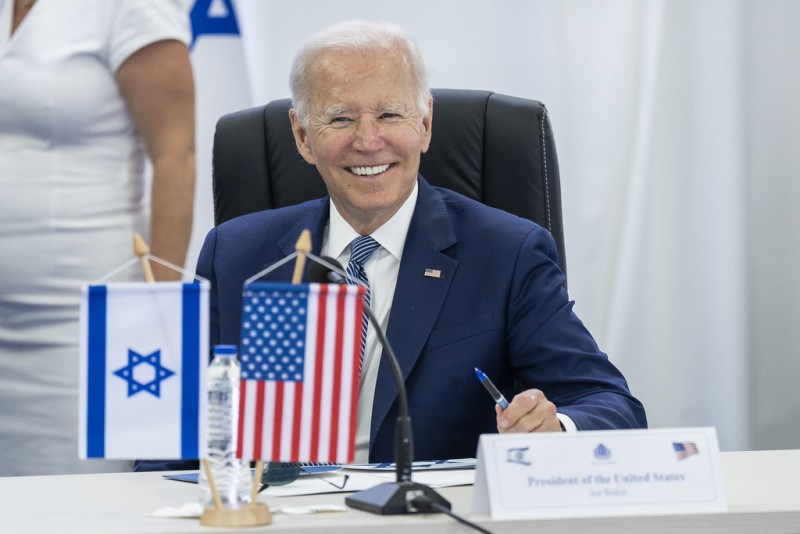


_800_533_90.jpg)


 coasts of bohemia