Shit year, great music.

SONG OF THE YEAR

1 Taylor Swift All Too Well (the 10-minute version, as performed on SNL). You go girl!

2 Japanese Breakfast Paprika

3 The Felice Brothers We Shall Live Again


ALBUMS OF THE YEAR

THE TOP FIVE

1  Arlo Parks Collapsed in Sunbeams

2  Floating Points/Pharoah Sanders/London Symphony Orchestra Promises

3  Japanese Breakfast Jubilee

4  The Felice Brothers From Dreams to Dust

5  Vijay Iyer/Linda May Han Oh/Tyshawn Sorey Uneasy

THE NEXT FIVE (in no particular order)

Steve Earle J.T.

Valerie June The Moon and Stars: Prescriptions for Dreamers

Jaimie Branch Fly or Die live

Mdou Moctar Afrique Victime

Jack Ingram/Miranda Lambert/Jon Randall The Marfa Tapes

OLDER RECORDINGS FIRST RELEASED IN 2021

Mike Cooley/Patterson Hood/Jason Isbell Live at the Shoals Theater

Drive-By Truckers Plan 9 Records July 13, 2006

John Coltrane A Love Supreme: Live in Seattle (1965, featuring a much younger Pharoah Sanders)

Masabumi Kikuchi Hanamichi: The Final Studio Recordings (recorded in 2013)

HONORABLE MENTION

Dry Cleaning New Long Leg

Sons of Kemet Black to the Future

Alfa Mist Bring Backs

John Hiatt Leftover Feelings

Tony Higgins and Mike Peden (compilers) J JazzVolume 3: Deep Modern Jazz from Japan

Theon Cross Intra-1

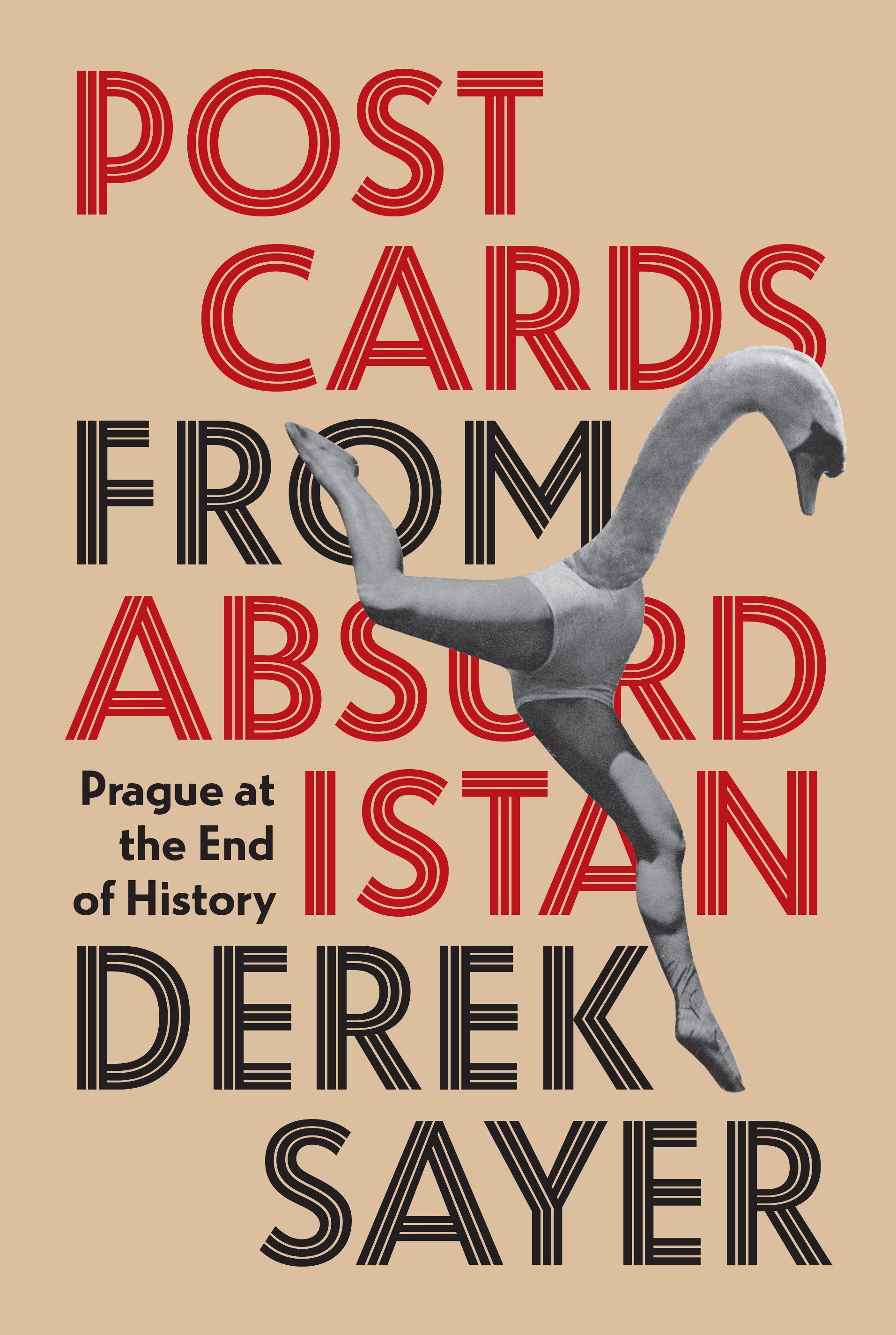
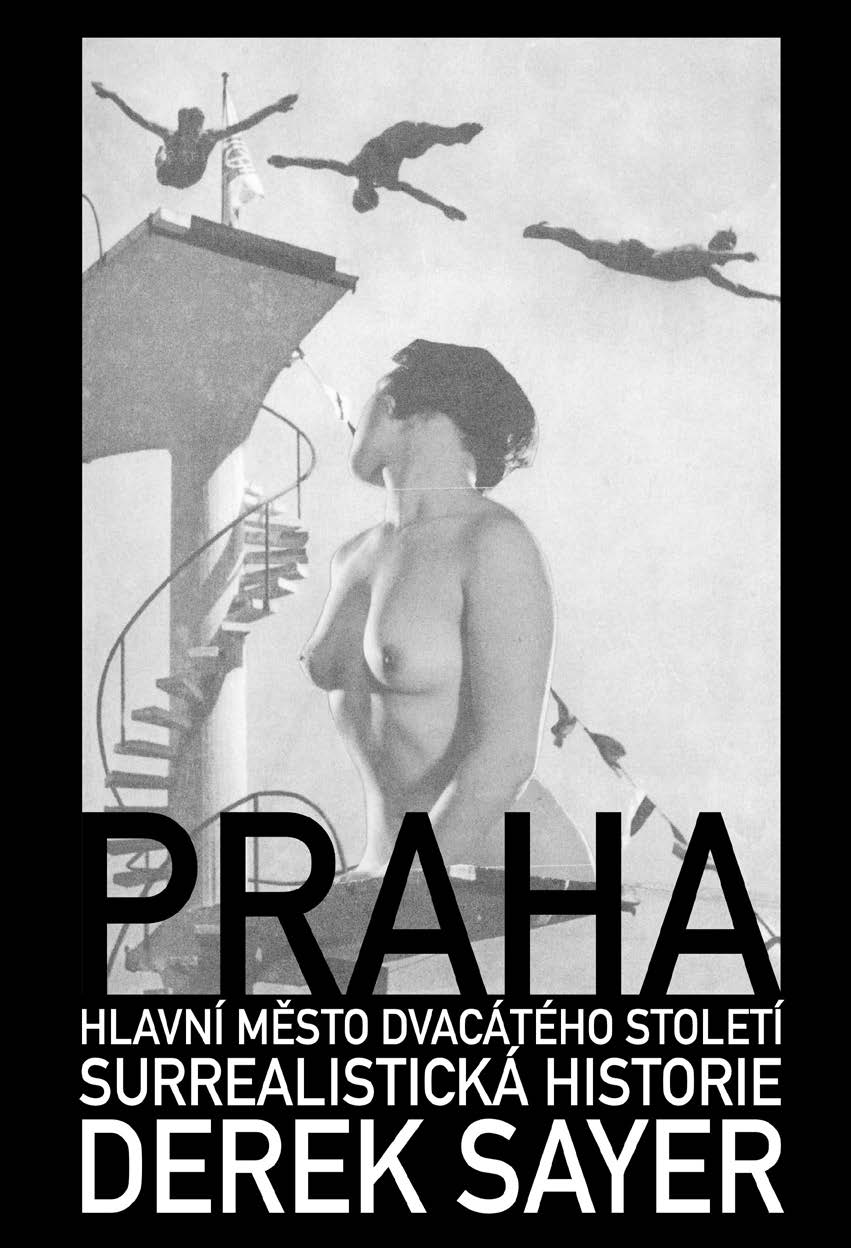
Very pleased to see that I am getting some excellent reviews in the Czech press for the Czech edition of Prague, Capital of the Twentieth Century, which was published earlier this year in Prague by Volvox Globator. Extracts below.


Czech readers are at last getting a translation of the best known book by the internationally acclaimed and award-winning Bohemist, which is an adventurous tour through twentieth-century Prague in all its surreal corners, that lurk at literally every step.

Prague – “a city located at a crossroads of imagined futures that seemed boundless and imagined pasts that eternally threatened to return.” Just because of this it became an inspirational metropolis for a movement so sensitively reactive to the social changes of its time. Now, surrealist Prague is presented in a spectacular monograph, which in more than 500 pages shows the important role of this uncanny city in its interwoven connections, without which surrealism would not have achieved its celebrated forms. And what is still more remarkable – it is not a Czech but a Canadian-British Bohemist who narrates this adventure …

In his spellbinding account of the turbulent art of Prague and the lives of its creators, Sayer does not forget the finest details … (Elizaveta Getta, “Město surrealistických snů,” iLiterature.cz, 1 August 2021)


I dare not estimate the total number of pragensia, i.e. books dedicated to Prague, that have so far been published. Two of them, however, are absolutely fundamental works and rightly recognised throughout the world. These are Magic Prague by the Italian bohemist Angelo Ripellino and Prague in Black and Gold by the now ninety-eight-year-old Prague native and Yale University professor emeritus Peter Demetz. These two admirers of Prague were joined eight years ago by a generation and a half younger Canadian-British bohemist Derek Sayer, with his extraordinary cultural-historical monograph Prague, Capital of the Twentieth Century, subtitled A Surrealist History

I consider Derek Sayer’s book Prague, Capital of the Twentieth Century, with the significant subtitle A Surrealist History, to be an excellent guide to the history that we assume we know. This Canadian has managed to make it special precisely by looking from elsewhere and putting into context what, seen from up close, appears like some impressionist paintings—illegible spots of colour. (Zdenko Pavelka, Meziřádky Zdenko Pavelky, Magazín OKO, 25 May 2021.)


According to the author, the modern history of Prague is “an illustrative lesson in black humor.” Where else can one get a better sense of irony and absurdity, a lasting mistrust of the sense of grand theories and of totalitarian ideologies, and a Rabelaisian delight in how all social and intellectual claims to rationality are indiscriminately subverted by the erotic? But above all, Sayer repeatedly emphasizes that we should understand “modernism” as Vítězslav Nezval prefigured it in his collection Woman in the Plural, namely as something diverse and plural. According to Sayer, it is time to acknowledge that abstract art and the gas chamber are equally authentic expressions of the modern spirit …

The author’s picture of Prague and those times … is dominated by left avantgarde artists … about whose occasional inclination toward the Stalinist Soviet Union the author writes overly generously … Despite this slight bias and minor errors, we can agree with Lenka Bydžovská, who wrote enthusiastically about the original book that Sayer amazes the reader with his “encyclopedic knowledge, his reliable orientation in specialist literature, memoirs and correspondence, in literature and art, but above all with his inventiveness, his ability to illuminate seemingly familiar events, stories and works from a different angle.” (Jan Lukavec, “Surrealistická setkávání v modernistické metropoli” [Surrealist encounters in a modernist metropolis], Deník N, 3 June 2021.)  


A substantial book on art has been published—and yet it doesn’t weigh 5 kg! It is, however, weighty in its genuine passion, content and reach. The main theme is the interwar cultural scene in Prague, with an emphasis on the local surrealist circle, which has gained an international reputation. The book is about this phenomenon, but it is is also full of enjambments, digressions and wider contexts. It is a great read—and yet it is based on a truthful, factual and clearly accurate text. Here we have writing that is extremely learned, informed as well as naturally flowing. It is strange that no one has written a book like this before. Only now has a foreigner taken it up. And that is very good …

Sayer’s book is a great achievement. It is a source of information, education and entertainment. A volume that brings Czech history to life, a text that penetrates its numerous hidden corners, a collection of (un)known stories of which we can generally be proud, for they prove the valuable place of our cultural activities and art in the first half of the 20th century. We belonged to the avant-garde, and Derek Sayer knows how to write about it. (Radan Wagner, “Vynikající kniha nejen o Praze a českém surrealismu” [An exceptional book not only on Prague and Czech Surrealism], ArtReview, 12 June 2001.)


A slightly incorrect and provocative guide to the cultural history of Prague, not only of the last century. It reminds Western readers how significant a role Prague played in the world’s modern culture. For those here, it can help them to perceive in a new, unhackneyed and lively way many of Prague’s realities that we too often take to be self-evident. For Prague flaneurs. (PLAV, iLiteratura.cz, 19 June 2021, where it is among six non-fiction books listed in the site’s traditional annual recommendations for summer reading.)


Eight years after the original, a Czech translation of a monumental guide to Czech modern culture has come out, whose author is Derek Sayer … The author’s aim is not only to rehabilitate Czech surrealism before the global public, but to present Prague as the city of “another” modernity: “This is not ‘modern society’ as generations of western social theorists have habituated us to think of it, but a Kafkan world in which the exhibition may turn into a show trial, the interior mutate into a prison cell, the arcade become a shooting gallery, and the idling flaneur reveal himself to be a secret policeman …”

For him Prague is also the capital city of the twentieth century because “this is a place in which modernist dreams have again and again unraveled; a location in which the masks have sooner or later always come off to reveal the grand narratives of progress for the childish fairy tales they are.” And also a place where “the past is not easy to escape … even when, and perhaps especially when, you are making new worlds.” (Petr Zídek,”Kniha o českém surrealismu aneb monografie světové Prahy” [A book on Czech surrealism or a monograph of global Prague], Právo, 1 July 2021.)


It is beyond debate that Sayer’s work is a monumental achievement in terms of the scope and variety of facts and events covered, and one cannot but bow before it (Veronika Košnarová, “‘Hadrář’ Prahy dvacátého století? Kulturní dějiny jako postmoderní freska” [A “ragpicker” of 20th-century Prague: Cultural History as a Postmodern Fresco],” Soudobé dějiny / CJCH 2023 / 1, pp. 223-33.  Review essay.


None of these reviewers are without their criticisms, and I am grateful where they have pointed out occasional factual mistakes in the text. There are of course errors, mostly minor, in the book (and as Petr Zídek and Veronika Košnarová noted in their reviews, some more were added in the Czech edition that were not picked up by the Volvox Globator editors). Zdenko Pavelka also (justly) alerts readers that:

“Sayer’s knowledge of realities and his ability to connect them in time and space are exceptional. I have to warn, however, that sometimes maybe also with a certain exaggeration or, let us say, poetic license. Perhaps you know that the Kinský Palace on the Old Town Square was the seat of the State German Gymnasium at the end of the 19th century, which Franz Kafka attended as a student. Sayer mentions that just outside the windows of his classroom is the balcony from which Gottwald spoke on 21 February 1948. I’m not sure whether in this case Sayer is not slightly embellishing reality in the Hrabalian manner, because the rooms at the disposal of the gymnasium were supposed to be in the rear of the palace. But even if Kafka did not sit in that balcony room, the well-known story of how in a later retouched photograph of the balcony scene, only the cap of Gottwald’s faithful comrade Vladimir Clementis remains, of course on Gottwald’s head, is certainly close to Kafka, but also to the surrealists.”

Precisely. In this case the error was inadvertent, but call it hasard objectif. The Kinský Palace remains an excellent example of Prague’s surrealities. As to the comparison with Bohumil Hrabal, I take it as a compliment.

For us as for many others 2020 was an extraordinarily difficult and sad year. I didn’t get around to posting my usual Top 10+ Albums of the Year. For the record, here they are.

album of the year

charles lloyd 8: kindred spirits (live from the lobero)


rest of the top ten

in no particular order

bob dylan rough and rowdy ways

asher gemedze dialectic soul

ambrose akinmusire on the tender spot of every calloused moment

sault untitled (pt 1 black is)

sault untitled (pt 2 rise)

taylor swift folklore

nubya garcia source

jerry joseph the beautiful madness

waxahatchee saint cloud


honorable mention

lucinda williams good souls and better angels

makaya mccraven universal beings E + F sides

blue note re-imagined (compilation)

keith jarrett the budapest concert

drive-by truckers the unraveling

The Number One

I had three top albums this year.  I couldn’t make up my mind between them.  It depends a lot on my mood.  They are very different from one another.   But all have superlative songwriting with great lyrics, highly imaginative scoring, and kickass vocal delivery.  It’s great to hear popular singers using the full range and colors of the female voice just like opera singers do.

But if I had to choose just one album, the 2019 award would go to:

FKA Twigs  Magdalene

It’s all for the lovers tryna fuck away the pain.  The future of music in the UK (unlike everything else) seems to be in very capable hands.


The Number Twos

Lana Del Rey  Norman Fucking Rockwell

I’ve been tearing around in my fucking nightgown/ 24-7 Sylvia Plath

Taylor Swift  Lover

‘Cause if I was a man/ Then I’d be the man.  (No apologies.  I loved Abba too.)


The rest of the top ten

in alphabetical order

The Comet Is Coming  Trust in the Lifeforce of the Deep Mystery

Another incarnation of the great Shabaka Hutchings, on Coltrane’s old Impulse label.

Theon Cross  Fyah

Yes, that’s a fucking tuba.  With Moses Boyd on drums and Nubya Garcia on tenor sax.  Inimitable 21st-century jazz, courtesy of the London diaspora.

Christone “Kingfish” Ingram  Kingfish

Straight outta Clarksdale, Mississippi, channeling the ghost of Robert Johnson.  Wow.

Joshua Redman Quartet  Come What May

Shouldn’t like this (I generally prefer full-on honk-squeak sax) but I do.  Saw this quartet in Calgary this year, masters of their craft.  Cerebral, yes, not a note out of place but there are times it’s just so pleasurable to put this on the turntable and relax.  Great cover too.

Caroline Shaw/Attaca Quartet  Orange

Sublime.  We have “Mozart in the Jungle” to thank for introducing us to Caroline Shaw.

Kate Tempest  The Book of Traps and Lessons

A voice poor benighted Britain badly needs today.  And not just Britain.  Maybe y’all should listen.

North Mississippi All Stars  Up and Rolling

Jim Dickinson’s boys Luther and Cody have been great in various iterations of this band for 20 years.  In this version they are joined by Sharisse Norman and Shardé Thomas on vocals for some down and dirty Mississippi country blues.  If there was an award for quality of sleevenotes, the beautiful booklet in here would win hands down too.


Best previously recorded albums first released in 2019

(the OK boomer section)

Leonard Cohen  Thanks for the Dance

Spare, sexy, graceful.  What a way to bow out.  Thank you too, Mr Cohen.

John Coltrane  Blue World

The great quartet, a little before they recorded A Love Supreme.

Bob Dylan  The Rolling Thunder Revue: The Bootleg Series Vol. 14 Live 1975

And a very good time was had by all.  Performances for the ages.

Bob Dylan (feat. Johnny Cash)  Travelin’ Thru: The Bootleg Series Vol. 15, 1967-1969

I suspect of greater historical than musical value, but some fun rockabilly and boom-chicka-boom from Bobby and Johnny back in the day.

Townes Van Zandt  Sky Blue

Townes Van Zandt is the best songwriter in the whole world, and I’ll stand on Bob Dylan’s coffee table in my cowboy boots and say that (Steve Earle).


honorable mentions

 a handful of excellent albums

that in other years would likely have made it into my top ten but didn’t because this year’s top ten were so damn good

Ezra Collective  You Can’t Steal My Joy

Michael Kiwanuka  Kiwanuka

Kokoroko  Kokoroko (EP)

Sturgill Simpson  Sound and Fury

Sharon Van Etten  Remind Me Tomorrow

“Seventeen” is my song of the year.


And no, I’m afraid I haven’t yet listened to the 2019 albums by Nick Cave, Solange, or Brittany Howard.  I should.  Maybe next year.

This set of texts and images was part of an exhibition titled EX SITU: (Un)making Space out of Place that led to a photobook of the same title.  The exhibition was convened and the photobook edited by Craig Campbell and Yoke-Sum Wong.  

EX SITU was part of a series of international workshops/events held over the last five years in the US, UK, Germany, and Greece involving art and media practitioners, academics, and research students from different disciplinary backgrounds. These meetings have led to an anthology of essays, Feelings of Structure: Explorations in Affect (McGill-Queens University Press) co-edited by Karen Engle and Yoke-Sum Wong.

All participants in the EX SITU exhibition/photobook were asked to couple up to six images with the same number of texts, each of no more than 100 words, on any topic of their choice.  I shot the photographs in Athens, Greece in 2016.  The original photobook layout with text and image side by side can be downloaded here.

I found the form an interesting one to work with.  My intention was to set up layers of open-ended resonance and signification within a limited group of texts and images, rather than have the images simply illustrate the texts or the texts caption the images.  I wanted to convey something of what Milan Kundera calls “the density of unexpected encounters.”

I am posting this work now in eager anticipation of the latest in this series of events, the  STRUCTURES OF ANTICIPATION research creation symposium at the University of Windsor, Ontario.


1  athens_bank

athens1 bank

Greece’s government has said the country is “turning a page” after Eurozone member states reached an agreement on the final elements of a plan to make its massive debt pile more manageable.

The government spokesman, Dimitris Tzanakopoulos, hailed “a historic decision” that meant “the Greek people can smile again.”

The government in Athens will have to stick to austerity measures and reforms, including high budget surpluses, for more than 40 years. Adherence will be monitored quarterly.

Guardian, June 22, 2018


2  athens_bey

athens2 beyonce

The latest video by the Carters, a.k.a. Beyoncé and Jay-Z, is a treat. Filmed in the Louvre, “Apesh-t” begins with close-ups of various old master paintings. A bell tolls atmospherically.

And then, out of nowhere, comes a moment of pure swagger.

Beyoncé and Jay-Z, sumptuously dressed, stare out diffidently, like a royal couple posing for a baroque marriage portrait. Behind them, out of focus, is the Mona Lisa. The gallery (which was once, of course, a royal palace) is otherwise empty.

Washington Post, June 19, 2018


3  athens_aesthetics

athens3 aesthetics

Note: the word in Greek letters in the top left of the photo reads: “AESTHETICS.”

Origin Late 18th century (in the sense ‘relating to perception by the senses’): from Greek aisthētikos, from aisthēta ‘perceptible things’, from aisthesthai ‘perceive.’ The sense ‘concerned with beauty’ was coined in German in the mid-18th century and adopted into English in the early 19th century, but its use was controversial until much later in the century.

Oxford Dictionaries


4  athens_caryatids

athens4 caryatids

45, Asomaton Str.

The residence with the caryatids in Kerameikos has been cherished like no other not only by the Athenians, but also by the city’s visitors … When the French photojournalist Henri Cartier-Bresson visited Athens in the 50s, he “captured” two spry old ladies dressed in black, walking under the shadow of the lissome and proud silhouettes of the caryatids. The contrast of the black and white figures, of motion and stillness, of decay and eternal beauty, created a powerful picture, one of Bresson’s most representative.

Tina Kontogiannopoulo, Streets of Athens blog


5  athens_magritte

athens5 magritte

The first version, that of 1926 I believe: a carefully drawn pipe, and underneath it (handwritten in a steady, painstaking, artificial script, a script from the convent, like that found heading the notebooks of schoolboys, or on a blackboard after an object lesson!), this note: “This is not a pipe.”

The other version—the last, I assume—can be found in Aube à l’Antipodes. The same pipe, same statement, same handwriting. But instead of being juxtaposed in a neutral, limitless, unspecified space, the text and the figure are set within a frame.

Michel Foucault, This Is Not a Pipe


6  athens_museum

athens6 museum

The definition of a museum has evolved, in line with developments in society. Since its creation in 1946, ICOM updates this definition in accordance with the realities of the global museum community.

According to the ICOM Statutes, adopted by the 22nd General Assembly in Vienna, Austria on August 24th, 2007:

“A museum is a non-profit, permanent institution in the service of society and its development, open to the public, which acquires, conserves, researches, communicates and exhibits the tangible and intangible heritage of humanity and its environment for the purposes of education, study and enjoyment.”

ICOM website


yomiuri shimbun

I am really pleased that my book Prague, Capital of the Twentieth Century: A Surrealist History was published in Japanese translation in September 2018 by the Tokyo publisher Hakusuisha.

The book has received what I am told are excellent reviews in several leading Japanese newspapers and magazines, including Yomiuri Shimbun (28 December 2018), Asahi-Shimbun  (“The City of Kafka and Čapek,” 6 November 2018 book page: “a great book”), Mainichi Shimbun (by Shigeru Kashima, 27 January 2019, reproduced in All-Reviews, 6 March 2019: “It is a must-read document for understanding the Czech avant-garde”), and Repre (no. 35, 2019, by Haraka Hawakame: “With a focus on Prague, the Czech capital, this book crosses literature, art, music, cinema, theatre, architecture and all cultural areas starting from the surrealism movement and draws nearly 600 pages of European cultural history in the first half of the 20th century.  It is a great book”).

I have also been told that Tosho Shimbun (the reviewer’s weekly) “recommended the book as one of the most impressive books for 2018.”

I am extremely fortunate, not to say honored, to have a leading Japanese expert on the Czech avant-garde, Kenichi Abe, as my translator, assisted by Kawakami Haruka and Atsushi Miyazaki.  An Associate Professor at the Graduate School of Humanities and Sociology at the University of Tokyo, Dr Abe has translated (among many other Czech works) Bohumil Hrabal’s I Served the King of England into Japanese. Translating Hrabal must be the pinnacle of the translator’s art!  Kenichi Abe’s most recent translation, appearing this month, is of Bianca Bellová’s Jezero (The Lake). His own book Karel Teige: Poezii no tankyusha (Karel Teige: the surrealist who pursued the poiesis, 2018) is a first attempt to map the Prague interwar avant-garde in Japanese.

The publishers have done a superb job of producing this Japanese edition, with outstanding book design, many illustrations (some not in the original English edition) and a stunning cover by Junpei Niki that montages some of the book’s key motifs.

Many thanks to all!


japanese ed cover

japanese brochureabe teige.jpg

Ivan Margolius, author of “Reflections of Prague: Journeys through the 20th Century” and “Prague: A Guide to 20th Century Architecture”
“There is no visitor to Prague who is not enchanted by this city.  Prague has everything: the ancient and the modern, the history and the culture, the music and the tranquility, the contradictions and the harmony.  Derek Sayer’s excellent book captures all of these facets of Prague to make any visit even more worthwhile.”
Jindrich Toman, University of Michigan
“Meticulous, imaginative, unconventional—all the way from old palaces to Little Hanoi.”


prague-22

I have long wanted to write a non-academic book on Prague that would both provide a readable short history of the city and act as a guide to visitors who might be interested in more than just the standard tourist trail.  When I was approached by Reaktion Books to write on Prague for their excellent Cityscopes series, I jumped at the opportunity.   This is the result.  Out this month.  It was fun to write, and I hope it serves its purpose.


Publisher’s description

Thirty years ago, Prague was a closed book to most travelers.  Today, it is Europe’s fifth-most-visited city, surpassed only by London, Paris, Istanbul, and Rome.  With a stunning natural setting on the Vltava river and featuring a spectacular architectural potpourri of everything from Romanesque rotundas to gothic towers, Renaissance palaces, Baroque churches, art nouveau cafés, and cubist apartment buildings, Prague may well be Europe’s most beautiful capital city.

But behind this beauty lies a turbulent and often violent history, and in this book, Derek Sayer explores both.  Located at the uneasy center of the continent, Prague has been a crossroads of cultures for more than a millennium.  From the religious wars of the middle ages and the nationalist struggles of the nineteenth century to the modern conflicts of fascism, communism, and democracy, Prague’s history is the history of the forces that have shaped Europe.

Sayer also goes beyond the complexities of Prague’s colorful past: his expert, very readable, and exquisitely illustrated guide helps us to see what Prague is today.  He not only provides listings of what to see, hear, and do and where to eat, drink, and shop, but also offers deep personal reflection on the sides of Prague tourists seldom see, from a model interwar modernist villa colony to Europe’s biggest Vietnamese market.

Hardback, 280 pages, 105 illustrations, 71 in color.


Availability
Published by Reaktion Books (UK) and Chicago University Press (in North America).
Available from amazon.co.uk (£12.45) and amazon.com ($22.00).
Preview (including Table of Contents and Prologue) here.


Is there some law that says the worse it gets in the world out there, the better it gets in the arts?  It was an outstanding year for music.  Highlights for me were discovering the incredible jazz+++ scene in diasporic London, as eloquent a fuck you to the white Anglo mean-mindedness of Brexit as I can imagine, and slowly excavating the assembled talents of the West Coast Get Down—which turns out to be much more than just (the phenomenal) Kamasi Washington.  It has also been a spectacular year for that peculiar category comprising stuff recorded way back when but only released for the first time this year, meaning it is not a reissue.  Most years I combine both in my top 10, but this year was so rich overall that I’ve made separate lists.


#1 Record of the Year

Janelle Monáe  Dirty Computer

The range of her imagination on this record is astonishing.  Not a weak track over 4 sides.  My favorite LP side of the year (A 2) has three very different varieties of joy: “Screwed” (featuring Zoë Kravitz), “Django Jane” (just Janelle, laying down the most kickass rap I’ve heard in 2018), “Pink” (featuring Grimes).  Warning: the download that comes with the LP beeps out all the fuck words.


The rest of the Top Ten (in alphabetical order)

Ambrose Akinmusire     Origami Harvest

The record company blurb sums it up nicely: “a surprisingly fluid study in contrasts that pits contemporary classical wilding against deconstructed hip-hop, with bursts of left-field jazz, funk, spoken word, and soul with help from the Mivos Quartet and art-rap expatriate Kool A.D. (Das Racist), along with pianist Sam Harris, drummer Marcus Gilmore, and saxophonist Walter Smith III.”  No, really, it’s a stunner.  Reminds me of the best of Uri Caine (like his Mahler recordings), which is high praise indeed.


Moses Boyd Exodus  Displaced Diaspora

Recorded in 2015, i.e., just before the contemporary London jazz scene exploded internationally, featuring Theon Cross (tuba), Nubya Garcia (bass clarinet), Nathaniel Cross (trombone), and Zara McFarlane (vocals) in addition to Moses Boyd on drums.  The Bandcamp website tags it under experimental hip hop beats jazz space music London, which seems about right.


Brandi Carlile  The Joke 

The songwriting is uniformly strong (try “The Mother”) but it’s that huge, soaring, effortless voice.  You can get lost in it.  Usually only operatic sopranos thrill me like that.


Alejandro Escovedo  The Crossing

I don’t usually go for concept albums, because usually the concept overwhelms the album.  This one is an exception.  The concept is the immigrant experience.  Escovedo seems hardly known outside Texas, where he is somewhere between a legend and a god.  A pity.  This album has huge musical variety and great emotional depth.


Nubya Garcia  When We Are (EP)

We first heard Nubya on We Out Here (see below) where she plays on five tracks, and were lucky enough to see her with her own band (Nubya on tenor sax, Joe Armon-Jones on keyboards, Daniel Casimir on double bass, Femi Coleoso on drums) at Ronnie Scott’s in London (where we also saw Ambrose Akinmusire).  She can honk squeak with the best of them, but its the unfailing warmth and luminosity of her tone that always gets to me.


Pistol Annies   Interstate Gospel

A top ten albums from me without a country offering is unthinkable but it was getting to look that way (see disappointments of the year, below) until this arrived through the mail this week.  Thank you Miranda Lambert, Ashley Monroe, and Angeleena Presley.


Ryan Porter  The Optimist

Recorded in Kamasi Washington’s parents’ basement in 2008-9, this triple album brings together West Coast Get Down veterans Ryan Porter (trombone), Kamasi Washington (tenor saxophone), Miles Mosley (upright bass), Cameron Graves (piano, fender rhodes), Tony Austin (drums), Jumaane Smith (trumpet), and more.  What Kamasi was before he Busby Berkeleyed it with cinematic strings and those god-awful choirs.  Great jazz.


Sons of Kemet  Your Queen Is a Reptile

Best of British for an era when the geriatric white majority is settling for blue passports to nowhere.  An angry album, and rightly so (read the sleeve notes).  Shabaka Hutchins (tenor sax), Theon Cross (tuba), and Tom Skinner + Seb Rochfort or Eddie Hicks + Moses Boyd on drums depending on the track.  Nubya Garcia on tenor sax and Congo Natty and Joshua Idehen (rap) guest.  Heady, polyrhythmic, driving stuff.  Saw them at Vancouver Jazz Festival, a riveting performance.  Luci hates it.


Various artists  We Out Here

The Brownswood compilation double-album that introduced me to the London jazz+++ scene.   If it wasn’t for Janelle Monáe this would be my undisputed #1.  These are the tracks:

A1. Maisha – Inside The Acorn
A2. Ezra Collective – Pure Shade
B1. Moses Boyd – The Balance
B2. Theon Cross – Brockley
C1. Nubya Garcia – Once
C2. Shabaka Hutchings – Black Skin, Black Masks
C3. Triforce – Walls
D1. Joe Armon-Jones – Go See
D2. Kokoroko – Abusey Junction

Nuff said.  Here is the Brownswood documentary that went with it.


Best five older recordings first issued in 2018 

#1  Miles Davis and John Coltrane  The Final Tour (The Bootleg Series, vol. 6)

Trane is incandescent, especially on CD 4.  Luci would like everyone to know that this is her favorite album of 2018 and that most of that London jazz+++ stuff is *very difficult* to doze off to.

and the rest—

Bob Dylan  More Blood, More Tracks

Charles Mingus  Jazz in Detroit / Strata Concert Gallery / 46 Selden

Thelonius Monk  Mønk

John Coltrane  Both Directions at Once: The Lost Album


2018 Honorable Mentions

In most other years any of these would make it into my top ten list, but it’s 2018 so they didn’t.

Boygenius (Julien Baker, Phoebe Bridgers, and Lucy Dacus)  Boygenius (EP)

Lucy Dacus  Historian

Charles Lloyd and the Marvels + Lucinda Williams  Vanished Gardens

Maisha  There Is a Place

Mitski  Be the Cowboy


Most Played Album This Year

Nubya Garcia Nubya’s 5.  Recorded in 2017, second vinyl pressing 2018.  Her first album as leader, backed by Joe Armon-Jones / Piano, Moses Boyd / Drums, Daniel Casimir / Bass, Femi Koloeso / Drums, Sheila Maurice-Grey / Trumpet, Theon Cross / Tuba


Disappointment of the Year

A close-run thing between Kacey Musgraves Golden Hour (very clever but left me cold), Joe Armon-Jones Starting Today (love his work but somehow this offering never gelled as an album), and Kamasi Washington Heaven and Earth (too much concept, way too much choir—though as ever with him some great blowing).