It has been a strange year, when, as I reached the ripe old age of 74, whatever illusions I still harbored about “western civilization” died on the killing fields of Gaza. Perhaps that is why I was more drawn to meditative solo piano or quiet jazz trios and quartets this year, with my song of the year being Caroline Shaw and So Percussion’s haunting deconstruction of Schubert’s beautiful An die Musik. Adam Sliwinski of So Percussion likens it in his sleevenotes to “the ghost of a structure, like a ruined building or an ancient underwater city.” Seems apt for the times.

That said, who can resist the joyfulness of Ezra Collective or the Sun Ra Arkestra—led by the irrepressible Marshall Allen, still going strong at 100? Or the sublime lyricism of Charles Lloyd, who is just hitting his prime at 86?

Do not go gentle into that good night.

PROBABLY NOT JAZZ TOP 10

Album of the year

Hurray for the Riff Raff The Past Is Still Alive

The Past Is Still Alive - Album by Hurray For The Riff Raff | Spotify

Finalists 

Adrianne Lenker Bright Future

English Teacher This Could be Texas

Caroline Shaw & So Percussion Rectangles and Circumstances

King Hannah Big Swimmer

Mdou Moctar Funeral for Justice

Jason Isbell Live at the Ryman vol 2

T-Bone Burnett The Other Side

Kim Deal Nobody Loves You More

Waxahatchee Tiger’s Blood


MAYBE JAZZ TOP 10

Album of the year

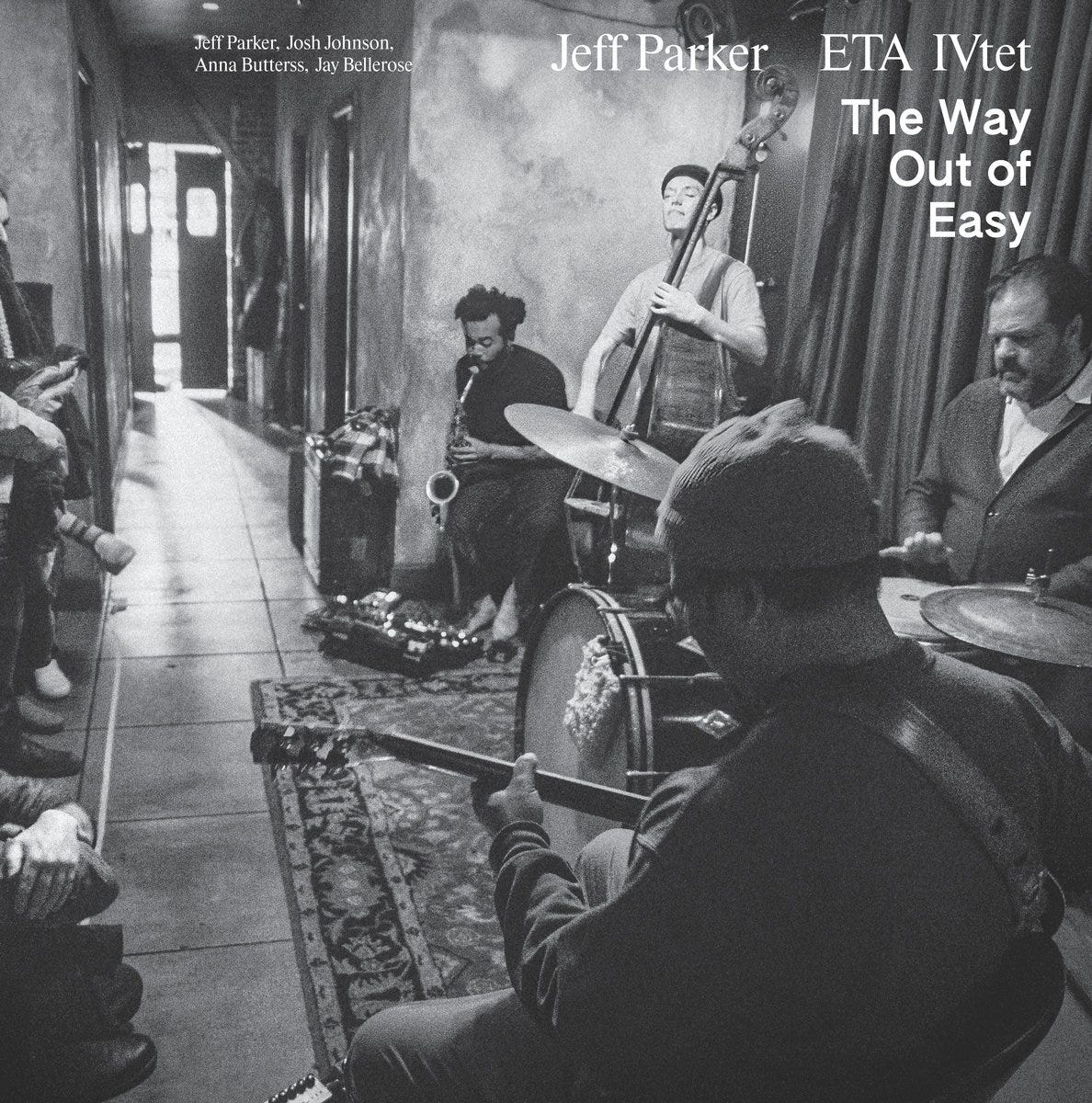
Jeff Parker & the EVA IVtet The Way Out of Easy

The Way Out of Easy | Jeff Parker ETA IVtet | International Anthem

Finalists 

Wadada Leo Smith and Amina Claudine Myers Central Park’s Mosaics of Reservoir, Lake, Paths and Gardens

Nala Sinephro Endlessness

Tyshawn Sorey Trio The Susceptible Now

Nubya Garcia Odyssey

Ezra Collective Dance, No One’s Watching

Vijay Iyer, Linda May Han Oh, Tyshawn Sorey Compassion

Walter Smith III Three of Us Are from Houston and Reuben Isn’t

Sun Ra Arkestra Lights on a Satellite

Charles Lloyd The Sky Will Still Be There Tomorrow


REISSUES/FIRST ISSUES OF OLDER RECORDINGS

Jimmie Dale and the Flatlanders All American Music

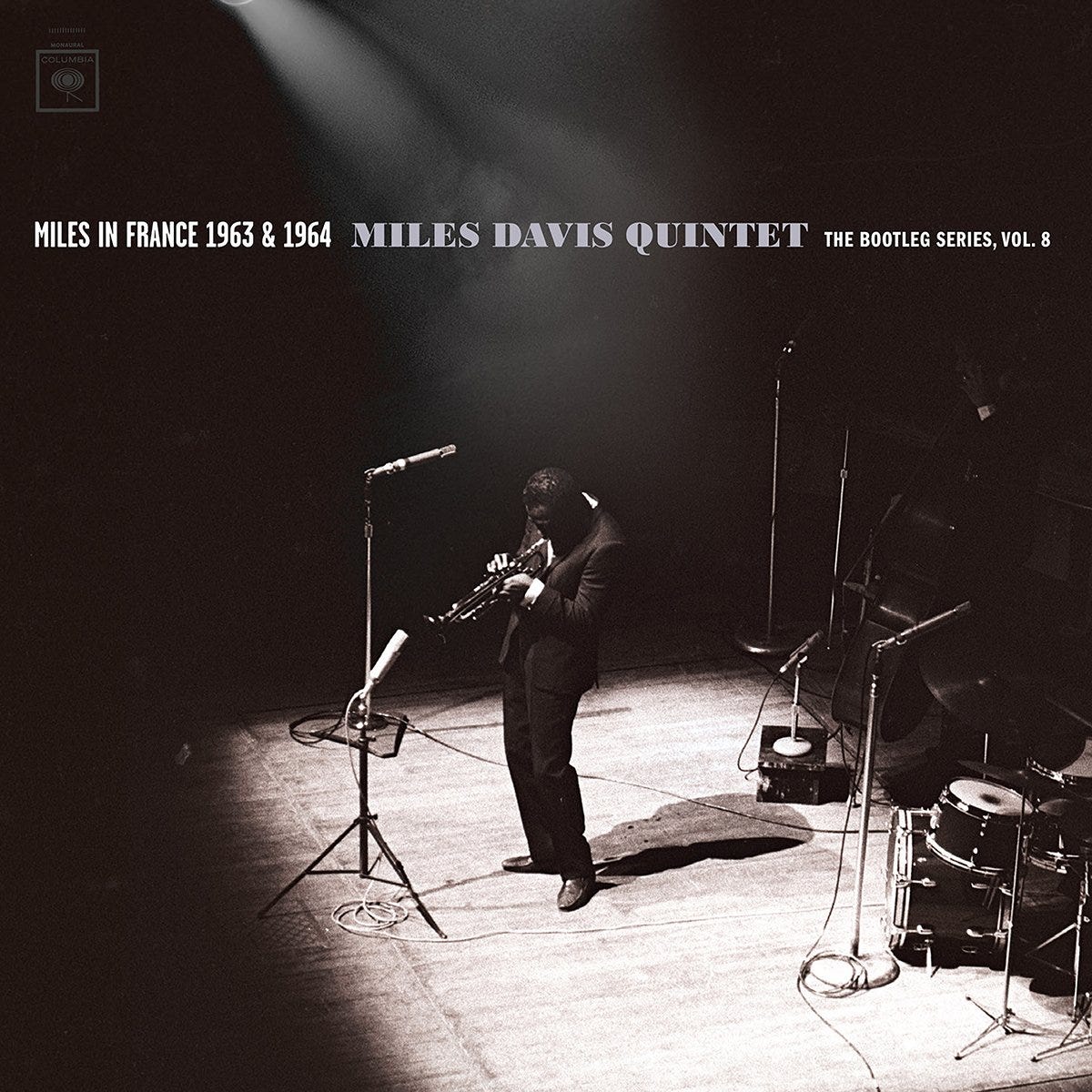
Miles Davis in France 1963 & 1964

Keith Jarrett, Paul Motian, Gary Peacock The Old Country

Miles in France - Miles Davis Quintet 1963/64: The Bootleg Series, Vol. 8 | Miles  Davis Official Site

I ALSO LIKED

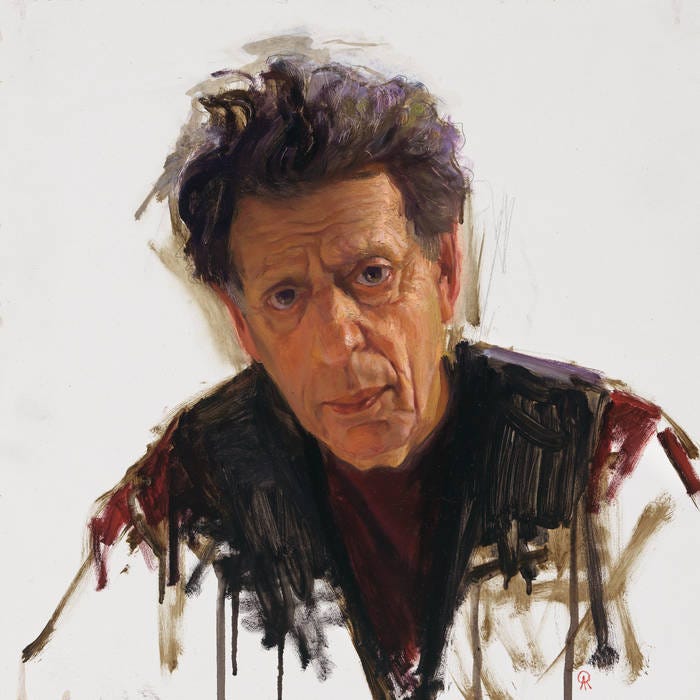
Philip Glass Solo (2024)

Jon Batiste Beethoven Blues

Ryuichi Sakamoto Opus

Ambrose Akenmusire Owl Song

Kamasi Washington Fearless Movement

Philip Glass Solo | Philip Glass

SONG OF THE YEAR

Caroline Shaw/So Percussion To Music (An die Musik, Schubert)

Rectangles and Circumstance | Caroline Shaw, Sō Percussion | Sō Percussion

Finalists

Kamasi Washington Prologue

Kim Deal Coast

Hurray for the Riff Raff Buffalo

Ezra Collective feat. Yazmin Lacey God Gave Me Feet for Dancing

English Teacher Albert Road

This is the submitted version of an article accepted for publication in Sociology Lens (DOI: 10.1111/johs.12490)

Abstract   Submitting an invited text for the Anthropology and Humanism festschrift “Hundreds for Katie,” I experienced cognitive dissonance between the objectives of ethnographic writing championed by Kathleen Stewart and the journal’s submission requirements.  The insistence that every submission must contain keywords and an abstract signifies deeper issues with academic writing.  Specific forms of writing enforce the disciplinary norms of Thomas Kuhn’s “normal science.”  To “write difference” we may need to write differently.  The paper draws inter alia on works by Kathleen Stewart, Lauren Berlant, Ludwig Wittgenstein, Peter Winch, Walter Benjamin, James Clifford, Georges Bataille, and members of the Mass–Observation group. 


The Tyranny of the Abstract

In memory of Lesley Stern

Form follows function—that has been misunderstood. Form and function should be one, joined in a spiritual union.

Frank Lloyd Wright[1]

1

I was recently invited to participate in a project to honor the anthropologist Kathleen Stewart’s retirement from the University of Texas at Austin, titled “100s for Katie.”  Though I was doubtful about what I could offer—this would be my first attempt at writing a “hundred”—I welcomed the chance to contribute.  Katie is a friend whose work I have deeply admired since I first encountered A Space on the Side of the Road (1996), her ethnography of “an ‘other’ America that survives precariously among the ruins of the West Virginia coal camps and ‘hollers’ … as an excluded subtext to the American narrative of capitalism, modernization, materialism, and democracy.”[2]   This was followed by Ordinary Affects (2007) and her jointly authored volume with Lauren Berlant, The Hundreds (2019).  Running through all Katie’s writing is an abiding suspicion of what I call the violence of abstraction.  I borrowed this concept from Karl Marx,[3] but it is a vice of which the intellectual left is far from innocent.   “This book is set in a United States caught in a present that began some time ago,” Katie observes at the beginning of Ordinary Affects:

But it suggests that the terms neoliberalism, advanced capitalism, and globalization that index this emergent present, and the five or seven or ten characteristics used to summarize and define it in shorthand, do not in themselves begin to describe the situation we find ourselves in.  The notion of a totalized system, of which everything is always already somehow a part, is not helpful (to say the least) in the effort to approach a weighted and reeling present.  This is not to say that the forces these systems try to name are not real and literally pressing.  On the contrary, I am trying to bring them into view as a scene of immanent force, rather than leave them looking like dead effects imposed on an innocent world.[4]

            Throughout her career Katie has pushed the boundaries of academic discourse, exploring forms of writing that in her view are better attuned to grasping and expressing excluded subtexts (and marginalized subjects) than the research article or scholarly monograph.   I emphasize forms of writing.  What are we writing about, and how is it best captured?   In Katie’s own words, “These works are experiments that write from the intensities in things, asking what potential modes of knowing, relating or attending to things are already being enacted and imagined in ordinary ways of living.”  She seeks to give expression to “what might happen, what things in process might become, what something might be related to, a pattern” in everyday worldings.[5]  Her starting points lie in “the forces that come into view as habit or shock, resonance or impact.  Something throws itself together in a moment as an event and a sensation; something both animated and habitable.”[6]  It is this something—something real, tangible, out there, in here, even if it is as yet inchoate and unnamed—that she strives to find ways of researching and articulating.  This requires immersion rather than distance.  “Ethnographic writing is ‘writing difference‘ through a process of participant observation—an attention to scenes you are somehow ‘in,'” Katie tells her students, whether these be “a group, an identity, a practice like running or caring for someone, or a brief situation like riding a bus.” “In writing culture, we are learning to describe with precision how a range of things impact lives.  Write through details!” she urges, for “as a method of writing, ethnography composes with what’s already composed.”[7]  

            “Hundreds” are an experimental form of writing first developed by Emily Bernard and the 100-Word Collective at the University of Vermont in 2009, which Circe Sturm (who was a member of Bernard’s original group) introduced to colleagues in Austin in 2012 and applied to ethnographic writing.  “In Emily Bernard’s approach,” explains Kim Tallbear, “a writer launches their piece from an idea, phrase, single word, or anything that resonates or sparks from the previous piece. There are no limitations for form, style, or subject.”[8]  Sturm suggests that “One of the reasons so many of us are drawn to this abbreviated format is that it allows us to dialogue with other writers, even when our lives are extremely busy. We also feel freer to experiment with content, form and voice, and to risk vulnerability in our writing …  Some ideas catch fire and never lose their burn. This seems to be one of them.”[9]  Sturm, Stewart, and other members of the Austin Public Feelings group “brought [the 100s] to the concept of the new ordinary we’d been developing, and The Hundreds project took off.”  

            Berlant and Stewart provide the briefest of possible introductions (titled “Preludic”) to The Hundreds, leaving plenty space for the texts that follow to engage the reader as they may:

The constraint of the book is that our poems (makings) are exercises in following out the impact of things(words, thoughts, people, objects, ideas, worlds) in hundred-word units or units of hundred multiples.  Honoring the contingency of the experiment, there is no introduction up front but distributed commentary throughout the book, plus reflection in many spots about how the writing attempts to get at a scene or process a hook.  We don’t want to say much in advance about what kind of event of reading or encounter the book can become.  We tried not to provide even this preliminary.[10]

2

Each contributor to “100s for Katie” was invited to write one hundred words on a topic of their choice, to be published in a special section in the American Anthropological Association (AAA) journal, Anthropology and Humanism.  My contribution—in its entirety—read as follows:

Hundreds and Hundreds

Columbine, West Nickel Mines School, Virginia Tech, Northern Illinois U, Collier Township women’s aerobics class, U Alabama Huntsville, Chardon HS, Oikos U, Oak Creek Sikh temple, Sandy Hook ES, Isla Vista sorority house, Marysville Pilchuck HS, Emanuel African Methodist Episcopal Church, Umpqua Community College, Pulse nightclub Orlando, Sutherland Springs First Baptist Church, Stoneman Douglas HS, Santa Fe HS, Tree of Life synagogue, Borderline Bar Thousand Oaks, UNC Charlotte, Walmart El Paso, Texas A & M Greensville, Atlanta spas, Oxford HS, Top supermarket Buffalo, Robb ES Uvalde, U Virginia Charlottesville, Arts HS St Louis, Club Q Colorado Springs, Michigan State U …[11]      

Anyone with a passing acquaintance with recent American history will immediately recognize at least some of these names as the locations of mass shootings.[12]  They register forces that “come into view as habit or shock, resonance or impact”—or in this case all of the above—without my having to say another word.

            Having made it through peer review—a standard academic procedure that felt distinctly out of place in this context—my text was accepted without revision.  But when it came to proof stage, I was instructed to: “Add your Summary (up to 200 words) and up to five keywords below your address.  Keywords, or something very close to them, should also appear in the Abstract itself to maximize searchability. In this case the Summary can be 1-2 sentences, e.g., ‘In this ‘hundreds’ in honor of Kathleen Stewart, I …'”  This instruction was part of a set of Author Guidelines to which all contributions to Anthropology and Humanism (apart from poetry, which had its own separate guidelines) had to conform, irrespective of their subject matter.  Among other things, these guidelines mandated that authors use American spellings, follow the Chicago Manual of Style, and leave one rather than two spaces after a period.   It had apparently not crossed the minds of the editors of an ethnography journal that if, as Peter Winch once put it, “our language and our social relations are just two different sides of the same coin. To give an account of the meaning of a word is to describe how it is used; and to describe how it is used is to describe the social intercourse into which it enters,”[13] then “to describe with precision how a range of things impact lives” may sometimes require deviation from the Chicago Manual of Style.  A rereading of Clifford Geertz’s classic essay on thick description, published fifty years ago, might not come amiss in this context.[14]

            My particular concern here is with the demand to provide Keywords and Abstracts, which Anthropology and Humanism‘s guidelines treat as a merely formal, technical issue, a matter of making the text visible to internet search engines.  It is also, I learned later, a result of major commercial publishers standardizing submission and typesetting templates across their journals in the service of automating (and offshoring) their production processes. Unfortunately for the social sciences and humanities, these templates more often than not reflect the priorities of the science journals that form the largest portion of the big journal publishers’ stables.   But whatever technical and financial reasons journals may have for mandating Abstracts and Keywords, these elements cannot but function as paratexts that influence what kind of event of reading or encounter the text can become.  They epitomize the kind of prescriptive framing Lauren and Katie’s “Preludic” takes pains to avoid.  Gérard Genette, who coined the concept, describes a paratext as “a threshold, or—a word Borges used apropos of a preface—a ‘vestibule’ that offers the world at large the possibility of stepping inside or turning back.  It is an ‘undefined zone’ between the inside and the outside, a zone without any hard and fast boundary on either the inward side (turned toward the text) or the outward side (turned toward the world’s discourse about the text), an edge, or as Philippe Lejeune put it, ‘a fringe of the printed text which in reality controls one’s whole reading of the text.'”[15]  

            As a longtime coeditor of another academic journal,[16] I am well aware that in today’s precarious funding environments metrics matter.  Keywords are clickbait, comparable to headlines for news media.  I duly provided my five: America, hate, homophobia, misogyny, racism.  They were not inaccurate; my text did bear on all these topics.  How useful they are to readers or researchers, given their abstraction, is another issue.  I deliberately did not use the generic term “mass shootings,” which might seem the most obvious classification under which to file my piece, for reasons I shall explain more fully later.  But I baulked at the absurdity of writing an Abstract or Summary of “1-2 sentences,” let alone of “up to 200 words,” to frame a 100-word text.  This was not just a question of proportion.  Like Katie and Lauren, I was loath to say anything in advance about what kind of event of reading or encounter my text could become.  I did not want to circumscribe my potential readership or restrict the ways in which the text might be read by too narrow a prior summary of what my 100 words were “about.”  My aim was to make people think—to open up what Katie calls “a contact zone for analysis”[17]—rather than telling them what to think.  From this point of view, any summary would be too narrow.  I concur with Roland Barthes that “a text is not a line of words releasing a single ‘theological’ meaning (the ‘message’ of the Author-God) but a multi-dimensional space in which a variety of writings, none of them original, blend and clash.”[18]  No text can ever be closed, definitively pinned down in one interpretation—even its author’s interpretation.  Especially, perhaps, its author’s interpretation.  I wanted my words—words I did not invent, that came heavily freighted with cultural resonances of their own—to speak for themselves, through whatever they evoked for each individual reader.  As a poem might.  

            I returned the proof without an Abstract, hoping it wouldn’t be missed.  A couple days later the editor reminded me that I needed to provide one, within seven days please.  Not wanting to get into an argument in which we would likely just talk past one another—after all it seemed such a trifling quibble, a storm in an academic teacup—I gave in.  Keeping in mind George Bataille’s dictum that “A dictionary would begin starting from the moment when it no longer provided the meanings of words but their jobs,”[19] I did not attempt to summarize what my text says, so much as to inform readers what it tries to do.  This was therefore not, strictly speaking, an Abstract.  It read: “This contribution to the special section ‘100s for Katie’ attempts to communicate the depth and breadth of the hatred infecting contemporary America in one hundred words.”  

            Along with several other contributions, all of which were headed “Poetry” or “Creative Nonfiction” (as distinct from “Research Articles”), my hundred words were published online as a self-contained piece in Early View format, a week after I had delivered the corrected proof and months before publication of the special issue as a whole.  Driven by an economy in which large commercial journal publishers increasingly make their money not from library subscriptions but open access payments (APCs)[20] or download fees for individual articles, this is a process of Spotification[21] that disrupts my text’s connection with the rest of the “100s for Katie” (I would never have written this text, in this way, outside of this context), networking it instead to whatever else is found by searching under its keywords.  This too violates the spirit of the hundreds, which are typically written for writing groups whose members are variously stimulated by (rather than academically responding to) one another’s texts in the open-ended ways described by Kim Tallbear and exemplified by Katie and Lauren in The Hundreds.  At least my omission of “mass shootings” from the keywords and abstract may deter searchers from subsuming my text under Criminology. 

            The visual design of the anthropology and Humanism Early View page acts as a further paratext.[22]  What draws the eye in the layout of these articles, because of the size of the typeface and its placing in an indented box at the head of each text is—the Summary (heading in bold, font larger than the main text) and KEYWORDS (heading in bold capitals).[23]  This pre-text stands out even more than it would in the case of a normal length article, because the text it introduces is so short: in my case, just eight lines.  Everything conspires to suggest to the reader that the gist, the core, the meat, the heart, the message, the essence of the text is to be found here—in the Abstract.  I am playing with words now, but with serious intent.  As the Collins Dictionary explains, “When you talk or think about something in the abstract, you talk or think about it in a general way, rather than considering particular things or events.”[24]  Abstraction is the polar opposite to what the hundreds set out to do.  In Katie’s words, introducing Ordinary Affects, her writing:

tries to slow the quick jump to representational thinking and evaluative critique long enough to find ways of approaching the complex and uncertain objects that fascinate because they literally hit us or exert a pull on us.  My effort here is not to finally “know” them—to collect them into a good enough story of what’s going on—but to fashion some form of address that is adequate to their form; to find something to say about ordinary affects by performing some of the intensity and texture that makes them habitable and animate.  This means building an idiosyncratic map of connections between a series of singularities.  It means pointing always outward to an ordinary world whose forms of living are now being composed and suffered, rather than seeking the closure or clarity of a book’s interiority or riding a great rush of signs to a satisfying end …  From the perspective of ordinary affects, thought is patchy and material.  It does not find magical closure or even seek it, perhaps only because it’s too busy trying to imagine what’s going on.[25]

3

The list of mass shootings in my “hundred for Katie” is far from comprehensive: from dozens of shootings over the same period listed in Wikipedia,[26] I chose a selection of those that seemed (to me) to speak to “what things in process might become, what something might be related to, a pattern.”  The earliest shooting in my list took place when Eric Harris and Dylan Klebold donned their trench coats and gunned down twelve of their fellow students and one of their teachers at Columbine High School in Colorado on April 20, 1999.  I began with Columbine because in the popular imaginary Columbine has become the paradigmatic, iconic, quintessential mass shooting, the event that “laid down the ‘cultural script’ for the next generation of shooters.”[27]  The very word Columbine has acquired the totemic power of one of Roland Barthes’ myths, a self-sufficient sign that “abolishes the complexity of human acts, it gives them the simplicity of essences, it does away with all dialectics, with any going back beyond what is immediately visible, it organizes a world which is without contradictions because it is a world without depth, a world wide open and wallowing in the evident, it establishes a blissful clarity: things appear to mean something by themselves.”[28]  The rest of my shootings all happened during the present century, beginning with the shooting of ten girls aged between six and thirteen (five were killed) at West Nickel Mines School, an Old Order Amish one-room schoolhouse in Lancaster County, PA, on October 2, 2006.  

            The form of my text—a bald, unadorned list—was integral to what I was trying to do.  It is not an argument, an analysis, an explanation, a narrative, or a critique.  As Katie says of her own work, it is “an attempt to find something to say about ordinary affects by performing some of the intensity and texture that makes them habitable and animate.”  It maps a contemporary affectual terrain—a zone of fear and anxiety, of morbid fascination and perverse excitement, a scene that attracts like an accident on the highway—by enumerating some of its landmarks. These are names that resonate with significances.  The text communicates through what its one hundred words evoke rather than anything it explicitly says.  It says nothing, because these words are not linked in meaningful propositions.  They don’t even form a coherent sentence.  The impact of the text relies entirely on their connotations.  If this hundred works (I accept that for many readers it may not), it does so by calling to mind “what’s already composed” in everyday worldings.

            The very fact that I—or Wikipedia—can compile such a list shows how far this terrain has become part of the landscape of everyday American life; not to mention how peculiar America is in that regard, since nowhere else in the developed world would a list of mass shootings over this period get close to one hundred words.[29]  The geographical spread of locations, from Buffalo to El Paso and from Orlando to Santa Barbara, and the variety of social sites in which the shootings occurred, underline not only the scale of these killings but their ordinariness, suggesting they could happen to anyone anytime anywhere.  Full of juxtapositions as surreal as Lautréamont’s chance encounter of a sewing machine and an umbrella on an operating table—a women’s aerobics class in suburban Pennsylvania, a Sikh temple in Oak Creek, Wisconsin, a high school in Parkland, Florida, massage parlors in Atlanta, Georgia—the list is as non-sensical as the classification of animals in Borges’s imaginary Chinese Encyclopedia with which Michel Foucault begins The Order of Things.  Like that classification, it shatters “all the familiar landmarks of … our thought, the thought that bears the stamp of our age and our geography—breaking up all the ordered surfaces and all the planes with which we are accustomed to tame the wild profusion of existing things.”[30]  It disturbs, it disrupts, it deranges, it disorders.  Only, it is unlikely to provoke laughter.  

            If we “slow the quick jump to representational thinking and evaluative critique” and pause to think about what these names conjure up, one by one, each in its singularity, their cumulative weight becomes unbearable—for me, anyway.  As we go down the list, year by year, killing by killing, the recitation takes on the incantational cadences of a litany.  For some, it may recall other occasions when names are ritually intoned:  “At the going down of the sun and in the morning/We will remember them.”[31]  But it is as likely to be met with a meh of world-weary ennui, the “blasé attitude” of Georg Simmel’s sophisticated modern urbanite for whom “the meaning and differing values of things, and thereby the things themselves, are experienced as insubstantial.”  Recognizing what the names in the list are instances of soon enough, how many readers will stop reading long before they have reached the 100-word limit?  What’s new? This indifference, Simmel argued, is born out of attempts to protect the personality against the barrage of novel stimuli in the metropolis; but “self-preservation … is brought at the price of devaluating the whole objective world, a devaluation which in the end unavoidably drags one’s own personality down into a feeling of the same worthlessness.”[32]  Simmel was writing in 1903: in the multi-channel metaverse of 24-hour TV, internet, and social media, modernity’s assault on the senses, emotions, and intellect never ends.  Just as it had no real beginning—there were after all dozens of mass shootings before Columbine—this list has no terminus either.  The text concludes not with a period but an ellipsis, marking a space for the killings we know are still to come.  Hundreds and hundreds of them.

            This was an attempt to write from the intensities of things.  “Your writing,” Katie tells her students, “though non-fiction, will be creative in its effort to evoke and speculate on worlds that are both real and actively mediated and composed both through your writing and through all kinds of modes of expression present in the everyday compositions of living.”[33]  The worlds evoked by my hundred words are horribly real, and their expressions are ever-present in the highly mediated virtual forms through which most of us have experienced them—the everyday compositions of TV, newspapers, social media.  Who has not been touched, however vicariously, by a Sandy Hook, a Parkland, an Uvalde, punching a hole in the armor of indifference?  Or perhaps, depending on our race or gender or sexual orientation, the punctum that pierced the ordered surfaces and planes of our thought and our world was the killings at an Emanuel African Methodist Episcopal Church or a Tree of Life Synagogue, a sorority house in Santa Barbara or a Top supermarket in East Buffalo, a Club Q or a Pulse gay nightclub?  Every one of these shootings took place in a particular location in a particular community.  They are not just instances of a more general trend.  Like a photograph, each name recalls specific moments of horror, dragging us back to “the absolute Particular, the sovereign Contingency, matte and somehow stupid, the This … in short, what Lacan calls the Tuché, the Occasion, the Encounter, the Real, in its indefatigable expression.”[34]  The particulars refuse to dissipate into the lightness of generalization.  

            But this “idiosyncratic map of connections between a series of singularities” is something more than just an arbitrary list of unrelated events.  While these shootings do not share any single common property or set of defining characteristics, what connects them, not just in my text but in the world, is akin to what Ludwig Wittgenstein called family resemblances—”a complicated network of similarities overlapping and criss-crossing; sometimes overall similarities, sometimes similarities of detail.”[35]  These killings are sudden flares in a dark landscape of hate, eruptions of a volcanic underworld of horribly ordinary affects that “work not through ‘meanings’ per se, but rather in the way they pick up density and texture as they move through bodies, dreams, dramas, social worldings of all kinds.” “We look for a lesson in Columbine and its offshoots,” Katie writes, “But the kids, or the records they leave behind, tell stories that have their own complex trajectories … These stories don’t end in a moral but are left to resonate with all the other ways that intensities rise out of the ordinary and then linger, unresolved, until memory dims or some new eruption catches our attention … And we’re left with the visible signs of relays we can’t name or predict and don’t know what to do with.”[36]   

            My hundred words are a hook, an entry point, a way to open up Katie’s “contact zone for analysis”—a call to wrench the discourse away from indexing, classifying, defining, theorizing, explaining, in favor of the infinitely more difficult task of describing.

4

Like standardization of anything else in life from school curricula to flight attendants’ dress codes, the standardization of writing conventions cannot be a neutral process.  It is never just a matter of mere stylistic preferences. Somebody has to set the standards. Taken as a whole, Anthropology and Humanism‘s guidelines (which are not untypical of contemporary social science journals) select, elevate, and hegemonize one form of writing—a very particular form of writing, which is bound up in a powerful apparatus of disciplinary institutions and practices—over all others.  The fact that Anthropology and Humanism has separate categories for Creative Nonfiction and Poetry is itself revealing of the hierarchy of ways of knowing the world that is at play.  We should probably be grateful that Anthropology and Humanism carries such forms of writing at all when many other journals do not: here, the subtexts are merely marginalized rather than wholly excluded as irrelevant to the scholarly enterprise.  The archetypes of academic writing are the scientific paper or Research Article and, in the humanities and some areas of the social sciences, the scholarly monograph or book.  A Research Article is decidedly not Creative Nonfiction and still less is it Poetry, from which it is categorically distinct in all senses of the word.[37]  It has strict written and unwritten conventions (as does the academic book), some of which I and other contributors brushed up against in our contributions to “100s for Katie.”   Depending on how you look at it, the Abstract is the epitome or the reductio ad absurdum of this power/knowledge regime. 

            The notion that we can abstract the essence (gist, core, meat, heart, message) of a text in a couple sentences without significant loss of content assumes a very definite kind of text.  Nobody but a philistine would think we could abstract The Waste Land or summarize Ulysses.  We might be able to summarize the plot of Ulysses, but to do so would provide few clues as to why anyone should want to read Joyce’s magnum opus.[38] A novel is no more reducible to its plot than a film is reducible to its screenplay or a musical performance to its score.  We can regard an Abstract as an adequate summary of a Research Article only to the extent that the essence (gist, core, meat, heart, message) of the article is deemed to lie in its argument, for which any particulars serve merely as evidence or illustration.  Physicists are not interested in the color or taste of Isaac Newton’s apple, but what its fall from the tree tells them about the laws of motion.  A grotesque—but revealing—outcome of this assumption can be found in the Paper Summaries service academia.edu offers its premium subscribers, which promises to “scan the high quality papers on the site, find key words, phrases, and conclusions, and present them to you by paper section in a five-minute read.”[39]  With this feature, academia.edu boasts, you can “read the central arguments of a paper” and “see the 10 key points in any paper,” so that you need “never waste time on a paper again.”[40]  A similar “AI assistant,” which promises to “Summarize your docs in a click, ask questions to get quick answers, and level up your productivity,” is now offered as a (subscriber only) add-on to Adobe Acrobat, the popular software that generates the industry-standard PDF file format.[41]

            Much the same applies mutatis mutandis to scholarly books: while readers of novels or poetry don’t expect an introduction telling them what the text is about, publishers of academic monographs invariably demand one.  In both scholarly books and research articles, more or less obligatory literature reviews and rigorous citation practices situate the text in relation to wider disciplinary fields, as a contribution to ongoing academic debates.  I vividly remember the editors of the venerable English historical journal Past and Present requiring me to add a superfluous footnote referencing “the standard literature on nationalism” in a lengthy article they had already reviewed and accepted, not because I was engaging with that literature but because, well, one should.  I naively thought I could describe from primary sources how in nineteenth-century Prague speaking German or Czech shifted over the course of a century from a marker of class difference to a badge of national identity without doffing my cap to Benedict Anderson, Hobsbawm and Ranger, or Edward Said, but I was breaking an unwritten rule.[42]  To its credit, at least back in 1998 Past and Present did not require articles to have an abstract; nowadays it does.  The context for this form of writing is Thomas Kuhn’s puzzle-solving normal science—a “disciplinary matrix” of shared values, theories, methods, and exemplars that forms the framework within which scientists work and is questioned only in those relatively rare moments of crisis when the established paradigms break down.[43]

            I quoted Peter Winch earlier to the effect that to give an account of the meaning of a word is to describe how it is used, and to describe how it is used is to describe the social intercourse into which it enters.  The Concise Oxford Dictionary offers the following definition—a summary, of sorts—of ordinary usages of the word abstract

abstract adj., v., & n.  •adj. … 1 a to do with or existing in thought rather than matter, or theory rather than practice; not tangible or concrete (abstract questions rarely concerned him).  b (of a word, esp. a noun) denoting a quality or condition or intangible thing rather than a concrete object.  2 (of art) achieving its effect by grouping shapes and colours in satisfying patterns rather than by the recognizable representation of physical reality.  •v. … 1 tr. (often foll. by from) take out of; extract; remove.  2 a tr. summarize (an article, book.).  b intr. do this as an occupation.  3 tr. & refl. (often foll. by from) disengage (a person’s attention, etc.); distract.  4 tr. (foll. by from) consider abstractly or separately from something else.  5 tr. euphem. steal.  •n. … 1 a summary or statement of the contents of a book etc.  2 an abstract work of art.  3 an abstraction or abstract term.[44]

In colloquial speech and everyday intercourse, most of these uses of the word abstract are faintly pejorative.  The abstract is the realm of the mental rather than the material, the theoretical rather than the practical, the intangible rather than the concrete; abstract paintings may be aesthetically pleasing, but they are not recognizable representations of reality.  To abstract is to take away, to extract, to remove, to disengage, to distract—even, in one euphemistic usage, to steal.  

            Ordinary language tacitly recognizes that abstraction always impoverishes, because any process of abstraction involves loss. Only within the ivory towers of academe is it assumed that what is discarded in the process of abstraction is inessential—indeed, that not only can we abstract without loss, but that it is the act of abstraction itself that reveals what is essential.  The young Karl Marx viciously satirized this “mystery of speculative construction” back in 1845:

If from real apples, pears, strawberries and almonds I form the general idea “Fruit,” if I go further and imaginethat my abstract idea “Fruit,” derived from real fruit, is an entity existing outside me, is indeed the true essence of the pear, the apple, etc., then in the language of speculative philosophy—I am declaring that “Fruit” is the “Substance” of the pear, the apple, the almond, etc. I am saying, therefore, that to be a pear is not essential to the pear, that to be an apple is not essential to the apple; that what is essential to these things is not their real existence, perceptible to the senses, but the essence that I have abstracted from them and then foisted on them, the essence of my idea—”Fruit.” I therefore declare apples, pears, almonds, etc., to be mere forms of existence, modi, of “Fruit.” My finite understanding supported by my senses does of course distinguish an apple from a pear and a pear from an almond, but my speculative reason declares these sensuous differences inessential and irrelevant. It sees in the apple the same as in the pear, and in the pear the same as in the almond, namely “Fruit.” Particular real fruits are no more than semblances whose true essence is “the substance”—”Fruit.”[45]

One is tempted to cut to the chase and conclude that this “contemptuous attitude toward the particular case,” as Wittgenstein described it, has its roots in a form of life in which, fancying themselves to be neutral outside observers rather than involved (and compromised) participants, academics abstract themselves from the worlds they study—but let that pass.  “The idea that in order to get clear about the meaning of a general term one had to find the common element in all its applications,” Wittgenstein continues, “has shackled philosophical investigation; for it has not only led to no result, but also made the philosopher dismiss as irrelevant the concrete cases, which alone could have helped him understand the usage of the concrete term.”[46]

            Wittgenstein goes on to suggest that “Our craving for generality has another main source: our preoccupation with the method of science”:       

Philosophers constantly see the method of science before their eyes, and are irresistibly tempted to ask and answer questions in the way science does. This tendency is the real source of metaphysics, and leads the philosopher into complete darkness.  I want to say here that it can never be our job to reduce anything to anything, or to explain anything.  Philosophy really is ‘purely descriptive’.[47]

Anthropologists—and sociologists, and historians—should take heed of Wittgenstein’s warning, which does not apply just to philosophers but to students of human societies in general.  Our interests lie in the differentia specifica that make social and cultural phenomena what they are and not anything else.  And these, Katie Stewart suggests, “are not just dead social constructions that we can trace back to a simple origin, but rather are forms of contagion, persuasion, and social worlding”[48] that are always in flux, in statu nascendi.  What we banish from the abstractions though which we think the world comes back in the ordinary affects through which we feel it.  The problem for anthropologists and sociologists and historians—at this point, given the resonances of the term, I no longer want to describe us as social scientists—is how to grasp, articulate, and communicate these affects textually.  The reason abstract concepts like neo-liberalism, advanced capitalism, and globalization “do not in themselves begin to describe the situation we find themselves in” is that in themselves they do not describe any thing at all.  Which is of course why we have trouble reconnecting them with the world of everyday experience.  

            To describe the social world is to write difference.  And to write difference may just require us to write differently.         

5

There is a long tradition of research and writing, which until relatively recently remained mostly outside the academy, upon which we are able to draw.  I can only scrape the surface here.[49]  On January 30, 1937, a letter appeared in theNew Statesman and Nation under the headline “Anthropology at Home,” in which two members of the British Surrealist Group, the poet and sometime Daily Mirror journalist Charles Madge and the documentary filmmaker Humphrey Jennings, joined with the birdwatcher and amateur ethnographer Tom Harrisson, author of the Left Book Club bestseller Savage Civilisation,[50] to announce the formation of an enterprise that has since become legendary in the annals of social research.  Mass–Observation proposed to recruit 5000 people from all walks of life to carry out “an anthropology of ourselves.”[51]  Soon, over a thousand “coalminers, factory hands, shopkeepers, salesmen, housewives, hospital nurses, bank clerks, business men, doctors and schoolmasters, scientists and technicians” had applied to be mass–observers.[52]  Their principal task was to compile “Day Surveys” in which they related everything they did from waking to sleeping on the twelfth day of every month.  

            “The original purpose of the Day Surveys,” wrote Madge and Harrisson, “was to collect a mass of data without any selective principle.” “Mass–Observation has always assumed that its untrained Observers would be subjective cameras, each with his or her distortion,” they added, who “tell us not what society is like, but what it looks like to them.”[53]  The anthropological establishment of the time was appalled—not least, at the erosion of the boundary between observer and observed that is crucial to sustaining the illusion (and authority) of scientific objectivity.  Though Bronislaw Malinowski applauded Mass–Observation’s objectives, he criticized their “rough and perhaps crude empiricism,” “inchoate observation of everything,” and “inability to make a clear distinction between the relevant and the adventitious.”[54]  As it turned out, the Day Surveys that formed the basis for Mass–Observation’s first book fell on the day of George VI’s coronation.  In May the Twelfth, complained Raymond Firth (who succeeded Malinowski as Professor of Social Anthropology at the London School of Economics in 1944), “description of Coronation activities is interlarded continuously with remarks on the weather, accounts of people’s health, or babies or toilet, or argument about women cyclists or art,” with the result that “what to an anthropologist are essential phases of the phenomenon, namely the complex ritual involved, the religious and moral precepts associated with kingship, and the political structure which gives the framework for the ceremony” are buried under “masses of irrelevant crude fact.”[55]  It seems not to have occurred to him that the rituals he deems essential are his and his anthropological colleagues’ abstractions, while the remarks on the weather and arguments about women cyclists and art were equally constitutive of the coronation day as a social event—comprised of a simultaneous multiplicity of worldings.  To distinguish between “the sociological law of universal validity on the one hand, and sundry happenings and subjective reactions on the other” is harder than Malinowski supposes.[56]  Ironically, social historians have been mining Mass–Observation’s archive as an unparalleled source on the everyday life of the period ever since.

            Around the same time, on the other side of the English Channel, the exiled German critic Walter Benjamin was deep into his Arcades Project, an investigation of the dreamworlds of nineteenth-century Paris through its surviving material fabric and cultural artifacts that he had begun to research in 1927.  When he fled Paris to escape the German advance in 1940, Benjamin left the manuscript in the safekeeping of his friend Georges Bataille, who hid it in the stacks of the Bibliothéque Nationale for the duration of the war.    Benjamin committed suicide on the Spanish border to avoid being repatriated to occupied France in September 1940.  The Arcades Project was not published in the original German and French until 1982 or translated into English until 1999.  Alongside other belatedly translated texts like his Berlin Childhood around 1900 and One-Way Street,[57] it offers an approach to writing history that is equally respectful of the intensities in things.  “Must the Marxist understanding of history necessarily be acquired at the expense of the perceptibility of history?” Benjamin asks himself, wondering “in what way is it possible to conjoin a heightened graphicness to the realization of the Marxist method?”  His answer draws upon one of the most formally revolutionary innovations of twentieth-century art.  “The first stage in this undertaking will be to carry over the principle of montage into history,” he writes.  “That is, to assemble large-scale constructions out of the smallest and most precisely cut components.  Indeed, to discover in the analysis of the small individual moment the crystal of the total event.”[58]  

            Benjamin’s large-scale construction bears no resemblance to the grand narratives toward which, says Jean-François Lyotard, our postmodern era feels only incredulity, or the metahistories criticized by Hayden White as “a narrative prose discourse that purports to be a model, or icon, of past structures and processes in the interest of explaining what they are by representing them.”[59]  “This work has to develop to the highest degree the art of citing without quotation marks,” Benjamin observes; “Its theory is intimately related to that of montage.”[60]  The text of the Arcades Project is made up of hundreds of numbered individual passages quoted verbatim from the most heterogeneous primary sources, which Benjamin gathers into loose folders or “convolutes” without providing any overarching sense-making narrative under which they could be subsumed.  Though the text is spattered with his own often gnostic observations, Benjamin does not try to systematize these into an argument.  There are a multitude of ways through this labyrinth, connections within and across the convolutes, to which he provides no signposts or map.  He is confident that the details will speak for themselves.  “I needn’t say anything.  Merely show,” he writes.  “I shall purloin no valuables, appropriate no ingenious formulations.  But the rags, the refuse—these I will not inventory but allow, in the only way possible, to come into their own, by making use of them.”[61]

            Humphrey Jennings’s Pandaemonium 1660-1886: The Coming of the Machine as Seen by Contemporary Observers adopts a methodology of composing from fragments that is remarkably similar to Benjamin’s Arcades Project, even though the likelihood is that the two men never met.[62]  Pandaemonium assembles a vast panorama of extracts from diaries, letters, poems and novels, newspapers, scientific journals, speeches, and government reports, arranged chronologically, once again with minimal commentary.   “In this book I present the imaginative history of the Industrial Revolution,” the co-founder of Mass–Observation explains. “I say ‘present’, not describe or analyse, because the Imagination is a function of man whose traces are more delicate to handle than the facts and events and ideas of which history is usually constructed … I present it by means of what I call Images“:

These are quotations from writings of the period in question … which either in the writing or in the nature of the matter itself or both have revolutionary and symbolic and illuminatory quality.  I mean that they contain in little a whole world—they are the knots in a great net of tangled time and space—the moments at which the situation of humanity is clear—even if only for the flash time of the photographer or the lighting …

            And these images—what do they deal with?  I do not claim that they represent truth—they are too varied, even contradictory, for that.  But they represent human experience.  They are the record of mental events.  Events of the heart.  They are facts (the historian’s kind of facts) which have been passed through the feelings and mind of an individual and have forced him to write … They are all moments in the history of the Industrial Revolution, at which clashes and conflicts suddenly show themselves with extra clearness, and which through that clearness can act as symbols for the whole inexpressible uncapturable process … [T]his window-opening quality … differentiates these pieces of writing from purely economic or political, or social analyses.  Theirs is a different method of tackling, of presenting the same material, the same conflicts, the method of poetry.[63]

6

Both Walter Benjamin and Mass–Observation were directly influenced by the surrealists, who André Breton insisted in the first Surrealist Manifesto were “simple receptacles of so many echoes, modest recording instruments” rather than creative artists.[64]  In retrospect, the surrealists’ battery of techniques—collages, automatic writing, dérives, found objects, games of chance, and the rest—were all attempts at composing with “what’s already composed.”[65]  It is time Louis Aragon’s Paris Peasant, Philippe Soupault’s Last Nights of Paris, and André Breton’s Nadja were seen as experiments in ethnographic writing, and not simply as works of literature—precursors of the anthropology of Pierre Clastres, Michel de Certeau, and Marc Augé (not to mention the remarkable writings of Annie Ernaux, which shatter the boundaries between biography and history, participant and observer, the thought and the felt).[66]  James Clifford was one of the earliest Anglo-American scholars to recognize the importance of this surrealist legacy for anthropology in his 1981 essay “On Ethnographic Surrealism,” in which he argued that surrealism and ethnography are complementary facets of the cultural crisis unleashed by the civilizational dislocation of World War I, in which “Reality is no longer a given, a natural, familiar environment” and “The self, cut loose from its attachments, must discover meaning where it may.”  Where ethnography “suggests a characteristic attitude of participant observation among the artifacts of a defamiliarized cultural reality,” he goes on, surrealism “tended to work in the reverse sense, making the familiar strange.”[67]  

            Surrealism and ethnography came together explosively in the pages of Bataille’s journal Documents, whose “basic method,” Clifford writes, “is juxtaposition—fortuitous or ironic collage” in which “the proper arrangement of cultural symbols and artifacts is constantly placed in doubt … Its images, in their equalizing gloss and distancing effect, present in the same plane a Châtelet show advertisement, a Hollywood movie clip, a Picasso, a Giacometti, a documentary photo from colonial New Caledonia, a newspaper clip, an Eskimo mask, an Old Master, a musical instrument.”[68]  Documents was an exercise in what Bataille and Leiris’s “Critical Dictionary” called l’informe(formless):

formless is not only an adjective having such and such a meaning, but a term serving to declassify [déclasser], requiring in general that everything should have a form … For academics to be satisfied, it would be necessary, in effect, for the universe to take on a form.  The whole of philosophy has no other aim; it is a question of fitting what exists into a frock-coat, a mathematical frock-coat.  To affirm on the contrary that the universe resembles nothing at all and is only formless, amounts to saying that the universe is something akin to a spider or a gob of spittle.[69]

Interviewed for a symposium on l’informe in 2021, Michael Taussig argued that “Clifford not only presented a new history of anthropology but one that opened the gates to a surrealist anthropology that challenged the hegemony that still holds in France, the UK, and the USA”:

Anthropology, like anything else, goes through its fashions—functionalism, structuralism, post-structuralism, the literary turn, anti-colonialism, the ontological turn, etc.—but there is an unwritten law not to mess with form. Clifford’s essay held out the possibility of new writing by exposing and exploring the historical roots of a para-anthropology centered on ‘surrealism’ involving Bataille among others. To me it seemed like an invitation to think more creatively about the experience of one’s fieldwork, to allow the strange to wreak havoc with our normal, and to create a new feeling as to reality itself.[70]   

We are a long way from Malinowski and Firth—and Kuhnian normal science.

            These once heretical perspectives have had greater currency in the Anglophone academy during the last thirty years than at any time during the preceding century.  Walter Benjamin’s star, in particular, has never shone brighter.  It is, then, supremely ironic—part comic, but mostly tragic—that this is the moment when commercial journal publishers choose to standardize their templates along the lines of natural science models, seemingly regardless of the intellectual consequences.  A specific ideal of academic writing is being coercively materialized in the very technologies of journal production in ways that cannot but marginalize or exclude alternative forms and voices.   The irony is compounded by the fact that in more sensitive hands, these same digital technologies could be used to broaden the scope of ethnographic and historical writing, whether through the creative employment of hypertext and intertext or the combination of text with audio or visual elements, in ways that Benjamin or the surrealists could only have dreamed of.[71]  

            Given the continuing importance of research article publication in both universities’ tenure and promotion procedures and national research assessment exercises like the UK’s Research Excellence Framework (REF),[72] this may have serious consequences both for the shape of future knowledge and for individuals’ careers.  Unless there is some recognition of the problem by journal editors and effective resistance to this creeping standardization—not least on the part of professional associations like the American Anthropology Association—some of our most innovative writers, especially younger scholars working in these long-marginalized intellectual traditions, will find it increasingly difficult to publish their work in academically respectable venues at all—to their individual detriment, and to our collective loss.       


[1] Quoted in “Form Follows Function,” at https://www.guggenheim.org/teaching-materials/the-architecture-of-the-solomon-r-guggenheim-museum/form-follows-function (this and all other on-line resources cited in this article accessed on 19 July 2023 unless stated otherwise).

[2] Kathleen C. Stewart, A Space on the Side of the Road: Cultural Poetics in an “Other” America.  Princeton: Princeton University Press, 1996.  I quote from the book’s jacket description.

[3] Derek Sayer, Marx’s Method: Ideology, Science and Critique in ‘Capital ‘ (Brighton: Harvester Press and Atlantic Highlands, NJ: Humanities Press, 1979); and The Violence of Abstraction: The Analytic Foundations of Historical Materialism (Oxford and New York: Blackwell, 1987).

[4] Kathleen Stewart, Ordinary Affects.  Durham, NC, and London: Duke University Press, 2007, p. 1.  My emphasis.

[5] Kathleen C. Stewart, University of Texas at Austin website, at https://liberalarts.utexas.edu/anthropology/faculty/kcs.  My emphasis.

[6] Ordinary Affects, p. 1.

[7] I quote from Kathleen Stewart’s description of her UT Austin course ANT 324L Ethnographic Writing, at https://liberalarts.utexas.edu/anthropology/faculty/kcs.  My emphasis.

[8] Kim Tallbear, “Prairie Relations 100S,” Unsettle, February 2, 2022, at https://kimtallbear.substack.com/p/prairie-relations-100s#details.  

[9] Circe Accurso Sturm, “100-Word Collective,” Voices in Italian Americana, Vol. 24, Nos. 1-2, 2013, p. 95.  In the context of issues I raise later in this paper, it is interesting to compare this with earlier surrealist practices of group work and, in particular, such “games” as the exquisite corpse.  See further Derek Sayer, Making Trouble: Surrealism and the Human Sciences (Chicago: Prickly Paradigm Press, 2017).

[10] Lauren Berlant and Kathleen Stewart, The Hundreds.  Durham, NC, and London: Duke University Press, 2019, p. ix.  My emphasis.  

[11] Derek Sayer, “Hundreds and Hundreds,” Anthropology and Humanism 00(0): 1, 2023.  Open access, available at https://doi.org/10.1111/anhu.12447 (Early View).  Published under CC BY-NC-ND 4.0 license.

[12] As defined by the Gun Violence Archive, “Mass Shootings are, for the most part an American phenomenon. While they are generally grouped together as one type of incident, they are several different types including public shootings, bar/club incidents, family annihilations, drive-by, workplace and those which defy description but with the established foundation definition being that they have a minimum of four victims shot, either injured or killed, not including any shooter who may also have been killed or injured in the incident.” https://www.gunviolencearchive.org/explainer

[13] Peter Winch, The Idea of a Social Science and Its Relation to Philosophy.  London: Routledge and Kegan Paul, 1963, p. 123.

[14] Clifford Geertz, “Thick Description: Toward an Interpretive Theory of Culture,” in his The Interpretation of Cultures.  New York: Basic Books, 1973.

[15] Gérard Genette, Paratexts. Thresholds of Interpretation.  Trans. Jane E. Lewin, Cambridge: Cambridge University Press, 1997, p. 2.  My emphasis.

[16] The Journal of Historical Sociology, published quarterly from 1988 to 2022 by Basil Blackwell Publishers, subsequently Wiley.  See https://journals.scholarsportal.info/browse/09521909 (accessed 3 December 2024).

[17] Ordinary Affects, p. 5.

[18] Roland Barthes, “The Death of the Author,” in his Image Music Text.  Ed. and trans. Stephen Heath, London: Fontana, 1977, p. 146.

[19] Georges Bataille, “Informe,” Documents, No. 7, December 1929, p. 382.  My translation.  

[20] On APCs see Royal Society of Chemistry, “Open Access Payments and Funding,” at https://www.rsc.org/journals-books-databases/open-access-publishing/open-access-payments-apcs-and-funding/.  

[21] I am alluding to the music streaming service Spotify, which—for good or ill—alters the experience of listening to an album by abstracting individual tracks, which can then be infinitely recombined in playlists.

[22] See Genette, Paratexts, Ch. 2.

[23] See https://anthrosource.onlinelibrary.wiley.com/doi/epdf/10.1111/anhu.12447

[24] “Definition of ‘in the abstract,’ Collins Dictionary, at https://www.collinsdictionary.com/dictionary/english/in-the-abstract#google_vignette

[25] Ordinary Affects, pp. 4-5.  My emphasis.

[26] “List of Mass Shootings in the United States,” Wikipedia, at https://en.wikipedia.org/wiki/List_of_mass_shootings_in_the_United_States.  

[27] Malcolm Gladwell, “Thresholds of Violence: How School Shootings Catch On,” New Yorker, October 19, 2015, quoting Ralph Larkin. 

[28] Roland Barthes, Mythologies.  Trans. Annette Levers, New York: Farrar, Straus, Giroux, l991, p. 143.

[29] The US accounted for 73 percent of mass shootings that occurred in thirty-six developed countries between 1998 and 2019.  America’s 101 shootings led to 816 deaths.  France had the next highest number of shootings with eight, leading to 179 deaths.  Half the countries surveyed had no mass shootings at all, and only ten had more than one: Belgium, the Czech Republic, Italy, the Netherlands and Switzerland had two, Finland three, Canada four, and Germany five.  See Jason R. Silva, “Global mass shootings: comparing the United States against developed and developing countries,” International Journal of Comparative and Applied Criminal Justice, online publication 28 December 2022.  I put the term “developed” under erasure (writing it as “developed“), in Jacques Derrida’s sense, to indicate that it is a word I need to use here because of its referents but do not consider adequate as a concept.

[30] Michel Foucault, The Order of Things: An Archaeology of the Human Sciences.  Trans. Alan Sheridan, New York: Vintage, 1994, p. xv. 

[31] Lawrence Binyon, “For the Fallen,” at https://www.poetryfoundation.org/poems/57322/for-the-fallen

[32] “The Metropolis and Mental Life,” in The Sociology of Georg Simmel, ed. and trans. Kurt H. Wolff.  Glencoe, IL: The Free Press, 1950, p. 415.

[33] Course description for ANT 324L Ethnographic Writing.

[34] Roland Barthes, Camera Lucida: Reflections on Photography.  Trans. Richard Howard, New York: Hill and Wang, 1981, p. 4.  I am using the term punctum in the sense Barthes gives it in the same book: a “sting, cut, little hole—and also a cast of the dice. A photographer’s punctum is that accident which pricks me (but also bruises me, is poignant to me” (p. 27).

[35] Ludwig Wittgenstein, Philosophical Investigations.  Trans G. E. M. Anscombe, second edition, Oxford: Blackwell, 1958, p. 32.

[36] Ordinary Affects, pp, 3, 74. 

[37] “Categorical” is defined in Merriam-Webster Dictionary as “1 Absolute, unqualified”; and “2 a. of, relating to, or constituting a category,” or “b. involving, according with, or considered with respect to specific categories.” https://www.merriam-webster.com/dictionary/categorical

[38] See here Sally Rooney’s excellent essay “Misreading Ulysses,” in Paris Review, December 27, 2022, at https://www.theparisreview.org/blog/2022/12/07/misreading-ulysses/

[39] https://support.academia.edu/hc/en-us/articles/360045673953-What-is-Summaries-

[40] Promotional email from academia.edu headed “You would have saved 6,864 minutes with Summaries,” 29 July 2023.

[41] “Chat with your docs.  Meet Acrobat AI Assistant.”  https://www.adobe.com/acrobat/generative-ai-pdf.html (accessed December 13, 2014).

[42] See Derek Sayer, “The Language of Nationality and the Nationality of Language: Prague, 1780-1920,” Past and Present, No. 153, p. 182, note 67.

[43] Thomas S. Kuhn, The Structure of Scientific Revolutions.  Second edition, enlarged, Chicago: University of Chicago Press, 1970, p. 182.

[44] The Concise Oxford Dictionary.  Ninth Edition, ed. Della Thompson. Oxford: Clarendon Press, 1995, p. 6.

[45] K. Marx and F. Engels, The Holy Family, in Marx–Engels Collected Works, Vol. 4, London: Lawrence and

Wishart, 1975, pp. 57-8.

[46] Ludwig Wittgenstein, The Blue and Brown Books.  Oxford: Blackwell, 1958, p. 20. Emphasis added.

[47] Blue and Brown Books, p. 17. Emphasis added.

[48] Ordinary Affects, p. 65.

[49] I have discussed these and other examples at greater length in Making Trouble: Surrealism and the Human Sciences.  See note 9.

[50] Tom Harrisson, Savage Civilisation.  London: Victor Gollancz, Left Book Club edition, third

impression, 1937.

[51] Tom Harrisson, Humphrey Jennings, and Charles Madge, “Anthropology at Home,” New Statesman and Nation, 30 January 1937, p. 155.

[52] Humphrey Jennings and Charles Madge with T. O. Beachcroft, Julian Blackburn, William Empson, Stuart Legg, and Kathleen Raine, eds., May the Twelfth: Mass-Observation Day-Surveys 1937 by over two hundred observers.  London: Faber and Faber, 1937, pp. ix–x.

[53] Charles Madge and Tom Harrisson, The First Year’s Work.  London: Lindsay Drummond, 1938, p. 66. First emphasis added.

[54] Bronislaw Malinowski, “A Nationwide Intelligence Service,” in Madge and Harrisson, The First Year’s Work, pp. 85–86.

[55] Raymond Firth, “An Anthropologist’s View of Mass-Observation,” Sociological Review, Vol. 31, no. 2 (1939), pp. 178–179.

[56] “A Nation-wide Intelligence Service,” p. 85.

[57] Walter Benjamin, One-Way Street and Other Writings, trans. J. A. Underwood (London: Penguin, 2009); Berlin Childhood Around 1900: Hope in the Past, trans. Howard Eiland (Cambridge, MA: Harvard University Press, 2006).

[58] Walter Benjamin, The Arcades Project.  Trans. Howard Eiland and Kevin McLaughlin, Cambridge, MA: Harvard University Press, 1999, pp. 460-61.

[59] Jean-François Lyotard, The Postmodern Condition: A Report on Knowledge, trans. Geoff Bennington and Brian Masumi (Manchester: Manchester University Press, 1984), p. xxiv; Hayden White, Metahistory: The Historical Imagination in Nineteenth-Century Europe(Baltimore: Johns Hopkins University Press, 1973), p. 2.

[60] Arcades Project, p. 458.

[61] Arcades Project, p. 460.  My emphasis.

[62] For an extended discussion see Michael Saler, “Whigs and Surrealists: the ‘Subtle Links’ of Humphrey Jennings’s Pandaemonium,” in George K. Behlmer and Fred M. Leventhal, eds., Singular Continuities: Tradition, Nostalgia, and Identity in Modern British Culture (Stanford, CA: Stanford University Press, 2000).

[63] Humphrey Jennings, Pandaemonium 1660-1886: The Coming of the Machine as Seen by Contemporary Observers, ed. Marie-Louise Jennings and Charles Madge.  London: Icon Books, 2012, p. xiii.  My emphases.  The text compiled posthumously and published in 1985 runs to 376 pages; according to Marie-Louise Jennings, this was “around one third of the original text” (p. xxviii). Jennings’s use of “present” here is analogous to Katie Stewart’s use of “perform.”

[64] André Breton, “Manifesto of Surrealism,” in his Manifestoes of Surrealism, trans. Richard Seaver and Helen R. Lane (Ann Arbor, MI: University of Michigan Press, 1972), p. 28.

[65] As Ben Highmore has also argued, surrealism was “a form of social research into everyday life,” whose products should be seen “not as works of art but as documents of this social research.  In this way artistic techniques such as collage become methodologies for attending to the social.”  Everyday Life and Cultural Theory: An Introduction.  London: Routledge, 2002, p. 46.

[66] Louis Aragon, Paris Peasant (London: Cape, 1987); Philippe Soupault, Last Nights of Paris (Cambridge, MA: Exact Change, 1992); André Breton, Nadja (New York: Grove Press, 1960); Pierre Clastres, Society Against the State: Essays in Political Anthropology (London: Zone, revised edition, 1990); Michel de Certeau, The Practice of Everyday Life (Berkeley: University of California Press, 3rd edition, 2011); Mark Augé, In the Metro (Minneapolis: University of Minnesota Press, 2002); Annie Ernaux, The Years (New York: Seven Stories Press, 2017). 

[67] James Clifford, “On Ethnographic Surrealism,” Comparative Studies in Society and History, Vol. 23, No. 4, 1981, p. 541.  A revised version of this essay was included as Ch. 4 of Clifford’s The Predicament of Culture: Twentieth-Century Ethnography, Literature, and Art(Cambridge, MA: Harvard University Press, 1988).

[68] Clifford, Predicament of Culture, pp. 120-21.

[69] Bataille, “Informe.”  Yve-Alain Bois and Rosalind E. Krauss translate déclasser as “to bring things down in the world” in their book Formless: A User’s Guide (New York: Zone, 1997), unpaginated front matter; for Bois, the term has “the double sense of lowering and taxonomic disorder” (p. 18).  See further Karen Engle and Yoke-Sum Wong, “Thinking Feeling,” introduction to their edited book Feelings of Structure: Explorations in Affect (Montreal and Kingston/London/Chicago: McGill-Queens University Press, 2018. 

[70] “Michael Taussig in conversation with Nancy Goldring,” November, Vol. 1, 2021, at https://www.novembermag.com/content/michael-taussig. My emphasis.  See also, in this context, Taussig’s book Walter Benjamin’s Grave (Chicago: University of Chicago Press, 2006).

[71] See for example the websites of Writing with Light (http://www.writingwithlight.org) and the Bureau for Experimental Ethnography (https://bureauxethnography.dwrl.utexas.edu) (both accessed 3 December 2024).

[72] I have discussed the latter at length in Derek Sayer, Rank Hypocrisies: The Insult of the REF, London: Sage, 2015.

Does this mark a coup de grâce for the ‘rules-based international order’?

First published in Canadian Dimension on January 30, 2024

The Peace Palace, seat of the International Court of Justice in The Hague, Netherlands. The court is the principal judicial body of the United Nations. Photo by the United Nations/Flickr.

On January 26, the International Court of Justice (ICJ) delivered an interim ruling in response to South Africa’s charge that Israel is committing genocide in Gaza. This ruling required Israel to stop its military from engaging in actions contrary to international law, and to take immediate steps to ensure humanitarian aid reaches Palestinian civilians in Gaza. Within 48 hours Canada and other “Western democracies” cut off funding to the United Nations Relief and Works Agency for Palestine Refugees in the Near East (UNRWA), the organization upon which effective provision of aid to Gaza depends.

This is a clarifying moment in modern history—the day the “rules-based international order” that emerged from the ashes of the Second World War was given the coup de grâce, not by its enemies but by its authors. The gloves were off and so were the masks.

The ICJ ruling

Finding that “the catastrophic humanitarian situation in the Gaza Strip is at serious risk of deteriorating further” (§72), the ICJ imposed six “provisional measures” on Israel with the aim of “preserving … the right of the Palestinians in Gaza to be protected from acts of genocide and related prohibited acts” (§59). It stressed that “there is urgency, in the sense that there is a real and imminent risk that irreparable prejudice will be caused to the rights found by the Court to be plausible, before it gives its final decision” (§74, my emphasis).

These measures required, among other things, that Israel:

  • “take all measures within its power to prevent … (a) killing members of the group; (b) causing serious bodily or mental harm to members of the group; (c) deliberately inflicting on the group conditions of life calculated to bring about its physical destruction in whole or in part; and (d) imposing measures intended to prevent births within the group” (§78)
  • “ensure with immediate effect that its military forces do not commit any of the above-described acts” (§79)
  • “take immediate and effective measures to enable the provision of urgently needed basic services and humanitarian assistance to address the adverse conditions of life faced by Palestinians in the Gaza Strip” (§80) (my emphasis)

Though the court has no means of enforcing its orders, they are binding upon all states who have accepted its jurisdiction, including Israel—and Canada.

The ICJ, which was created in 1946, is the principal judicial organ of the United Nations and the world’s highest court for adjudicating disputes between states. These measures were agreed by majorities of 16 to one or 15 to two by an international panel of judges elected by the UN General Assembly and Security Council, several of whom come from countries whose governments have so far supported Israel in its conflict with Hamas, including the US, Germany, France, and Australia. The charge by Israeli senior ministers that the court is “antisemitic” is risible—though no more than we have come to expect from Israel’s supporters, who have weaponized the term “antisemitism” to tar any and all criticisms of the Israeli state and its actions in Gaza.

Canada’s response to the ICJ ruling

On the same day as the ICJ issued its ruling, Foreign Affairs Minister Mélanie Joly responded on behalf of the Canadian government in a brief statement asserting that: “Canada supports the ICJ’s critical role in the peaceful settlement of disputes and its work in upholding the international rules-based order.” It continued: “Our support for the ICJ does not mean that we accept the premise of the case brought by South Africa … Canada will continue to support Israel’s right to exist and defend itself, in accordance with international law… Canada remains deeply concerned about the scale of the humanitarian crisis in Gaza and the ongoing and serious impacts on Palestinian civilians.”

There are a number of puzzling features of this statement. That Canada supports the ICJ should go without saying, because Canada is subject to the court’s jurisdiction. It is irrelevant to say “our support … does not mean that we accept the premise of the case brought by South Africa,” since if the court’s final decision turns out to be in South Africa’s favour, Canada is bound to enforce it whether it agrees with it or not. The only possible reason for including this sentence at all is to cast doubt on the validity of the interim ICJ verdict, without explicitly challenging it.

While the statement affirms “Israel’s right to exist and defend itself, within international law,” nothing in the ICJ ruling questions this. Joly is dragging us away from the court’s sole concern—which is whether or not Israel is committing genocide in Gaza—to Israel’s preferred framing of its actions as self-defense. In the meantime, the statement blithely overlooks the fact that the ICJ ruling says that it is “plausible” (§54, 66, 74) that Israeli actions have breached international law and gone beyond what is legally permissible by way of self-defense.

Additionally, the statement insists that “Nothing can justify Hamas’ brutal attacks on October 7, including the appalling loss of life, and the heinous acts of violence perpetrated in those attacks, including sexual violence.” Hamas may well have committed heinous war crimes on October 7, though many of the more lurid claims, including of sexual violence, remain unverified. But once again, this was irrelevant to the ICJ ruling since it was Israel, not Hamas, that was on trial. This is typical of the way Western governments and media have repeatedly raised the October 7 attack to justify and/or deflect attention away from Israel’s subsequent actions in Gaza.

Most importantly, Joly’s statement does not even mention the provisional measures mandated by the court, beyond stressing the obligation on both Israel and Hamas to “facilitate the rapid and unimpeded access of essential humanitarian relief for civilians.” Instead, it conditions what the ICJ has mandated Israel to do immediately and unconditionally upon a “sustainable ceasefire,” in which “Hamas must release all hostages, stop using Palestinian civilians as human shields, and lay down its arms.” The importance the ICJ attached to immediate implementation of its provisional measures is underlined by the fact that it required that “Israel must submit a report to the Court on all measures taken to give effect to this Order within one month” (§82).

Despite Canada’s proclaimed support for the ICJ process, then, Joly is in practice disregarding the binding interim ruling that has resulted from this process and the findings on which it rests.

How is this remotely consistent with Canada upholding “the international rules-based order”?

The humanitarian catastrophe in Gaza

The ICJ ruling pulls no punches in its summary of the “catastrophic humanitarian situation in the Gaza Strip” (§72):

The Court considers that the civilian population in the Gaza Strip remains extremely vulnerable. It recalls that the military operation conducted by Israel after 7 October 2023 has resulted inter alia, in tens of thousands of deaths and injuries and the destruction of homes, schools, medical facilities and other vital infrastructure, as well as displacement on a massive scale … At present, many Palestinians in the Gaza Strip have no access to the most basic foodstuffs, potable water, electricity, essential medicines or heating (§70). 


The ruling quotes UN data showing that between October 7 and January 26, 26,083 Palestinians were killed by Israeli attacks in Gaza, some 70 percent of them women and children. Thousands more are missing under the rubble. During the same period, 64,487 people were injured and 1.7 million permanently displaced. Over 60 percent of Gaza’s housing units were destroyed or damaged, along with 378 educational facilities, 161 mosques, and 122 ambulances. Only 14 of Gaza’s 36 hospitals were left even partially functioning.

The ICJ was particularly concerned about the imminent risk of famine, given Israel’s continuing blockade in which very little aid was getting though:

An unprecedented 93% of the population in Gaza is facing crisis levels of hunger, with insufficient food and high levels of malnutrition. At least 1 in 4 households are facing catastrophic conditions: experiencing an extreme lack of food and starvation and having resorted to selling off their possessions and other extreme measures to afford a simple meal. Starvation, destitution and death are evident. (§48)


Since then, the humanitarian situation has gotten worse.  As of January 29, at least 26,637 people had been killed and 65,387 wounded in Israeli attacks on Gaza since October 7—hundreds of whom have died since the ICJ ruling was issued. The carnage continues, with no sign of Israel implementing the ICJ orders to stop killing—or of Canada demanding that Israel do so.

A man carries the body of a Palestinian child killed during Israeli shelling of Gaza City, October 17, 2023. Photo courtesy Fars Media Corporation/Wikimedia Commons.

The attack on UNRWA

On the same day as the ICJ delivered its ruling, UNRWA Chief Philippe Lazzarini announced that in response to Israeli allegations that some UNRWA staff had been involved in Hamas’s October 7 attack, “To protect the agency’s ability to deliver humanitarian assistance” he had “taken the decision to immediately terminate the contracts of these staff members and launch an investigation in order to establish the truth without delay.” UN Secretary General António Guterres confirmedthat 12 UNRWA employees had been implicated by Israel.

The timing strongly suggests this was a distraction on Israel’s part designed to deflect attention away from the ICJ ruling, but it also had other—and potentially genocidal—consequences.

Alongside the US, the UK, Australia, New Zealand, Japan, Germany, Italy, and several moreEuropean countries, Canada responded to Lazzarini’s announcement by immediately suspending its contributions to UNRWA. To their credit, Ireland, Scotland, Spain, Luxembourg, and Norway have refused to join this boycott. Lazzarini was appalled:

It is shocking to see a suspension of funds to the Agency in reaction to allegations against a small group of staff, especially given the immediate action that UNRWA took by terminating their contracts and asking for a transparent independent investigation…

UNRWA is the primary humanitarian agency in Gaza, with over 2 million people depending on it for their sheer survival.   Many are hungry as the clock is ticking towards a looming famine. The Agency runs shelters for over 1 million people and provides food and primary healthcare even at the height of the hostilities… 

It would be immensely irresponsible to sanction an Agency and an entire community it serves because of allegations of criminal acts against some individuals, especially at a time of war, displacement and political crises in the region.


Twenty-one international NGOs, including Oxfam and Save the Children, have since written that “we are deeply concerned and outraged that some of the largest donors have united to suspend funding for the United Nations Relief and Works Agency … [which] will impact life-saving assistance for over two million civilians, over half of whom are children, who rely on UNRWA aid in Gaza.

Their joint statement goes on to note that:

152 UNRWA staff have already been killed and 145 UNRWA facilities damaged by bombardment. UNRWA is the largest humanitarian agency in Gaza and their delivery of humanitarian assistance cannot be replaced by other agencies working in Gaza. If the funding suspensions are not reversed we may see a complete collapse of the already restricted humanitarian response in Gaza.

The time of monsters

This barbaric collective punishment of 2.2 million displaced and desperate Palestinian survivors of Israel’s relentless bombardment, because of the (alleged) crimes of 12 out of 13,000 UNRWA employees in Gaza, is a perfect metaphor for the entire surreal obscenity of this war.

According to official Israeli figures, the final death toll from Hamas’s October 7 attack was “695 Israeli civilians, including 36 children, as well as 373 security forces and 71 foreigners, giving a total of 1,139 deaths,” only two of whom were infants (pace the widely reported but now wholly discredited “40 beheaded babies” allegation).

Israeli media have reported that an unknown but substantial number of these deaths were caused by friendly fire, either as a result of the chaotic conditions on the morning of October 7 or as a result of implementation of the Hannibal Protocol which authorizes taking all necessary steps, including firing, to prevent hostages falling into enemy hands. Both first-hand testimony and visual evidence (destroyed buildings, burned-out vehicles) suggest that many of the deaths in Kibbutz Be’eri and the Nova music festival were caused by aerial weaponry or tank shells that Hamas did not possess. Some of the more gruesome images were in turn employed in Israeli propaganda.

The full truth about October 7 will probably never be known. What is beyond any dispute is the monstrous disproportionality of Israel’s response. For every individual killed in Israel on October 7, 23 Palestinians have been killed in Gaza; and for every Israeli civilian killed on October 7, 37 Palestinians have been killed in Gaza. But we live in that time of monsters, when the old world is dying and the new world struggles to be born.

I do not understand how it is in Canada’s interest to be seen as colluding in what may plausibly be genocidal actions by Israel in Gaza. We refused to follow the US into the Vietnam War or the 2003 Iraq War. Why are things so different this time? What is so special about Israel that we are willing to defy the ICJ and undermine the international rules-based order to protect it—contrary to our own position on previous ICJ genocide cases like those of Myanmar and Ukraine?

I do not pretend to have the answers. But I very much fear that they may lie in a deep-seated racism that does implicitly regard Palestinian, Arab, and Muslim lives as less valuable than those of white people. The contrast between the Trudeau government’s responses to the war in Ukraine and Gaza is glaring. But like Israel and the US, Canada is a settler colony, built upon the dispossession of its Indigenous inhabitants. When the chips are down the masks come off.

Paratexts, contexts, and the weaponization of October 7

First published Canadian Dimension February 9, 2024

A young woman carries her infant while walking on Rashid Street, west of Gaza City, on January 11, 2024. Photo by Omar Al-Qattaa/UNICEF/Flickr.

There is almost no kind of outrage … which does not change its moral colour when it is committed by ‘our’ side … Whether such deeds were reprehensible, or even whether they happened, was always decided according to political predilection.”

—George Orwell, “Notes on Nationalism


October 7 as paratext

On Friday, November 3, 2023, as the Palestinian death toll from Israeli military action in Gaza climbed to 9,257—among them 2,405 women and 3,826 children[1]—US Secretary of State Antony Blinken lamented that, “It’s shocking that so many people appear to have forgotten the brutality of the Hamas October 7 attack.” Unless one wished to be denounced as an antisemite and an apologist for terrorism, in the weeks following the attack it became obligatory to preface any statement on the war in Gaza, and in particular any criticism of Operation Swords of Iron (as Israel’s action is officially known), with a condemnation of Hamas’s brutality. Across the Western world a “McCarthyite backlash against pro-Palestine speech” cost people literary awardsart exhibitionsgovernment positionsseats on scientific research advisory boardsplaces in sports teamsfilm rolespublications, and jobs ranging from Air Canada pilot to MSNBC news show hostto University of Ottawa medical resident to editor at Artforum and eLife. Wall Street law firms rescinded job offers to students who had spoken out in support of Palestine, while doctors were investigated for “potential professional misconduct” by the College of Physicians and Surgeons of Ontario. Indigenous curator Wanda Nanibush abruptly quit her job at Toronto’s Art Gallery of Ontario after a pro-Israel organization complained about her social media posts. Laurie Anderson was forced to give up a visiting professorship at Folkwang University of Arts in Essen, Germany, because of her support for a 2021 Palestinian artists’ “Letter against Apartheid.” Exiled Chinese artist Ai Weiwei, whose exhibition at the Lisson Gallery was “effectively cancelled” for a tweet critical of Israeli influence in US politics, aptly described this backlash as “a massacre of thoughts.”

In Canada, the Ontario NDP expelled Hamilton MPP Sarah Jama from caucus for pro-Palestinian statements that had “broken the trust of her colleagues.” British Home Secretary Suella Braverman characterized protests in London and other UK cities, in which hundreds of thousands of people rallied against the scale and ferocity of Israel’s response, as “hate marches … chanting for the erasure of Israel from the map,” while the US Senate unanimously condemned “anti-Israel, pro-Hamas student groups” after demonstrations on university campuses across America. Not to be outdone, the House of Representatives censured its only Palestinian-American member, Rashida Tlaib, for “promoting false narratives regarding the October 7, 2023, Hamas attack on Israel and for calling for the destruction of the state of Israel.” Columbia University—for 40 years the home of world-renowned Palestinian scholar Edward Said—suspended its Students for Justice in Palestine and Jewish Voice for Peace societies. Harvard’s President Claudine Gay, who would later be hounded into resigning over her allegedly inadequate response to antisemitism on campus, responded to a letter from 34 student organizations that held “the Israeli regime entirely responsible for all unfolding violence” in Gaza with a statement that began by condemning “the terrorist atrocities perpetrated by Hamas” and totally ignored Israeli reprisals. She continued: “Such inhumanity is abhorrent, whatever one’s individual views of the origins of longstanding conflicts in the region.” What decent person, it was implied, would not want first and foremost to repudiate the authors of such barbaric atrocities—even if they supported the Palestinian cause?

The Times of Israel reported the UN General Assembly’s ceasefire resolution of October 27 under the subheading “Jerusalem denounces General Assembly’s approval of ‘despicable’ Jordanian initiative that makes no mention of Hamas,” while US Ambassador to the UN Linda Thomas-Greenfield complained “It is outrageous that this resolution fails to name the perpetrators of the October 7th terrorist attacks: Hamas.” It was on these grounds that the US and UK abstained in the vote on the Security Council resolution of November 15 calling for “humanitarian pauses” in the fighting. The October 27 resolution aimed to halt future fatalities, yet what concerned Israel and the US more was its failure to censure Hamas for its past actions. By drawing our attention relentlessly back to October 7, the focus was taken away from the ongoing humanitarian catastrophe in Gaza—and from Israel’s ongoing part in it. When Justin Trudeau later urged Israel to stop “this killing of women, of children, of babies,” Benjamin Netanyahu angrily responded: “it is not Israel that is deliberately targeting civilians but Hamas that beheaded, burned and massacred civilians in the worst horrors perpetrated on Jews since the Holocaust … the forces of civilization must back Israel in defeating Hamas barbarism.” By this time, Gaza’s death toll had passed 11,100, including 4,609 children—nearly four times as many children alone as the total number of Israelis killed in the October 7 attack—but it was October 7 that continued to dominate discussion and circumscribe the terms of acceptable debate.

These ritualized denunciations of Hamas’s actions on October 7 have functioned as what Gérard Genette calls paratexts. Like an abstract for an article, a trailer for a film, or a publisher’s blurb for a book, a paratext provides:

a threshold, or—a word Borges used apropos of a preface—a ‘vestibule’ that offers the world at large the possibility of stepping inside or turning back. A paratext is “an edge,” or as Philippe Lejeune put it, “a fringe of the printed text which in reality controls one’s whole reading of the text.”


By positioning October 7 as Israel’s Ground Zero, Hamas’s assault becomes the self-evident point of origin of the current conflict in Gaza and the obligatory reference point for all critical analysis and moral judgment regarding subsequent events. Whether the issue was Israel’s cutting off of water, food, electricity, fuel, and medical supplies to the Gaza strip, its relentless bombardment of residential areas and civilian facilities including schools, hospitals, mosques, bakeries, aid agencies, and physical infrastructure, or its acquiescence in settler violence against Palestinian villagers in the West Bank—all of which constitute prima facie war crimes and/or crimes against humanity—the Israeli government and its Western supporters repeatedly reminded us of the brutality of Hamas’s actions on October 7.

Beside such an atrocity, it was intimated, all else paled into insignificance: including Palestinian civilians’ human rights and the internationally recognized rules of war. Mark Thompson, CEO and editor-in-chief at CNN, said the quiet bit out loud in a set of guidelines to CNN staff issued in late October, which were later obtained by the Guardian newspaper:

A note at the top of the two-page memo pointed to an instruction “from Mark” to pay attention to a particular paragraph under “coverage guidance.” The paragraph said that, while CNN would report the human consequences of the Israeli assault and the historical context of the story, “we must continue always to remind our audiences of the immediate cause of this current conflict, namely the Hamas attack and mass murder and kidnap of civilians.” 


Even after the International Court of Justice (ICJ) found on January 26, 2024 that there was a “plausible” risk of a genocide occurring in Gaza and imposed several “provisional measures” on Israel “preserving … the right of the Palestinians in Gaza to be protected from acts of genocide and related prohibited acts,” the events of October 7 continued to frame official and mainstream media western narratives. Responding to the judgment in a statement that made no mention of most of the ICJ’s measures, the Canadian government reiterated that “Nothing can justify Hamas’ brutal attacks on October 7, including the appalling loss of life, and the heinous acts of violence perpetrated in those attacks, including sexual violence.” The following day was International Holocaust Remembrance Day. Joe Biden—whose White House had previously dismissed South Africa’s genocide charges against Israel as “meritless, counterproductive and completely without any basis in fact whatsoever”—seized the opportunity to divert the world’s attention away from the ICJ’s findings:

This year, the charge to remember the Holocaust, the evil of the Nazis, and the scourge of antisemitism is more pressing than ever. On October 7 Hamas terrorists unleashed pure, unadulterated evil on the people of Israel, slaughtering approximately 1,200 innocent people and taking hundreds more hostage—including survivors of the Shoah. It was the worst atrocity committed against the Jewish people in a single day since the Holocaust. … We cannot remember all that Jewish survivors of the Holocaust experienced and then stand silently by when Jews are attacked and targeted again today. Without equivocation or exception, we must also forcefully push back against attempts to ignore, deny, distort, and revise history. This includes Holocaust denialism and efforts to minimize the horrors that Hamas perpetrated on October 7, especially its appalling and unforgiveable use of rape and sexual violence to terrorize victims. 


By then, the number of Palestinians slaughtered in Gaza had reached 26,083, with thousands more missing under the rubble, 64,487 people injured, and 1.7 million permanently displaced. Biden did not once mention them. At the time of writing, Israel has killed at least 11,500 Palestinian children in Gaza—as compared with the 36 children killed in Israel on October 7. “A child killed every 15 minutes, one out of every 100 children in Gaza,” writes Israeli journalist Gideon Levy; “No explanation, no justification or excuse could ever cover up this horror … Horror of this scope has no explanation other than the existence of an army and government lacking any boundaries set by law or morality.”

Yet no matter what Israel does, any criticism of Operation Swords of Iron is forestalled by this eternal return of the ever-same. There is no way out of the vestibule. October 7 has acquired the status of a myth, in Roland Barthes’ sense of the term:

a self-sufficient sign that abolishes the complexity of human acts, it gives them the simplicity of essences, it does away with all dialectics, with any going back beyond what is immediately visible, it organizes a world which is without contradictions because it is a world without depth, a world wide open and wallowing in the evident, it establishes a blissful clarity: things appear to mean something by themselves.

From occupation to blockade

Myths, wrote the anthropologist Claude Lévi-Strauss, are “machines for the suppression of time.” Their defining characteristic is not that they are false—Hamas (or others who followed them through the fence on October 7) did commit war crimes against Israeli civilians, possibly including some horrific crimes of sexual violence.[2] The important point about myths, for present purposes, is that they are ahistorical. They detach actions from any context, transforming them into free-floating signifiers. It is this abstraction that allowed Israel’s UN Ambassador Gilad Erdan to demand that Secretary-General Antonio Guterres resign “because when you say those terrible words that these heinous attacks did not happen in a vacuum, you are tolerating terrorism.” But Guterres was right. Hamas’s attacks did not erupt out of nowhere. Nor did Israel’s response. They are the latest chapters in a conflict that has been going on now for over a century. Hamas’s rampage through southern Israel may have been, as Pakistan’s Ambassador to the UN Munir Akram put it, “the proximate cause” of the war, but the “real cause” lies deeper. Akram is in no doubt that “The Israeli occupation is the original sin, not what happened on 7 October.” While Israel’s defenders would cavil at the word sin, I would demur at the word original. Origins are in the eye of the beholder.

In seeking to go back beyond what is immediately visible, then, how far back should we go? The storming of the al-Aqsa mosque in Jerusalem by 832 Jewish settlers two days before Hamas’s assault undoubtedly inflamed Palestinian passions. But Hamas officials have said that the planning for October 7, which they codenamed “al-Aqsa Flood,” began after Israeli police raids on al-Aqsa in May 2021. Both recent intrusions will have revived memories of Ariel Sharon’s uninvited visit to the same mosque with a heavily armed entourage on September 27, 2000, which sparked the Second Intifada of 2000-2005, in which there were 138 suicide attacks and 1,038 Israelis and 3,189 Palestinians lost their lives. Sharon, who served as Israel’s prime minister from 2001-2006, is loathed among Palestinians, not least because of his role in facilitating the Christian Phalange militia’s massacre of between 2,000 and 3,500 Palestinian refugees and Shi’ite Muslims in Sabra and Shatila refugee camps in the Beirut suburbs during the First Israel–Lebanon War of 1982. An official Israeli investigation concluded that “the Minister of Defense [Sharon] made a grave mistake when he ignored the danger of acts of revenge and bloodshed by the Phalangists against the population in the refugee camps” and found him “personally responsible for ignoring the danger of bloodshed and revenge,” causing him to resign his post. This wasn’t Sharon’s first brush with atrocity: he commanded the forces responsible for the Qibya massacre in the West Bank of October 14, 1953, in which more than 69 villagers, two thirds of them women and children, lost their lives in a reprisal for a fedayeen raid from the West Bank that killed three Israelis.

It would be surprising if the latest desecration of Islam’s third most holy site played no part in stoking the vengefulness with which Hamas fighters carried out their killings on October 7 or the jubilation with which news of the breach of Israel’s supposedly impregnable defenses was greeted by many Palestinians in Gaza and across the world. Other recent Israeli provocations that might have been simmering in Palestinian minds that Saturday morning include the shooting of Palestinian American Al Jazeera journalist Shireen Abu Akleh in May 2022, in which, a UN inquiry “concluded on reasonable grounds … Israeli forces used lethal force without justification under international human rights law”; the weekly Great March of Return demonstrations of 2018-19, when Israeli snipers—some of whom later boasted to the newspaper Haaretz of taking sadistic delight in crippling Palestinian protestors by shooting them in the knees—fired at peaceful demonstrators within Gaza across the perimeter fence, killing 266 people and injuring 30,000 more in the course of a single year; and Israel’s Operation Protective Edge of July-August 2014, which led an appalled veteran Danish Middle East correspondent to tweet an iPhone photograph to the world with the sardonic caption “Sderot cinema. Israelis bringing chairs 2 hilltop in sderot 2 watch latest from Gaza. Clapping when blasts are heard.” Sderot was the scene of fierce fighting on October 7, which left at least 50 Israelis dead.

Operation Protective Edge was the third of four Israeli assaults that marked the peaks in a running conflict that killed 6,540 Palestinians (5,360 of them in Gaza) as compared with 309 Israelis between January 2008 and October 6, 2023—a fatality ratio of 21:1. The other operations were Operation Cast Lead in December 2008; Operation Pillar of Defense in November 2012; and Operation Guardian of the Walls in May 2021. Calling these “wars” is contentious insofar as they were not fought between sovereign states. The Israeli military uses the derisive metaphor “mowing the grass,” which rather confirms the Palestinian view of these “operations” as periodic collective punishments meted out by an occupying power. The political status of Gaza is a peculiar one. Israel dismantled its settlements and withdrew its troops from Gaza (which it had occupied since 1967) in September 2005, and Hamas has governed within the strip since 2006, when it won Palestinian elections with 44 percent of the vote. Fatah took 41.43 percent. Hamas followed its victory with a coup d’état in June 2007 in which it drove out its Fatah rivals (who continued to nominally govern in the West Bank). There have been no more elections in Gaza. Since only a small minority of the strip’s present inhabitants, over half of whom are children, were eligible to vote on the last occasion on which they had any choice in their government, the charge that “the Palestinians elected Hamas” (or, as Israeli President Isaac Herzog has complained, have failed to remove it) and that therefore “It is an entire nation out there that is responsible [for October 7]” is at best a gross oversimplification.

Israel has imposed a land, air, and sea blockade on Gaza since 2007, transforming the strip into what Human Rights Watch has called an “open-air prison camp.” Masha Gessen offers a different (if more inflammatory) comparison:

For the last seventeen years, Gaza has been a hyperdensely populated, impoverished, walled-in compound where only a small fraction of the population had the right to leave for even a short amount of time—in other words, a ghetto. Not like the Jewish ghetto in Venice or an inner city ghetto in America but like a Jewish ghetto in an Eastern European country occupied by Nazi Germany. 


For this reason, to Israel’s chagrin, the UN still classes Gaza as an occupied territory (which places legal obligations on the occupying power to safeguard the lives and human rights of its population). Gessen’s essay led the Heinrich Böll Foundation to withdraw its sponsorship of the Hannah Arendt Prize for Political Thought that she had been awarded, leading to the cancelation of the award ceremony. As Samantha Hill observed, “The irony is almost too thick to cut. Hannah Arendt would not qualify for the Hannah Arendt prize. She would be cancelled in Germany today for her political position on Israel and opinions about contemporary Zionism, which she remained critical of from 1942 until her death in 1975.”

Hamas’s takeover and Israel’s blockade of Gaza were the culmination of a longer process of polarization among both Palestinians and Israelis following the breakdown of the Oslo “peace process.” Should we be looking back, then, to the failure of the 2020 Camp David “peace summit” and the Second Intifada? To the sabotaging of the 1993-5 Oslo Accords by opponents on both sides—including Benjamin Netanyahu—after Israeli Prime Minister Yitzhak Rabin’s assassination by a right-wing religious extremist, Yigal Amir, in November 1995? To the First Intifada of 1987-93 and the Muslim Brotherhood’s foundation of Hamas in 1987? These were the decades during which the secular nationalism espoused by Fatah and the Palestinian Liberation Organization (PLO), which accepted Israel’s right to exist in peace in 1993, lost ground to Hamas’s militant Islamism. For years, Netanyahu cynically sought to take advantage of this split in the Palestinian resistance, bolstering Hamas’s control in Gaza in order to undermine the Fatah-controlled Palestinian Authority and with it any chance of a two-state solution. On October 7, that strategy spectacularly backfired. This has not stopped Netanyahu boasting that “I’m proud that I prevented the establishment of a Palestinian state,” and describing the Oslo accords as “a fateful mistake.”

Or is the “real cause” of the current crisis, as Munir Akram argued, to be found in the occupation of Gaza, East Jerusalem, and the West Bank following their capture by Israel in the Six Day War? Fifty-six years have now passed since the UN Security Council unanimously adopted resolution 242, which mandated the “withdrawal of Israel armed forces from territories occupied in the recent conflict.” Does Gilad Erdan seriously expect us to ignore the impact on Palestinian minds of the subsequent history of (illegal) Israeli settlements and dispossession of Palestinians—a process that has only accelerated during the present century—or the imposition, within the occupied territories, of what many respected Israeli and international human rights organizations, including B’tselemAmnesty International, and Human Rights Watch, have described as an apartheid regime? In 1995 there were around 110,000 settlers in the West Bank.  Today, more than 700,000 settlers live in 150 settlements and 128 outposts in the West Bank and East Jerusalem. The UN has repeatedly condemned this as a process of creeping annexation and ethnic cleansing.

In October 2022, a UN commission of inquiry called out “the coercive environment intended to force Palestinians to leave their homes and alter the demographic composition of certain areas,” instancing “the demolition of homes and destruction of property, the excessive use of force by security forces, mass incarceration, settler violence, restrictions of movement, and limitations on access to livelihoods, basic necessities, services and humanitarian assistance.” According to another recent UN report, Israel has detained around one million Palestinians in the occupied territories since 1967, including tens of thousands of children, in many instances in “administrative detention” without trial:

Confinement in filthy and crowded cells, sleep and food deprivation, medical negligence, severe and prolonged beatings and other forms of ill-treatment, have been extensively documented and torture remains an available method to intimidate and obtain confessions or information. 

From Nakba to occupation

But perhaps to find the “real cause” of October 7 we need to go back still further, to the events that laid the foundations of the Israeli state. Palestine had been an Arab land and an integral part of the Islamic world, containing some of its holiest places, since the Muslim conquest in 635-7 CE. The conquest did not significantly affect the demographics of the region: a Muslim elite replaced the Byzantine elite with little change in the ethnic makeup of the population as a whole. For centuries before that, Palestine had been part of the Byzantine and Roman empires: its name derives from Syria Palaestina, the Roman province established after the defeat of the Bar Kochba Jewish revolt of 132-136 CE, events that furthered the diaspora that began with the Babylonian conquest of Judea in 597 BCE. While there indeed was a Jewish presence in Palestine over the next two millennia—as there was throughout the Middle East, North Africa, and Europe—Jews were never more than a small minority of Palestine’s population. According to Israeli historian Ilan Pappé, Ottoman records show in 1878 Palestine had 462,465 inhabitants, of whom only 15,011 (three percent) were Jewish.

The stage for Palestine’s makeover into Israel was set by the Sykes-Picot Agreement of 1916 between Britain, France, and Russia on parceling up the Ottoman Empire in the event of Turkey’s defeat in the First World War, and the Balfour Declaration of November 2, 1917, in which Britain promisedZionists its support for “the establishment in Palestine of a national home for the Jewish people.” Britain gained control over Palestine in 1918, which it officially administered under a League of Nations mandate from September 29, 1923. Despite some modest Zionist immigration from Europe beginning in the 1880s, at the end of the First World War Palestine’s population was still 90 percent Arab. Initially encouraged by Britain, 376,845 Jewish settlers, many fleeing from Nazi persecution, arrived in Palestine between 1920 and 1945. The peak years of immigration were 1925 (33,801), 1933 (30,327), 1934 (42,359), 1935 (61,854), and 1936 (29,727). Hostility to the speed and scale of the Jewish influx led to the Great Arab Revolt of 1936-9.

David Ben-Gurion, the leader of the Jewish community in Palestine who would go on to become Israel’s first prime minister, understood the sources of Palestinian disquiet all too well. Benny Morris quotes him addressing a meeting of the Mapai Party in 1936:

The Arabs’ fear of our power is intensifying. They see exactly the opposite of what we see. It doesn’t matter whether or not their view is correct … They see immigration on a giant scale … they see the Jews fortify themselves economically … They see the best lands passing into our hands. They see England identify with Zionism … [Arabs are] fighting dispossession … The fear is not of losing land, but of losing the homeland of the Arab people, which others want to turn into the homeland of the Jewish people. There is a fundamental conflict. We and they both want the same thing: We both want Palestine … By our very presence and progress here, [we] have matured the [Arab] movement.


Since the parties seemed irreconcilable, the Peel Commission of 1937 recommended partition as the only solution. The Second World War put a temporary hold on any further resolution of the problem.

Despite belated British attempts to curtail further immigration, by 1944 Jews made up 30.39 percent of Palestine’s population. These numbers were swelled by some 70,000 Holocaust survivors in 1945-7, who arrived as illegal immigrants running the gauntlet of a British naval blockade. By 1948, over 50,000 Jewish refugees were detained in internment camps in Cyprus. Under attack from Palestinian nationalists on one side and Zionist militias on the other, in 1947 Britain announced its intention to leave Palestine and turned the future of the territory over to the UN. On November 29, the UN adopted a proposal to partition Palestine into separate Jewish and Arab states, with Jerusalem being placed under international control. Palestinian leaders rejected the proposal, which would have handed over 56 percent of the land to the Jewish minority, including the fertile central coastal strip. At the time the great majority of the land was still owned by Arabs. The Zionist leadership accepted the UN plan, on grounds that Ben-Gurion had set out in a letter to his son apropos the Peel Commission report:

But in this proposed partition we will get more than what we already have, though of course much less than we merit and desire. The question is: would we obtain more without partition? … What we really want is not that the land remain whole and unified. What we want is that the whole and unified land be Jewish. A unified Eretz Israel [Land of Israel] would be no source of satisfaction for me—if it were Arab. 


A civil war ensued in which Jewish and Palestinian militias both committed atrocities. Zionist militias Haganah, Irgun, and Lehi played a major part in the fighting, as Irgun (commanded by future Prime Minister Menachem Begin) and Lehi (otherwise known as the Stern Gang, led by future Prime Minister Yitzhak Shamir) had done in earlier attacks on the British like the terrorist bombing of the King David Hotel in Jerusalem, which killed 91 people on July 22, 1946. In one of the most notorious incidents, the Deir Yasin massacre of April 9, 1948, Irgun and Lehi forces slaughtered over 100 villagers, including women and children. Like almost everything else in this history, both the details of what happened and the numbers of casualties are hotly disputed. Historian Benny Morris quotes reports written by the head of the Haganah Intelligence Service (HIS) in Jerusalem, Yitzhak Levy, on April 12 and 13: “The conquest of the village was carried out with great brutality, whole families [including] women, old people and children were killed and there are piles and piles of dead. Some of the prisoners taken away … including women and children were murdered barbarically by their captors.” Palestinians retaliated four days later with the Hadassar medical convoy massacre, an ambush that left 78 Jewish medical staff and others dead.

Writing to the New York Times on December 4, 1948, and instancing among other atrocities the “shocking example” of Deir Yassin, Hannah Arendt, Albert Einstein, and other prominent members of the American Jewish community warned that:

Among the most disturbing political phenomena of our times is the emergence in the newly created state of Israel of the ‘Freedom Party’ [Herut], a political party closely akin in its organization, methods, political philosophy and social appeal to the Nazi and Fascist parties. It was formed out of the membership and following of the former Irgun Zvai Leumi, a terrorist, right-wing, chauvinist organization in Palestine … Within the Jewish community they have preached an admixture of ultranationalism, religious mysticism, and racial superiority … During the last years of sporadic anti-British violence the IZL and Stern groups inaugurated a reign of terror in the Palestine Jewish community. Teachers were beaten up for speaking against them, adults were shot for not letting their children join them. By gangster methods, beatings, window-smashing, and wide-spread robberies, the terrorists intimidated the population and exacted a heavy tribute. 


Herut’s leader was Irgun commander and future founder of Likud, Menachem Begin. There is a straight line of descent here from Vladimir Jabotinsky’s Revisionist Zionism, which was established in 1925 on an unquestioned belief in “the only and single idea of establishing a Jewish state” with “a Jewish majority on both sides of the Jordan.” I should perhaps add that were Arendt and Einstein to write their letter today, the Times likely wouldn’t publish it because it falls foul of the influential but much-contested International Holocaust Remembrance Alliance (IHRA) “working definition” of antisemitism, which forbids “drawing comparisons of contemporary Israeli policy to that of the Nazis.”

On the day the British mandate ended, May 14, 1948, David Ben-Gurion declared “the establishment of a Jewish state in Eretz-Israel” and the Palestinian Civil War turned into the Israeli War of Independence. Despite its promise of “complete equality of social and political rights to all its inhabitants irrespective of religion, race or sex,” the declaration made clear that Israel was to be a Jewish ethnostate. Troops from Egypt, Transjordan, Syria, and Iraq poured into Palestine, to be joined by smaller units from Lebanon, Saudi Arabia, and Yemen. The Jewish militias merged into the Israeli Defense Forces (IDF). In ten months of fighting Israel gained control not only of all the land allocated to it in the UN plan but around 60 percent of the area earmarked for the Arab state, as well as of West Jerusalem. Transjordan occupied East Jerusalem and the West Bank, annexing the latter the following year. Egypt occupied the Gaza strip. Ilan Pappé records that “In a matter of seven months, 531 [Palestinian] villages were destroyed and eleven urban neighborhoods emptied. The mass expulsion was accompanied by massacres, rape, and the imprisonment of males over the age of ten in labor camps for periods of over a year.

Palestinian refugees in the Jaramana Refugee Camp, Damascus, Syria, 1948. Photo from Wikimedia Commons.

Some 750,000 Palestinians were expelled or fled from the land that became Israel during 1947-8. This is what Palestinians call the Nakba: the Arabic word for catastrophe. In what is perhaps the bitterest pill for the exiles to swallow, Jews from anywhere in the world can “return” to a land they may never have set foot in with an automatic right to Israeli citizenship, while Palestinians have repeatedly been denied any right of return to the land they had been driven out of and their ancestors had inhabited and cultivated since time out of mind. Israel’s continuing refusal to allow the refugees to return has been a major stumbling-block to any peace agreement ever since. Their place was quickly taken by newly-minted Israelis. The UN has estimated that “between 15 May 1948 and the end of 1951 more than 684,000 Jewish immigrants settled in Israel … Of the 370 Jewish settlements established between 1948 and the beginning of 1953, 350 were established on land abandoned by the Palestinians. In 1954 more than one-third of Israel’s Jewish population, plus 250,000 new Jewish immigrants, settled in whole cities that had been completely deserted by the Palestinians as a result of the military operations of 1948.” Around two-thirds of Gaza’s population are Nakba refugees or their descendants. The memory of what was taken from them in 1947-8 has been passed down from generation to generation.

From a Palestinian point of view, the state of Israel is an artificial and entirely modern creation, which is as much the product of European settler colonialism as Australia, Canada, or the United States. Whatever may have been the case in antiquity, when the Hebrews were among several peoples (including the ancestors of the Palestinians) living in the Levant, Jews did not form a major component of Palestine’s population at any point between the second century CE and the 1920s. Israel’s ideological roots lie in the Zionism developed by Theodor Herzl and other European Jews at the end of the nineteenth century, and its demographic foundations were laid during the British mandate and built upon later. During the 1930s Britain, the US, and other Western states strictly limited the numbers of Jewish refugees from Nazi persecution they would accept, resulting in such tragedies as the turning back to Europe of the MS St. Louis, with 937 refugees on board, in June 1939. But after the Second World War, salving its conscience for the Holocaust with Arab land and Arab blood, the West allowed Israel to drive Palestinians out of their homeland to make way for Jewish settlers; and the West—somewhat grotesquely now including Germany, which has sought to atone for its Nazi crimes by declaring that “Israel’s security is German ‘reason of state [Staatsräson]’”—has continued to protect the Zionist state economically, diplomatically, and militarily ever since. Jewish ascendancy in Israel was established by violence and continues to be maintained by violence. Operation Swords of Iron, which killed more civilians in the first month of combat than died in two years of the Russia–Ukraine War, is but the most recent chapter in Israel’s long history of ethnic cleansing.

Capping this process and forever enshrining Jewish ethnic privilege in the constitutional law of the land, “The Basic Law: Israel as the Nation-State of the Jewish People,” which was passed by the Knesset in July 2018 on a vote of 62 to 55, defines Israel as “the historical homeland of the Jewish people” in which “the right to exercise national self-determination … is unique to the Jewish people.” The same law stripped Arabic of its status as an official language, proclaimed a “complete and united Jerusalem” as the national capital, and committed to “the development of Jewish settlement as a national value” which the state “will act to encourage and promote.” Unlike other settler colonies like Canada, which have evolved over time into multicultural democracies in which populations of diverse ethnic origins and religious faiths enjoy at least formally equal status and rights, Israel has continued to define its identity in restrictive ethno-religious terms, and this has bedeviled all attempts at any solution of the Palestinian question. In a controversial essay in the New York Review in 2003, the late historian Tony Judt got to the heart of the matter:

The problem with Israel, in short, is not—as is sometimes suggested—that it is a European enclave in the Arab world; but rather that it arrived too late. It has imported a characteristically late nineteenth-century separatist project into a world that has moved on, a world of individual rights, open frontiers, and international law. The very idea of a ‘Jewish state’—a state in which Jews and the Jewish religion have exclusive privileges from which non-Jewish citizens are permanently excluded—is rooted in another time and place. Israel, in short, is an anachronism.

The Israeli narrative—righteous victims?

Let me now put the clocks back and tell the story from an Israeli perspective—more briefly in this case, because this version is more familiar to most Western readers. Israel differs fundamentally from other settler colonies, its supporters argue, in that unlike the Muslim invaders, who came later, Jews did live there in antiquity. There is plentiful evidence, both Biblical and archaeological, for the existence of Jewish kingdoms in present-day Israel, including in the occupied territories of Judea and Samaria (aka the West Bank), during the first millennium BCE. Notwithstanding the long Jewish exile after the Roman destruction of the Second Temple in 70 CE and the crushing of the Bar Kochba revolt in 136 CE, Zionist settlers were indeed returning to their ancestral homeland, whose memory was enshrined in the religious texts and observances that defined and held together the Jewish people over the next two millennia. Palestinians, by contrast, never formed a distinct people with a comparable bond to the land but were simply Arabs who shared a common language, culture, history, and religion with their brothers and sisters from Morocco to Yemen and happened to live in Palestine rather than in any other Ottoman province.[3] These arguments have been comprehensively challenged by Ilan PappéShlomo Sand, and other Israeli historians, but their merits are not what matters here. What matters is that they have become an integral part of the Israeli national narrative, shaping perceptions of the country’s history both at home and abroad.

Equally absent from the foregoing account, for Israel’s defenders, is any acknowledgment that the Palestinians and their Arab and Muslim allies have refused every offer of a peaceful settlement since they turned down the UN partition plan in 1947, while continuing to wage intermittent wars with the aim of wiping the state of Israel from the face of the earth. After being invaded by several Arab armies on the very day of its birth, Israel signed armistices, but not permanent peace treaties, with its defeated enemies in 1949. The war inflamed antisemitic sentiment across the Muslim world and led to a mass exodus of Jews from Arab states of no lesser magnitude or misery than the Palestinian Nakba. Driven out of their centuries-old diasporic communities, some of which dated back millennia to the Babylonian captivity, by fear and violence as much as they were drawn by Zionist dreams of a new national homeland, around 650,000 of these displaced Middle Eastern and North African Jews (Mizrahi) ended up in Israel. Another 200,000 made their way to Europe (mostly settling in France) and the United States.

In addition to facing repeated incursions and border clashes, Israel fought three more full-scale wars with its neighbours over the next quarter-century: the Suez War of October 1956; the Six Day War of June 1967; and the Yom Kippur War of October 1973, which began with a surprise attack by Egypt and Syria launched on the holiest day in the Jewish calendar. It took until 1979 before Egypt became the first Arab state to recognize Israel—a breaking of ranks that resulted in its suspension from the Arab League until 1989. Jordan signed a peace treaty with Israel in 1984. Four decades had to pass before the Abraham Accords of 2020-23 normalized diplomatic relations between Israel and the United Arab Emirates, followed by Sudan, Bahrain, and Morocco. But so long as the Palestinian problem has not been resolved, such agreements remain precarious—Saudi Arabia, for example, suspended normalization talks with Israel on October 14, 2023 (which was likely a key objective of the Hamas attack). Most Muslim countries still refuse to recognize Israel’s existence 75 years after it was admitted to the UN, and some, like Syria and Iran—which funds Hamas and the Lebanon-based militia Hezbollah—remain actively committed to Israel’s destruction. Founded in 1982, Hezbollah, with whom Israel fought the Second Lebanon War in July 2006, represents an ongoing threat on Israel’s northern border at least as serious as Hamas’s in the south. No other state in the world, no matter how odious its regime, has been the object of such a sustained diplomatic boycott. What adds piquancy to this is that according to its supporters, Israel is the only democracy in the Middle East. The claim is not without justification—so long as we forget about the democratic rights of the three million Palestinians living in the occupied West Bank, not to mention the 2.2 million who are blockaded in Gaza.[4]

After the Six Day War of 1967, a further wave of 280,000-325,000 Palestinian refugees fled from the newly occupied territories to surrounding Arab states. Refugee camps provided fertile recruiting grounds for the Palestinian resistance, whose different factions proved to be major headaches not only for Israel but also for their hosts. Following months of fighting triggered by the Dawson Field hijackings of September 1970, in which Popular Front for the Liberation of Palestine (PFLP) militants diverted four passenger airliners to a desert airstrip in Jordan and blew up the (emptied) planes in front of the world’s assembled media, the Jordanian military expelled the Palestinian fedayeen to Lebanon, where they established what was in effect a state within a state that served as a base from which to continue their attacks on Israel. Some Palestinian terrorist operations made international headlines, like Tel Aviv’s Lod Airport massacre of May 30, 1972, when Japanese Red Army gunmen acting on behalf of the PFLP killed 26 people and injured 80 others, or Black September’s hostage-taking and murder of 11 Israeli athletes later that year at the Munich Olympics. Palestinians’ cross-border raids and involvement in the Lebanese Civil War of 1975-90 precipitated Israel’s invasions of 1978 and 1982 and occupation of the security zone in south Lebanon from 1985-2000.

Over the years there were many Palestinian attacks inside Israel. Among the worst were the Kiryat Shmona massacre of April 11, 1974, when PFLP–General Command militants killed 18 residents of an apartment block, half of them children; the Ma’alot massacre the following month, when Democratic Front for the Liberation of Palestine guerrillas took over an elementary school and held 115 students and teachers hostage, ending up in 31 deaths, including those of 22 children; and the Coastal Road massacre of March 11, 1978, in which 38 people, 13 of them children, died in a shootout after Fatah militants commandeered a bus near Tel Aviv. All of these were carried out by infiltrations from Lebanon, which declined after the expulsion of the PLO from Beirut in the fall of 1982 during the First Lebanon War. After a relatively peaceful interlude—the First Intifada employed mostly non-lethal forms of protest—Hamas’s first suicide bombing, at Mehola Junction in the West Bank on April 16, 1993, prefigured dozens of terrorist attacks during the Second Intifada whose targets included buses and bus stations, cafés and restaurants, bars and clubs, shopping malls, discotheques, crowded markets, and busy city streets. The number of suicide bombings dropped off after Hamas took over the Gaza strip in 2006, but Israel’s withdrawal did not bring about peace. Hamas and other Palestinian militias have since launched thousands of rockets against Israeli towns and cities from Gaza. Thanks to Israel’s “iron dome” defenses the rockets have caused relatively few fatalities, but they have inflicted a constant psychological barrage. From the beginning of the Second Intifada at the end of September 2000 through the end of September 2017, Palestinians killed 813 Israeli civilians, including 135 minors.[5]

Hamas’s 1988 founding Covenant of the Islamic Resistance Movement left no room for doubt that the group’s objective is to destroy the state of Israel and replace it with an Islamic republic, though it has considerably softened—or at least clarified—its original position since.[6] “The Islamic Resistance Movement … strives to raise the banner of Allah over every inch of Palestine,” the 1988 covenant proclaims. Insisting that “There is no solution for the Palestinian question except through Jihad [holy war],” the text rules out any trade-off of land for peace or two-state solution like that proposed in the Oslo Accords. “The day that enemies usurp part of Moslem land,” it thunders, “Jihad becomes the individual duty of every Moslem.” The document is full of well-worn antisemitic slurs:

With their money, [our enemies] took control of the world media, news agencies, the press, publishing houses, broadcasting stations, and others. With their money they stirred revolutions in various parts of the world with the purpose of achieving their interests and reaping the fruit therein. They were behind the French Revolution, the Communist revolution and most of the revolutions we heard and hear about, here and there. With their money they formed secret societies, such as Freemasons, Rotary Clubs, the Lions and others in different parts of the world for the purpose of sabotaging societies and achieving Zionist interests. With their money they were able to control imperialistic countries and instigate them to colonize many countries in order to enable them to exploit their resources and spread corruption there … They were behind World War I, when they were able to destroy the Islamic Caliphate, making financial gains and controlling resources. They obtained the Balfour Declaration, formed the League of Nations through which they could rule the world. They were behind World War II, through which they made huge financial gains by trading in armaments, and paved the way for the establishment of their state. It was they who instigated the replacement of the League of Nations with the United Nations and the Security Council to enable them to rule the world through them. There is no war going on anywhere, without having their finger in it. 


“The Zionist plan is limitless,” Hamas warns. “After Palestine, the Zionists aspire to expand from the Nile to the Euphrates. When they will have digested the region they overtook, they will aspire to further expansion, and so on. Their plan is embodied in the Protocols of the Elders of Zion, and their present conduct is the best proof of what we are saying.”

Reading such calumnies, it is easy—too easy, perhaps, for the historical contexts were quite different—to see October 7 as simply the latest manifestation of an age-old generic antisemitism that is found in both the Muslim and Christian worlds (though Islam was on balance more tolerant of its Jewish minorities) and long preceded the establishment of the State of Israel. While Jew-hate has varied in its forms and intensity from time to time and place to place, the history of the diaspora has been marked by religious persecution (sometimes resulting in mass expulsions, like those from England in 1290 and the Iberian peninsula in 1492-6), ghettoization (enforced by restrictions on Jewish landowning, residence, marriage, and occupations), and stigmatization (like blood libels and Shylock stereotypes), punctuated by outbreaks of popular violence in which Jewish property was vandalized and Jewish men, women, and children brutally slaughtered, often with the connivance of the authorities. The precursors of October 7 stretch from the massacres of Jews across Europe and the Levant that accompanied the Crusades and the Black Death to the rash of pogroms in Odessa, Kyiv, Warsaw, and elsewhere in the Tsarist Empire at the turn of the twentieth century that contributed to the rise of Zionism. European antisemitism was to find its apotheosis in the Holocaust, a genocide that is without modern parallel in either its scale or its systematicity. When Hitler came to power in 1933 there were approximately 9.5 million Jews living in Europe. The Nazis murdered six million of them. It has not been forgotten in Israel that Haj Amin Al-Husseini, the Grand Mufti of Jerusalem from 1921-37 and an ardent Palestinian nationalist, propagandized on behalf of the Axis powers during his Second World War exile in Berlin.

In seeking to understand Israel’s response to October 7, we can no more ignore this context than we can ignore the influence of the Nakba or the occupation on Palestinian perceptions. Dov Waxman writes that “for many Jews the specific nature of Hamas’ attack—the mass slaughter and the way in which Hamas gunmen went systematically from house to house murdering families, and, in some cases, brutally butchering people—evokes deep, traumatic memories of the Holocaust.” It is surely possible to acknowledge the reality of intergenerational Jewish trauma independently of whether, as Atalia OmerRaz Segal, and Norman Finkelstein maintain, Israel “weaponizes the Holocaust.” The global Jewish population (of 15.7 million) has still not recovered to its pre-Holocaust level (c. 16.5 million in 1939). Israel (excluding the occupied territories) has a population of around 9.73 million people, of whom 7.14 million (73.5 percent) are Jews. This compares with a global Arab population of approximately 464.68 million, and a global Muslim population of around two billion. Most Arab and Muslim states have shown nothing but hostility toward Israel for the last 75 years, while Hamas, Hezbollah, and other radical Islamist groups have made clear their desire to eradicate what they call “the Zionist entity” from Levantine maps and memories. Is it any wonder that the Jewish state should see itself as perpetually under existential threat—or that it should feel compelled to adopt a posture of aggressive self-defense and military deterrence? A self-defense that may in its eyes call for pre-emptive strikes (as in the 1956 Suez and 1967 Six Day Wars) and disproportionate reprisals (the apparent basis of current IDF strategic thinking), in order to ensure that “never again” becomes a reality, rather than just a well-meaning sentiment? No more going gentle into anyone’s gas chambers. When senior Hamas official Ghazi Hamad promises that “the October 7 attack[s] against Israel were just the beginning” and vows to launch “a second, a third, a fourth” attack until the country is “annihilated,” best listen.

David Ben-Gurion anticipated the hostility the infant Jewish state would face. He was also far more forthright than many of Israel’s present-day defenders in admitting that the “Jewish national homeland” was built on the dispossession and depopulation of Palestinians, rather than seeking to justify the Zionist conquest with reference to Biblical prophecies, descent from the ancient Hebrews, or the Holocaust. In his memoir The Jewish Paradox, founder of the World Jewish Congress and longtime president of the World Zionist Organization Nahum Goldmann related a conversation he had with Ben-Gurion in 1953. “Why should the Arabs make peace?” he says Ben-Gurion asked him:

If I was an Arab leader I would never make terms with Israel. That is natural: We have taken their country. Sure, God promised it to us, but what does that matter to them? Our God is not theirs. We come from Israel, it’s true, but two thousand years ago, and what is that to them? There has been antisemitism, the Nazis, Hitler, Auschwitz, but was that their fault? They only see one thing: We have come here and stolen their country. Why should they accept that? They may perhaps forget in one or two generations’ time, but for the moment there is no chance. So it’s simple: we have to stay strong and maintain a powerful army. Our whole policy is there. Otherwise the Arabs will wipe us out …

“But how can you sleep with that prospect in mind,” I [Goldmann] broke in, “and be Prime Minister of Israel too?”

Who says I sleep? he answered simply.

Photos of Israelis who were kidnapped by Hamas during the October 7 attack. Photo from Wikimedia Commons.

Historical contextualization versus traumatic recall

“Palestinian terrorist groups and their sympathizers” are not the only ones to have claimed the land “from the river to the sea,” which under the sign of October 7 is now unambiguously interpreted as a call for genocide of Jews. The 1977 Likud Party Platform declared that “The right of the Jewish people to the land of Israel is eternal and indisputable … Judea and Samaria will not be handed to any foreign administration; between the sea and the Jordan there will only be Israeli sovereignty.” This exactly mirrors Hamas’s insistence in its 1988 covenant that “the land of Palestine is an Islamic Waqf consecrated for future Moslem generations until Judgement Day … it, or any part of it, should not be given up.” As Ben-Gurion said, they both want Palestine. I have not rehearsed these competing narratives, however, in order to adjudicate between their respective claims. My purpose has instead been to show why we cannot begin to understand the war in Gaza without an awareness of how both Palestinian and Israeli actions have shaped and been shaped by those narratives. I do not believe we can make sense of Hamas’s assault on October 7 without reference to the Nakba, the occupation, or Israel’s blockading of Gaza since 2007—any more than we can make sense of Israel’s response without reference to the diaspora, the pogroms, and the Holocaust, as well as the more recent history of Arab/Israeli conflicts since 1948.

Unfortunately, the feature of the current fighting that has most appalled outsiders—and that, crucially, allowed October 7 to be weaponized as an emotionally compelling, all-embracing, all-excusing paratext in the first place—is depressingly familiar to historians. Colonial settings tend to create a mutual contempt between the colonizer and the colonized that frequently finds its outlet in extreme violence toward the other—on both sides. Plentiful historical precedents for Hamas’s October 7 attack, as well as for Netanyahu’s “mighty vengeance,” can be found in the brutality of the Haitian Revolution, the 1831 Jamaica Slave Rebellion, the Indian “Mutiny,” the massacres at Wounded Knee and Jallianwala Bagh, the Mau Mau Uprising, or the Algerian War. As Israeli human rights activist Michael Sfard sorrowfully recognized apropos the current bloodshed, “The incomprehensible cruelty that we’ve been exposed to—which proves the degree to which the occupation and the siege corrupt the occupied as well as the occupier—has penetrated our soul. And like nuclear fuel, it has spiraled us on our way to a moral hell.”

To contextualize is not to absolve. “To make sense” does not mean to justify, excuse, condone, or legitimate either side’s actions, but to attempt to grasp the historical circumstances in which they took place.  Things precisely don’t mean something by themselves. Contrary to Gilad Erdan, to understand human actions, including (and perhaps especially) those we find most repugnant and alien to our own sensibilities, requires us to situate them not only in relation to antecedent events but also in relation to the cultural frameworks that confer meanings on those events: not for us, but for the actors involved. In this case, as former B’tselem Director Hagai El-Ad reminds us, “Deir Yassin and Gush Etzion, Sabra and Shatila, Be’eri and Gaza. Atrocities [are] etched into the historical memory of both peoples.” Gush Etzion was a massacre of Jews by Palestinians on May 13, 1948. Be’eri is one of the kibbutzim attacked by Hamas on October 7, where at least 130 people were killed. Only a fool—or an unprincipled political apologist—would deny that such historical memories profoundly influence how people act and react.

Passing moral judgment on those actions is a separate matter, which should not cloud and cannot substitute for historical analysis. My personal position on the Gaza War, for whatever it is worth, is that while I unreservedly condemn Hamas’s actions against civilians on October 7, I can see no moral standpoint from which I could do so that would not oblige me equally to condemn Israel’s retaliatory violence—and vice versa. Both share the same indifference to human lives and human rights and the same cruelty in collectively punishing a dehumanized other. I would also strongly suggest that proportionality of response should itself be seen as a moral issue. By proportionality, to be clear, I mean in proportionality of numbers of victims and extent of damage on each side. This is not the same as the legal definition used in relevant humanitarian law, which weighs civilian harm against military objectives (thus clearly prioritizing the latter). I would like someday to see Yahya Sinwar and Benjamin Netanyahu sharing the dock in the Hague, and the recent ICJ decision gives me some hope that I might. But these are not the reasons why I have written this article. My concern is with what the translation of October 7 into a paratext as the Ur-atrocity, the singular point of origin, suppresses—and enables. It suppresses understanding. And it thereby enables—justifies, excuses, condones, and legitimates—further atrocities.

In a recent discussion of Germany’s crackdown on pro-Palestinian speech in the wake of October 7, British Israeli architect Eyal Weizman argued that “There is a crucial distinction between two relations to the past, one governed by factual excavation, collation and analysis, the other manifesting as a kind of psychological recoil. We can shorthand the former mode as historical contextualization and the latter as traumatic recall. But these two forms of responses have gotten dangerously mixed up in the past weeks”:

I can’t deny that as the descendant of [a] family of pogrom and Holocaust survivors the close-range killings of families were emotionally triggering. But the trauma I too experience can’t replace the responsibility of historical analysis. Israeli society seems stuck in Oct 7th, as if in an endless present. Trauma has disassociated at least some of the events of this day from the history of the seventy-five years of catastrophe that Israel brought on Palestinians, the decades long siege of Gaza, the denial of any political horizon to another people. But after October 7th came October 8th and on—and all the while much of Israeli society is either cheering or is oblivious to the annihilation of Gaza. 


The severing of the events of October 7 from the preceding 75 years of catastrophe has already done untold damage and threatens to do more. I am not only referring to the McCarthyite witch hunts that are poisoning democratic political cultures across the western world. Far worse is the effect on the course of the conflict itself. So long as we remain mired in the endless present of October 7, Israel’s continuing pulverization of Gaza remains immune from any intellectual analysis or moral criticism because these are disallowed a priori. Instead, the transmutation of October 7 into a free-floating sign, divorced from any meaningful context that might explain it, allows it to be reinscribed in other, time-honored colonialist discourses—those familiar discourses of “civilization” versus “barbarism,” replete with their racist tropes of the irredeemably primitive, lustful native—that usurp the place that responsible historical analysis should have occupied.

Addressing the Knesset on October 16, 2023, Benjamin Netanyahu told the world that the Gaza War was “a struggle between the children of light and the children of darkness, between humanity and the law of the jungle.” “Many people around the world now understand who stands against Israel,” he went on. “They understand that Hamas is ISIS. They understand that Hamas is the new version of Nazism.” As a matter of historical fact, Hamas has fundamentally different objectives to ISIS and very little in common with Nazism other than the antisemitism discussed earlier. One might, on the other hand, brave IHRA censure as an antisemite and point to some uneasy parallels between the calculated, rationalized brutality of Israel’s annihilation of Gaza and the specifically modernfeatures of the Holocaust to which Adorno and HorkheimerHannah Arendt, and Zygmunt Baumanamong others have drawn attention. But so what? Stripped of any meaning other than as a self-explanatory signifier of elemental savagery, October 7 becomes a metonym for the Palestinian (or Arab, or Muslim) people and a vehicle for their further dehumanization. If they are less than fully human, why should they have any human rights? Announcing on October 9 that “We are imposing a complete siege on Gaza. There will be no electricity, no food, no water, no fuel,” Israeli Defense Minister Yoav Gallant explained “We are fighting human animals and we are acting accordingly.” Evidently, he has no sense of irony.

Late in November international pressure led Israel to accept a week-long “humanitarian pause,” in which some hostages were exchanged and some food, water, fuel, and medical supplies were allowed into Gaza. Fighting resumed on December 1. While that portion of the world that was not forever stuck in the October 7 vestibule equivocated over whether Israel’s actions yet met the legal thresholds for war crimes, crimes against humanity, ethnic cleansing, or genocide, Benjamin Netanyahu went on TV to assure the Israeli people that “The day before yesterday I directed the IDF, together with the War Cabinet, to resume fighting, with increasing force … The IDF and the security forces are doing this with determination, strength and while upholding international law.” South Africa launched its genocide case at the ICJ on December 29. Faced with the ICJ’s unwelcome judgment, Israeli leaders circled the wagons and determined to carry on regardless. Netanyahu fumed “the very claim that Israel is committing genocide against Palestinians is not just false, it is outrageous, and the court’s willingness to discuss it at all is a mark of disgrace that will not be erased for generations.” He added that Israel would continue the war until it had achieved “absolute victory.” “The ICJ in The Hague went above and beyond, when it granted South Africa’s antisemitic request to discuss the claim of genocide in Gaza, and now refuses to reject the petition outright,” agreed Yoav Gallant. “Hague Schmague,” tweeted national security minister Itamar Ben-Gvir. Once again invoking the specter of October 7, opposition leader Yair Lapid thundered “136 hostages in Hamas tunnels are witness to their voices being silenced in the court in The Hague,” adding: “we do not need lectures or behavior guidelines in order to act like democracies that act according to international law.” Sure. War is peace. Freedom is slavery. Ignorance is strength.

Let me give the last word to Theodor Adorno—a German Jew, displaced to America, writing in the wake of the Holocaust, the Universal Declaration of Human Rights, and the Geneva Conventions. He was horribly prescient:

Legalities.—What the Nazis did to the Jews was unspeakable: language has no word for it, since even mass murder would have sounded, in face of its planned, systematic totality, like something from the good old days of the serial killer. And yet a term needed to be found if the victims—in any case too many for their names to be recalled—were to be spared the curse of having no thoughts turned unto them. So in English the concept of genocide was coined. But by being codified, as set down in the International Declaration of Human Rights, the unspeakable was made, for the sake of protest, commensurable. By its elevation to a concept, its possibility is virtually recognized: an institution to be forbidden, rejected, discussed. One day negotiations may take place in the forum of the United Nations on whether some new atrocity comes under the heading of genocide, whether nations have a right to intervene that they do not want to exercise in any case, and whether in view of the unforeseen difficulty of applying it in practice the whole concept of genocide should be removed from the statutes. Soon afterwards there are inside-page headlines in journalese: East Turkestan genocide programme nears completion.


References

1. Throughout this article Palestinian casualty figures are those supplied by the Gazan Health Ministry unless otherwise indicated.

2. If true, the allegations regarding Hamas’s use of sexual violence on October 7 are deeply disturbing. See relevant articles in  themedialine.org,  Haaretz, the New Yorker, and the New York Times. However, there has been considerable doubt cast on the evidential basis for these claims in pro-Palestinian sources. See articles in Mondoweiss (herehere, and here), The Intercept, and Electronic Intifada (here and here).

3. My own view is that while both these contentions can find some empirical support, they are anachronistic. We cannot simply identify modern Israelis with ancient Hebrews while simultaneously dismissing the elements that bind Palestinians into a community and distinguish them from other Arabs. Like every other modern nation, the adversaries confronting each other today in Israel/Palestine are “imagined communities” in Benedict Anderson’s sense, and how each imagines itself has been shaped in large part by the modern struggles between them. This is an important issue, but one that it is beyond the scope of this article to discuss any more fully.

4. The Economist Group’s Democracy Index 2022 ranks Israel as the only democracy (albeit a “flawed democracy”) in the region. But the description absolutely cannot be applied to the occupied territories, whose inhabitants lack any democratic rights. Moreover, the majority of Arab citizens who remained within Israel after the Nakba (who formed around 1/5 of the population) were subject to military rule until 1966.

5. By way of comparison, from 29 September 2000 to 6 October 2023, Israeli forces killed 10,554 Palestinians.

6. Hamas adopted a new covenant in 2017, which is far less publicized among supporters of Israel. Among other important shifts from the 1988 position are (1) clarification that “Hamas affirms that its conflict is with the Zionist project not with the Jews because of their religion. Hamas does not wage a struggle against the Jews because they are Jewish but wages a struggle against the Zionists who occupy Palestine. Yet, it is the Zionists who constantly identify Judaism and the Jews with their own colonial project and illegal entity”; and (2) acceptance of “the establishment of a fully sovereign and independent Palestinian state, with Jerusalem as its capital along the lines of June 4, 1967, with the return of the refugees and the displaced to their homes from which they were expelled, to be a formula of national consensus.” The antisemitic slurs of the 1988 covenant, quoted below in my text, are absent from the 2017 document.

Western leaders seem finally to be waking up to the monstrosity of the horrors Israel has unleashed upon Gaza

First published in Canadian Dimension February 21, 2024

Damage in Gaza caused by Israeli airstrikes, October 2023. Photo courtesy Islamic Relief Canada.

After four months of war, some Western leaders seem finally to be waking up to the monstrosity of the horrors Israel has unleashed upon Gaza, in which our governments and civil societies—our corporations, our news organizations, our social media, our educational and cultural institutions—are unarguably complicit.

The West has supplied the bombs, tanks, drones, and Hellfire missiles with which the Israel Defense Forces (IDF) has killed at least 28,473 Palestinians, injured another 68,146, displaced 90 percent of the population, and rendered much of the Gaza Strip uninhabitable. Over 12,300 of the dead are children or young teenagers. These are the known casualties, as of February 13; thousands more people are missing, presumed buried under the rubble. According to Israel’s social security agency Bituah Leumi, by comparison, Hamas’s October 7 attack killed “695 Israeli civilians, including 36 children, as well as 373 security forces and 71 foreigners, giving a total of 1,139 deaths”—not 1,400, as was stated as recently as February 15 by National Security Minister Itamar Ben Gvir—an unknown but likely substantial number of whom died from IDF friendly fire.

Comparisons may be odious, but I am not the only one making them. Benjamin NetanyahuJoe Biden, and other defenders of Israel’s actions in Gaza have constantly reiterated that October 7 was “the deadliest day for Jews since the Holocaust,” coopting the memory of the most horrific crime of the twentieth century to justify what threatens to be the worst genocide so far of the twenty-first.

But however horrific Hamas’s crimes were on October 7, they are dwarfed by Israel’s retribution, which matches them in its callous brutality but is infinitely greater in its scale. It seems the IDF has taken Netanyahu’s injunction to “remember what Amalek has done to you, says our Holy Bible” literally: “Now go, attack the Amalekites and totally destroy all that belongs to them. Do not spare them; put to death men and women, children and infants, cattle and sheep, camels and donkeys,” says the relevant passage from the first book of Samuel.

For every Israeli killed on October 7, the IDF have now killed 27 Gazans. For every Israeli civiliankilled on October 7, the IDF have now killed 40 Gazans. For every Israeli child killed on October 7, the IDF has now killed 342 Gazan children.

You might have seen one of them, 12-year-old Sidra Hassouna, hanging dead from a wall in Gaza, ribbons of flesh all that was left of her legs after Israel struck Rafah in a “complex overnight operation” to free two hostages, while a worldwide audience of 123.7 million people were glued to the 2024 US Super Bowl, making it “the highest number of people watching the same broadcast in the history of television.”

Western representatives at the UN have repeatedly prevented the Security Council from ordering a ceasefire that might have halted this carnage. Western media have boosted the Israeli narrative through brazenly one-sided reporting (e.g. at CBCBBCCNN), while our universities, museums, film studios, art galleries, professional associations, and a host of private employers have compliantly suppressed all pro-Palestinian speech on grounds of “antisemitism.”

The ICJ ruling that there is a “plausible” case that Israel is committing genocide in Gaza vindicated Israel’s critics, but has so far done little to alter the situation on the ground. Canada’s evasiveresponse, in which Foreign Affairs Minister Mélanie Joly reiterated Israel’s “right to defend itself” in the face of “Hamas’s brutal attacks of October 7,” was typical of official Western reaction. Immediately after the court delivered its verdict, the US, UK, Canada, and 13 other “Western democracies” diverted attention from the ruling by suspending funding to UNRWA, the principal relief agency in Gaza upon which hundreds of thousands of Palestinian lives depend, on the basis of Israel’s unevidenced allegation that a dozen UNRWA staff (out of 13,000) had participated in Hamas’s October 7 attack.

Such is the power of the spectre of October 7, which up till now has been a black hole into which everything—reason, morality, proportionality, context, or any other perspectives on the conflict—get sucked and disappear.

Palestinians inspect the ruins of Aklouk Tower destroyed in Israeli airstrikes in Gaza City on October 8, 2023. Photo courtesy the Palestinian News & Information Agency-WAFA/Wikimedia Commons.

Is the tide turning?

When the Spanish and Belgian prime ministers denounced “innocent killings of civilians” back in November, Netanyahu rebuked them because they “did not place total responsibility on Hamas for the crimes against humanity it perpetrated: massacring Israeli citizens and using Palestinians as human shields.” As Israel seems poised for a final solution (“absolute victory”) by assaulting Rafah, where an estimated 1.4 million Palestinians the IDF has driven from their homes are holed up in conditions of unimaginable squalor, famine, and disease, that argument seems finally to be losing its stranglehold over rational or moral debate.

Maintaining that “The expanded Israeli military operation in the Rafah area poses a grave and imminent threat that the international community must urgently confront,” Irish Prime Minister Leo Varadkar and Spanish Prime Minister Pedro Sánchez wrote Ursula van der Leyden on February 13 demanding that “the European Commission urgently review whether Israel is complying with its obligations to respect human rights in Gaza.” Along with Belgium, Luxembourg, Norway, and Portugal, Ireland and Spain have been among a handful of European countries who have refused to join the boycott of UNRWA and publicly criticized Israel for its military response to October 7.

More recent converts to the chorus of belated concern include the EU’s top diplomat Josep Borrell, UK Foreign Secretary David Cameron, French Foreign Minister Stéphane Séjourné, German Foreign Minister Annalena Baerbock, Australian Foreign Minister Penny Wong, and Mélanie Joly, who is rapidly developing into Canada’s very own Susan Collins. These all speak for states who have up till now backed “Operation Swords of Iron,” as Israel’s Gaza offensive is officially codenamed, to the hilt.

On February 14, Australian Prime Minister Anthony Albanese, Canadian Prime Minister Justin Trudeau, and New Zealand Prime Minister Christopher Luxon went further, issuing a joint statement calling for a ceasefire. As the Times of Israel noted, the statement “did not mention removing the terror group [Hamas] from power, as a trilateral statement in December had, but rather focused on civilians in Rafah.”

Though the leaders reiterated that they “unequivocally condemn Hamas for its terror attacks on Israel on October 7” and demanded that “Hamas must lay down its arms and release all hostages immediately,” the statement’s main focus was no longer on Hamas but Israel. The settler colony troika adopted a markedly different tone toward the ICJ’s measures than Mélanie Joly’s earlier statement of January 26:

There is growing international consensus. Israel must listen to its friends and it must listen to the international community. The protection of civilians is paramount and a requirement under international humanitarian law. Palestinian civilians cannot be made to pay the price of defeating Hamas.

An immediate humanitarian ceasefire is urgently needed. Hostages must be released. The need for humanitarian assistance in Gaza has never been greater. Rapid, safe and unimpeded humanitarian relief must be provided to civilians. The International Court of Justice has been clear: Israel must ensure the delivery of basic services and essential humanitarian assistance and must protect civilians. The Court’s decisions on provisional measures are binding.


Perhaps more significantly—time alone will tell—a visibly exasperated Joe Biden, whose public backing for Israel has up till now been (in his words) “unwavering,” told White House Reporters on February 8: “I’m of the view, as you know, that the conduct of the [Israeli] response in the Gaza Strip has been over the top.” The White House meantime leaked that in private, Joe calls “that guy” Netanyahu an “asshole.”

Speaking in Tel Aviv a day earlier, US Secretary of State Antony Blinken had warned: “the daily toll that [Israel’s] military operations continue to take on innocent civilians remains too high …”

Israelis were dehumanized in the most horrific way on October 7. The hostages have been dehumanized every day since. But that cannot be a license to dehumanize others. The overwhelming majority of people in Gaza had nothing to do with the attacks of October 7, and the families in Gaza whose survival depends on deliveries of aid from Israel are just like our families. They’re mothers and fathers, sons and daughters—want to earn a decent living, send their kids to school, have a normal life. That’s who they are; that’s what they want. And we cannot, we must not lose sight of that. We cannot, we must not lose sight of our common humanity.

An Israeli artillery unit in action near the Gaza Strip. Photo courtesy IDF Spokesperson’s Unit/Wikimedia Commons.

Colonialist legacies

It’s nice to see Western politicians admit that Palestinians are people rather than (as Israel’s Defense Minister Yoav Gallant called them) “human animals.” It would be nicer still if the words were matched by deeds—the suspension of arms shipments to Israel, the immediate restoration of UNRWA funding, and Western support for a binding UN Security Council resolution on a ceasefire and implementation of resolution 242 (1967) mandating Israel’s withdrawal to its 1967 borders would be a start. Despite Biden’s and Blinken’s words, the US used its veto to block a Security Council ceasefire resolution for a third time on February 20.

But one has to ask: what took you all so long? Where have you been these last four months (these 57 years of illegal Israeli occupation)? Whether or not the ICJ in the end classifies them as genocidal, what has blinded you to the palpable war crimes playing out live from Gaza on our screens in real time, that have horrified the rest of the world and brought hundreds of thousands of protestors out on Western streets week after week, only to be maligned by you as antisemites?

These questions might especially be asked of otherwise (relatively) progressive Western politicians, who are on the center-left of their countries’ political spectrum yet have stood foursquare behind the most right-wing government in Israel’s history while it methodically obliterated Gaza and canceled its people: Joe Biden and other Democrat leaders (Nancy Pelosi, Hillary Clinton, Chuck Schumer) in the US, Labour Party leader Keir Starmer in the UK, Justin Trudeau in Canada.

Could an embarrassing part of the answer be that “the West,” or what is more accurately conceived as the Global North, is made up largely of imperialist states that not so long ago possessed colonies spread across the Global South, and their former settler colonies (Australia, Canada, New Zealand, and above all the United States)? That Israelis are in some obscure way felt to be, in a phrase once beloved of British supporters of Ian Smith’s rogue UDI regime in what was then Rhodesia, “our kith and kin,” in a way that Palestinians (Arabs, Muslims) are not? Why else would we be prepared to believe the most ludicrous of Israeli atrocity stories while for so long ignoring the mountain of evidence of war crimes committed against Palestinians now and previously by the IDF?

We need seriously to consider the disturbing proposition that it is not contemporary economic interests or geopolitical alliances, nor even the undoubted power of pro-Zionist lobby groups like the American Israel Public Affairs Committee (AIPIC) or Canada’s Centre for Israel and Jewish Affairs (CIJA), that are the decisive factors in Western support for Israel, but the deeper, affectual bonds of a shared legacy of colonialism. That what most closely and insidiously binds the West to Israel, at the end of the day, is a deeply embedded culture of white supremacy in which “the natives” are indeed regarded (in Benjamin Netanyahu’s words) as children of darkness, capable of any vileness, while we are the progressive children of light, pure as the driven snow.

Aaron Bushnell, Jan Palach, and resisting the normalization of the unthinkable

First published in Canadian Dimension March 3, 2024

On February 25, Aaron Bushnell, a 25-year-old serviceman of the United States Air Force, died after setting himself on fire outside the front gate of the Embassy of Israel in Washington, DC.

As the whole world by now surely knows, shortly before 1 pm on Sunday, February 25, Aaron Bushnell, a 25-year-old United States Air Force cyber-defense operations specialist serving with the 531st Intelligence Support Squadron in San Antonio, Texas, walked to the gates of the Israeli Embassy in Washington DC.

As he approached the embassy, he livestreamed a statement on the social media site Twitch via his cell phone:

My name is Aaron Bushnell. I’m an active-duty member of the United States Air Force. And I will no longer be complicit in genocide. I’m about to engage in an extreme act of protest, but compared to what people have been experiencing in Palestine at the hands of their colonizers, it’s not extreme at all. This is what our ruling class has decided will be normal. 


The young airman positioned his phone on the ground to video what was going to happen next, poured flammable liquid over his head, lit himself on fire, and stood to attention for as long as he could. He was wearing his air force uniform. Bushnell’s last words, which he screamed several times before collapsing, were “Free Palestine!”

After Secret Service officers extinguished the flames—this being America, one of them kept a gun pointed at the burning airman throughout his ordeal, shouting “Get on the ground! Get on the ground!”—Bushnell was taken by ambulance to a local hospital. He was pronounced dead at 10:06 pm.

A non-violent act of despair

An earlier protest against US support for Israeli action in Gaza by a so far unidentified woman carrying a Palestinian flag who set herself on fire outside the Israeli consulate in Atlanta on December 1 attracted little press attention. Bushnell did his utmost to ensure that his death would not similarly go unnoticed, and social media did the rest.

Prior to setting out, he emailed a link to the Twitch livestream to several reporters and left-wing news sites giving notice that “Today, I am planning to engage in an extreme act of protest against the genocide of the Palestinian people.” It would, he warned, be “very disturbing.” He asked that “you make sure that the footage is preserved and reported on.” It later emerged that the previous week Bushnell had made a will in which he left his savings to the Palestine Children’s Relief Fund and arranged for a neighbour to take care of his cat. Whether or not one agrees with them, these were considered and purposeful actions.

Initial media reports downplayed Bushnell’s political motivation—the New York Times headline “Man Dies After Setting Himself on Fire Outside Israeli Embassy in Washington, Police Say” was aptly described by Al Jazeera’s Belén Fernández as “a rather strong contender, perhaps, for the most diluted and decontextualised headline ever.” Many supporters of Israel tried to explain away the airman’s protest as the result of mental illness or, like Republican senator Tom Cotton, insinuated “extremist leanings” in his past. In the face of Bushnell’s footage going viral on social media, however, such attempts to bury the story or deflect from its message were soon superseded by more serious analyses of self-immolation as a form of political protest.

Recalling among others the Buddhist monk Thích Quảng Đức, who set himself on fire at a Saigon intersection in 1963; Americans Alice Herz and Norman Morrison, who burned themselves to death protesting the Vietnam War; and Tunisian fruit vendor Mohamed Bouazizi, whose 2010 self-immolation launched the Arab Spring, several commentators situated Bushnell’s self-sacrifice in a long tradition of extreme protest. These are all what the French sociologist Émile Durkheim termed altruistic suicides, in which individuals sacrifice their lives out of loyalty to a group or cause.

Ironically, this is exactly the same kind of loyalty that our societies honour with Purple Hearts and Victoria Crosses—or what poet Wilfred Owen, protesting the senseless slaughter of the First World War, dubbed “The old Lie: Dulce et decorum est/Pro patria mori.” The difference is that the cause for which Bushnell martyred himself is not sanctioned by the state, and this immediately catapults it into a different realm of discourse.

In a lucid article in The New Yorker, Russian American journalist Masha Gessen argues that “Self-immolation is a nonviolent act of despair.” It was not Bushnell who was crazy, she suggests, but the situation in which he found himself—a situation that was made worse by the fact that he was a serving member of the US military. He confronted a stark double bind, from which he could see no honorable way out.

As a member of “a generation of Americans—adults under the age of thirty—who express more sympathy with Palestinians than with Israelis in the current conflict,” faced with “a Presidential race between two elderly men who seem to differ little on what for Bushnell was the most pressing issue in the world today: the slaughter of Palestinians in Gaza,” the young airman had every reason for hopelessness:

Maybe Bushnell watched or read about the proceedings of South Africa’s case against Israel in the International Court of Justice. Perhaps he listened to the litany of atrocities that grew familiar as fast as it became outdated: the exact thousands of women and children killed, the precise majority of Gazans who are experiencing extreme hunger. That court ordered Israel to take immediate measures to protect Palestinian civilians. Israel has ignored the ruling, and the United States has vetoed resolutions calling for a ceasefire and argued, in another ICJ case, that the court should not order Israel to end its occupation of the West Bank and Gaza. This was a government that Bushnell had sworn to protect with his life, subverting mechanisms created to enforce international law, including law—such as the Genocide Convention—that the United States had played a key role in drafting.


What was most radical in Émile Durkheim’s classic study of suicide was his insistence that whatever their individual circumstances, every suicide had its social conditions. In Aaron Bushnell’s case, the social conditions were the cognitive dissonance that arose from the west tearing up the “rules-based order” it had established after the Second World War in order to allow an ally to commit what the ICJ ruled was a plausible genocide.

Torch no. 1

Among the historical precedents for Bushnell’s protest mentioned by Gessen are several cases of self-immolation in the erstwhile Soviet bloc, of which the suicide of Jan Palach, a 20-year-old student of history and political economy at Charles University in Prague, is the best known. On January 16, 1969, Palach set himself on fire in front of the National Museum in Wenceslas Square, a Prague location that has an equivalent symbolic place in Czech political life as London’s Trafalgar Square or the National Mall in Washington DC. Palach, too, had ample reason for hopelessness.

Five months previously, the Soviet-led invasion of August 21-22 had brutally ended Czechoslovak communist reformers’ attempts to create “socialism with a human face.” Though many reformers still retained their positions in the party and state leadership—they would gradually be pushed out over the next eighteen months—the Prague Spring reforms were already being rolled back in a process euphemistically known as “normalization.” Compromised by their collaboration with the occupiers and increasingly alienated from the people, communist party secretary Alexander Dubček, prime minister Oldřich Černík, president Ludvík Svoboda, and the rest of the reformers were slowly becoming no more than shabby decorations on the facade of the normalization regime, signifiers of abject accommodation and submission.

Palach left a letter in his briefcase explaining why, in these circumstances, he thought his extreme action was necessary. It was intended to be a wake-up call:

Because our nations [i.e., Czechs and Slovaks] find themselves on the brink of hopelessness, we have decided to express our protest and awaken the people of this land by the following means. Our group is composed of volunteers who are determined to let themselves burn for our cause. I had the honor of drawing the first lot and so have gained the right to write the first letters and step up as the first torch.


Two days after Palach set himself ablaze, the New York Times ran an editorial titled “Human torch in Prague.” Its tone was very different from its coverage of Bushnell’s suicide (which did not merit an editorial). It concluded:

The attempted self-immolation in Prague of Jan Palach—who signed himself “Torch Number One,” in his farewell letter—is a sign of the desperation to which patriotic and democratically minded elements in Czechoslovakia have been driven. 


Back then, when the fault lines between good and evil neatly coincided with the Iron Curtain, America’s self-proclaimed paper of record had no difficulty accepting the notion of self-immolation as a non-violent act of despair. Or in linking it with those supposedly quintessentially Western values of patriotism, freedom and democracy.

Truth will prevail

Jan Palach died of his injuries three days later. His death unleashed an immense outpouring of grief. Tens of thousands of ordinary people lined up for hours to pay their respects as his coffin lay in state at the Karolinum, the medieval seat of Charles University, on January 24.

University rector Oldřich Starý began the funeral ceremonies the next morning with these words:

In deep emotion, with pain and pride the academic community of Charles University bows before the dead Jan Palach, a student of the Philosophical Faculty. His heroic and tragic act is the expression of a pure heart, of the highest love for the homeland, truth, freedom and democracy. 


After the speeches were over the coffin was placed on a hearse, behind which Palach’s mother Libuše, older brother Jiří, and sister-in-law Ilona led “an immense procession, which snaked like a river through the Fruit Market, Celetná Street, and the Old Town Square and stopped in front of the Philosophical Faculty building on the square that was spontaneously renamed Jan Palach Square in honor of the immolated young man on January 20, 1969.”

A young boy salutes during Jan Palach’s funeral, Prague, January 25, 1969. Photo by Milon Novotný/Wikimedia Commons.

Some 200,000 people filled Prague’s streets, honouring as well as mourning the nation’s latest martyr. Many drew a link between Jan Palach and Jan Hus, the Czech religious reformer who was burnt at the stake by the Council of Constance in 1415 because he refused to recant his heretical views, whose statue stands in the Old Town Square. The Hussite slogan “Pravda vítězí“—truth will prevail—was the official motto of Czechoslovakia and remains the motto of today’s Czech Republic.

No senior government or party figures attended Palach’s funeral, and the normalizers soon did their best to discredit his sacrifice. A scurrilous rumor was spread that his immolation started as a hoax organized by writer Pavel Kohout, Olympic medalist Emil Zátopek, chess grandmaster Luděk Pachman, and other prominent critics of the invasion that went tragically wrong. But the young man’s memory proved impossible to eradicate. His grave in Prague’s Olšany Cemetery became a site of pilgrimage.

Tired of the endless procession of visitors with their flowers and their candles, the authorities exhumed Palach’s remains one night in 1973, cremated his body, and returned the ashes to his family in the little country town of Všetaty. The square in front of the Philosophical Faculty officially remained Red Army Square throughout the years of normalization, but within weeks of the fall of communism in the Velvet Revolution of 1989 it was formally renamed Jan Palach Square.

I hear your cowardice

Much as Palach’s gesture was respected by his compatriots, nobody wanted to see it repeated. It was precisely an act of despair. The veteran poet Jaroslav Seifert, who would go on to become the first Czech winner of the Nobel Prize in Literature, issued a plea to Czechoslovakia’s youth on behalf of the Writers’ Union:

Not even you, students who have resolved upon the most despairing act, can be allowed to have the feeling that there is no other path than the one you have chosen. I beg you, do not think in your despair that our cause can only be solved now and that it will be solved only here.


He was right, but youth is not always given to patience.

On February 25—the anniversary of the 1948 putsch that brought the communist party to power in Czechoslovakia—another young man, scarcely more than a boy really, an eighteen-year-old high school student from Šumperk in Northern Moravia named Jan Zajíc, elected to go up in flames on Wenceslas Square as “Torch no. 2.”

A few days before his death Zajíc had written a poem titled “The Last One,” which he dedicated to Jan Palach. Here it is, in full:

I hear your cowardice,
it cries in the fields,
it bawls in the cities,
it whimpers at the crossroads,
it stammers with fear of death
and does not feel how death alerts and entices
From the church towers tolls
the death knell of the nation and the land
In the name of life
yours
I burn
Jan

Palach’s and Zajíc’s suicides are often represented as protests against the Soviet occupation, but this misses a crucial dimension of the young men’s actions. As both their words make abundantly clear, the “torches” were protesting not just the occupation, but above all their compatriots’ failure to resist—and therefore, their active complicity in—its normalization.

As Václav Havel would later argue in his celebrated essay “The Power of the Powerless,” by going through the motions of conformity to the system, “individuals confirm the system, fulfill the system, make the system, are the system.” They are “objects in a system of control, but at the same time they are its subjects as well. They are both the victims of the system and its instruments.”

Living in lies, dying in truth

Havel’s insight does not just apply to communist regimes. Rejecting complicity in a war he found morally unacceptable, and refusing to compromise on his convictions, Aaron Bushnell chose to engage in a gruesome, shocking act of protest that exposed our everyday normalizations for the lies that they are.

His supreme sacrifice cuts like a knife through the Orwellian doublethink—mass slaughter of innocent civilians is “self-defense,” the IDF is “the most moral army in the world”—that allows us to continue to live with what the highest court in the world has described as a plausible genocide.

In case anyone is in need of a reminder, US Defense Secretary Lloyd Austin admitted on March 1 that Israel’s assault has now killed at least 25,000 women and children alone in Gaza, as compared with 1,139 people, only 695 of whom were Israeli civilians and only 36 of whom were children, who died in Israel on October 7.

Bushnell’s message applies most obviously to those Western political leaders who have gaslit Israel’s slaughter—Biden, Sunak, Starmer, Scholz, Trudeau—by providing arms, diplomatic cover, and repression of critics at home. But it should not stop there.

Captioning the link to his Twitch livestream, Bushnell’s last Facebook post read:

Many of us like to ask ourselves, “What would I do if I was alive during slavery? Or the Jim Crow South? Or apartheid? What would I do if my country was committing genocide?” The answer is, you’re doing it. Right now. 

Is Benjamin Netanyahu about to cross his Rubicon?

First published in Canadian Dimension March 14, 2024

Palestinian children survey a series of destroyed apartment buildings in the northern Gaza Strip. Photo by Shareef Sarhan/United Nations/Flickr.

Seven weeks have now passed since the International Court of Justice (ICJ) in The Hague ruled that South Africa’s accusation that Israel was committing genocide in Gaza was “plausible.” A final verdict may take years. But on January 26, the ICJ imposed a number of “provisional measures” aimed at “preserving … the right of the Palestinians in Gaza to be protected from acts of genocide” (ICJ report, ¶59).

By a majority of 15 judges to two, the world’s highest court instructed Israel among other things to take “all measures within its power” to prevent:

(a) killing members of the group; (b) causing serious bodily or mental harm to members of the group; (c) deliberately inflicting on the group conditions of life calculated to bring about its physical destruction in whole or in part; and (d) imposing measures intended to prevent births within the group (¶78). 


Noting the “catastrophic humanitarian situation in the Gaza Strip” (¶72) in which “an unprecedented 93 percent of the population in Gaza is facing crisis levels of hunger” (¶48), the judges further ordered Israel to:

take immediate and effective measures to enable the provision of urgently needed basic services and humanitarian assistance to address the adverse conditions of life faced by Palestinians in the Gaza Strip (¶80). 


In this case, the majority was 16 to one, with even the judge Israel appointed as its representative for this case concurring.

As international human rights lawyer Akila Radhakrishnan observed, while the court did not mandate a ceasefire (it could hardly do so when it has no jurisdiction over Hamas as a non-state actor), it is difficult to see how these objectives could be achieved without Israel “halting or at least drastically curtailing its military operations.”

Responding to the ICJ judgment, Benjamin Netanyahu fumed that “the very claim that Israel is committing genocide against Palestinians is not just false, it is outrageous, and the court’s willingness to discuss it at all is a mark of disgrace that will not be erased for generations.” Other senior Israeli politicians dismissed not only South Africa’s charge of genocide but even the court itself as “antisemitic”—a term that is now bandied about so prodigally that it is in danger of losing all purchase on reality.

The carnage continues

Though ICJ rulings are supposed to be binding on all UN member states, Israel has to all intents and purposes ignored these orders and carried on its military campaign in Gaza regardless.

By March 11, the beginning of the Muslim holy month of Ramadan, the Palestinian death toll in Gaza had risen from the 25,700 cited in the ICJ report (¶46) to 31,112, with a further 72,760 wounded. These are confirmed deaths of named victims, compiled by Gaza’s health ministry. The IDF’s degradation of Gaza’s health services—as of March 9, Israeli forces had destroyed 155 health institutions and rendered 32 out of the strip’s 36 hospitals completely or partially out of service, killed over 400 health care workers, and abducted over 110 others—has made reliable death counts increasingly difficult, and the true figure is likely to be substantially higher.

If we include people missing and presumed buried under the rubble, the total rises to over 39,000. US Defense Secretary Lloyd Austin recently admitted that over 25,000 women and children alonehave been killed in Gaza since October 7. According to the UN, the Israeli offensive has killed more children (12,300) “in just four months of fighting than in four years of armed conflicts around the world combined.”

Genocide is not only measured in numbers of deaths but in the deliberate creation of “conditions of life calculated to bring about [the group’s] physical destruction in whole or in part.” As of March 5, Israeli actions had completely destroyed 106,000 Gazan homes and partially destroyed 250,900 others, as well as destroying or damaging 2,120 industrial facilities, 432 schools, 621 mosques, 279 health care facilities, and 175 press headquarters. In its determination to control the flow of information out of Gaza, the IDF had killed at least 95 journalists and media workers.

The Palestinian Ministry of Culture reports that out of 320 listed archaeological sites and buildings of cultural and historical significance, including old mosques, churches, cemeteries, museums, libraries, and archives, 207 have been reduced to rubble or severely damaged by Israeli strikes. Among them are the Orthodox Church of Saint Porphyrios, which is believed to be the world’s third oldest church; the 12th-century Great Omari Mosque, the Al-Qissariya medieval market, and over 140 other notable historic monuments in Gaza’s Old Town; and the Pasha’s Palace, which served as the governor’s residence during the Mamluk and Ottoman periods of Palestine’s history.

All of Gaza’s 12 universities have been destroyed. Al-Israa University in southern Gaza was blown up 70 days after the IDF had transformed it into a military barracks and later into a detention centre. Not content with wanton demolition of militarily insignificant but culturally pivotal buildings, “the Israeli army has targeted academic, scientific, and intellectual figures in the Strip in deliberate and specific air raids on their homes without prior notice,” killing 94 university professors as of January 20.

Others killed in IDF strikes include artists Muhammed Sami Qraiqea, Heba Zaqout, and Ali Nasman, poets Refaat Alareer, Hiba Abu Nada, and Muhamed Ahmed, writer Youssef Dawwas, novelist Nour Hajjej, and photographer Rushdi al-Sarraj. These are not mere collateral casualties of war. The material obliteration of the Gaza Strip is coupled with the systematic obliteration of Palestinian history and culture. Bodily and cultural genocide walk hand in hand.

Starvation as a weapon of war

An open letter issued by twelve prominent Israeli human rights organizations, which was reported in a Guardian exclusive on March 11, claims that “humanitarian aid to Gaza dropped by 50 percent in the month following the [ICJ] ruling.”

Since January 26, Israel has allowed protestors to block crossings to prevent food getting into the strip; withheld visas from vital UN and international aid agency personnel; denied, impeded, or postponed World Health Organization missions to supply medical essentials to Gaza’s devastated hospitals; and carried out the now infamous “flour massacre” in which IDF troops fired on a crowd awaiting a promised food delivery, killing over 100 Palestinians.

Faced with such sabotage of the ICJ order to “enable the provision of urgently needed basic services and humanitarian assistance,” Israel’s allies have hastily cobbled together other costly and inefficient alternative schemes to get aid to Gaza’s besieged and starving population. These range from parachuted air drops (which have already killed several Palestinian children) to a floating dock (which will take at least two months to build) to bring in supplies by sea from Cyprus.

An Israeli tank sits in a street surrounded by destroyed buildings in Gaza. Photo from Wikimedia Commons.

A rethink in the West?

While Israel continues to thumb its nose at the ICJ, the one-time united front of its Western backers has shown increasing signs of fracturing.

Most Western governments, including the government of Canada, initially downplayed the ICJ ruling—which I suspect surprised them by both its near-unanimity and its scope. In what looked suspiciously like a coordinated effort to distract from the ICJ bombshell, 16 Western countries ostentatiously demonstrated their support for Israel when the ruling was first announced by defunding UNRWA, the most important aid agency in Gaza, on the basis of unevidenced Israeli accusations that a dozen of its 13,000 personnel had been involved in Hamas’s October 7 attacks.

But as the death toll in Gaza continued to rise and domestic opposition grew throughout the West, second thoughts began to set in.

Belgium, Ireland, Luxembourg, Norway, Portugal, and Spain refused to join the UNRWA boycott. The Irish and Spanish prime ministers demanded that “the European Commission urgently review whether Israel is complying with its obligations to respect human rights in Gaza.” British, French, German, Australian, and Canadian foreign ministers voiced their newfound “concern” at civilian casualties.

Australia, Canada, and New Zealand issued a joint statement telling Israel that it “must listen to its friends and it must listen to the international community.” Belatedly pontificating that “Palestinian civilians cannot be made to pay the price of defeating Hamas”—as if they hadn’t been supporting Israel’s doing exactly that since October 7—Israel’s fellow settler-state Prime Ministers Anthony Albanese, Justin Trudeau, and Christopher Luxon reminded their errant ally that:

The International Court of Justice has been clear: Israel must ensure the delivery of basic services and essential humanitarian assistance and must protect civilians. The Court’s decisions on provisional measures are binding.


This latter point was one Mélanie Joly had conspicuously failed to make in her initial statement on the ICJ ruling, though on that occasion she did find space to reiterate that “Canada will continue to support Israel’s right to exist and defend itself.”

Canada, Sweden, and the EU Commission later quietly announced that they would be restoring their contributions to UNRWA.

And what of the US?

Speaking in Tel Aviv on February 7, Secretary of State Antony Blinken fired an opening shot over Israel’s bow, warning that “the daily toll that [Israel’s] military operations continue to take on innocent civilians remains too high.” The next day president Biden himself told journalists “I’m of the view, as you know, that the conduct of the [Israeli] response in the Gaza Strip has been over the top.”

The unexpectedly large “uncommitted” vote in primaries in Michigan (13 percent), Minnesota (19 percent), and elsewhere, which resulted from a hastily organized campaign to register dissent at the Biden administration’s support for Israel’s military actions, seems to have concentrated Democrat minds wonderfully.

Congressman and Biden campaign surrogate Ro Khanna, who was long opposed to a ceasefire in Gaza, is now urging “if [Netanyahu] defies the United States, not allowing aid, or going into Rafah, [then] no more weapons transfers … unconditionally.”

Even Senate majority leader Chuck Schumer, whose Zionist credentials are unimpeachable, is now calling for new elections in Israel. Netanyahu, he says, has “has lost his way by allowing his political survival to take precedence over the best interests of Israel.” The current Israeli government “has been too willing to tolerate the civilian toll in Gaza, which is pushing support for Israel worldwide to historic lows. Israel cannot survive if it becomes a pariah.”

Talk of a “rift” between Netanyahu and Biden has led to speculation that Biden is contemplating cutting off further supplies of offensive weapons (though not the defensive Iron Dome) if Israel does not soon alter course (see CNNHaaretz and Politico).

Though Biden has still not committed to using America’s considerable leverage to pressure Israel into changing its policies, he did not pull any punches in his March 7 State of the Union address.

Thirty-two million viewers watched him put it on record that:

This war has taken a greater toll on innocent civilians than all previous wars in Gaza combined.

More than 30,000 Palestinians have been killed.

Most of whom are not Hamas.

Thousands and thousands are innocent women and children.

Girls and boys also orphaned.

Nearly 2 million more Palestinians under bombardment or displaced.

Homes destroyed, neighborhoods in rubble, cities in ruin.

Families without food, water, medicine.

It’s heartbreaking …


“Israel must allow more aid into Gaza and ensure that humanitarian workers aren’t caught in the crossfire,” the president went on. “Humanitarian assistance cannot be a secondary consideration or a bargaining chip. Protecting and saving innocent lives has to be a priority.”

We have come a long way from October 26, when Biden told reporters assembled in the White House rose garden: “I have no notion that the Palestinians are telling the truth about how many people are killed. I’m sure innocents have been killed, and it’s a price of waging war. But I have no confidence in the number that the Palestinians are using.” Where we are headed, on the other hand, still remains unclear.

Pro-Palestine rally in Columbus, Ohio. Photo by Becker1999/Wikimedia Commons.

At a crossroads

Facing down his critics, Benjamin Netanyahu continues to insist that Israel will fight on until “absolute victory” is achieved over Hamas. He is adamant that the IDF will invade Rafah, where one-and-a-half million “displaced” Palestinians have sought a last refuge, unmoved by German Foreign Minister Annalena Baerbock’s plea that “If the Israeli army were to launch an offensive on Rafah under these conditions, it would be a humanitarian catastrophe” or any other Western entreaties.

Rafah may prove to be Netanyahu’s Rubicon. Mounting an assault without first evacuating civilians would challenge the “red line” Biden laid down in an MSNBC interview after his State of the Union address, in which the American president told Israel that:

They cannot have 30,000 more Palestinians dead as a consequence of going after … there’s other ways to deal with the trauma caused by Hamas.


But if Netanyahu is facing his Rubicon, the West has finally arrived at its own moral crossroads.

After months of uncritical (and I would argue, unthinkingly racist) support for Israel’s assault on Gaza and weeks of equivocation as the magnitude of its inhumanity has become undeniable, there is still time to draw back from the abyss and defend the post-war rules-based international order whose highest legal authority is the ICJ.

“We find ourselves in an unprecedented situation,” writes Pankaj Mishra:

Never before have so many witnessed an industrial-scale slaughter in real time. Yet the prevailing callousness, timidity and censorship disallows, even mocks, our shock and grief. Many of us who have seen some of the images and videos coming out of Gaza—those visions from hell of corpses twisted together and buried in mass graves, the smaller corpses held by grieving parents, or laid on the ground in neat rows—have been quietly going mad over the last few months. Every day is poisoned by the awareness that while we go about our lives hundreds of ordinary people like ourselves are being murdered, or being forced to witness the murder of their children.


The West can end its complicity in what Naomi Klein, with a nod to Jonathan Glazer’s film The Zone of Interest, has called this “ambient genocide.” The film follows Auschwitz commandant Rudolf Höss’s everyday life with his wife and children in a stately home and lovingly-tended garden whose wall hides the sight, but not the sounds, of the extermination camp next door.

Glazer caused an uproar—and also garnered much applause—at this year’s Oscars when accepting the Academy Award for Best International Feature Film. He stated:

All our choices we made to reflect and confront us in the present. Not to say ‘look what they did then’—rather, ‘look what we do now.’ Our film shows where dehumanization leads at its worst. It shaped all of our past and present …

Right now, we stand here as men who refute their Jewishness and the Holocaust being hijacked by an occupation which has led to conflict for so many innocent people. Whether the victims of October 7 in Israel or the ongoing attack on Gaza—all the victims of this dehumanization, how do we resist?


Over to you, Mr Biden. Over to you, Messrs Joly, Hussen, and Trudeau. The choice is yours.

Closing in on a ‘final solution’ in Gaza?

First published Canadian Dimension March 26, 2024

Medic carrying a wounded Palestinian child in Gaza. Photo courtesy Fars Media Corporation/Wikimedia Commons.

On March 18, the world’s famine watchdog the Integrated Food Security Phase Classification (IPC), whose “main goal … is to provide decision-makers with a rigorous, evidence- and consensus-based analysis of food insecurity and acute malnutrition situations,” reported that:

The entire population in the Gaza Strip (2.23 million) is facing high levels of acute food insecurity. Between mid-March and mid-July, in the most likely scenario and under the assumption of an escalation of the conflict including a ground offensive in Rafah, half of the population of the Gaza Strip (1.11 million people) is expected to face catastrophic conditions (IPC Phase 5), the most severe level in the IPC Acute Food Insecurity scale …

It is vital to note that the projected Famine can be prevented or alleviated. All evidence points towards a major acceleration of death and malnutrition. The actions needed to prevent Famine require an immediate political decision for a ceasefire together with a significant and immediate increase in humanitarian and commercial access to the entire population of Gaza. All efforts must be made to ensure the provision of food, water, medicines, and protection of civilians, as well as to restore and provide health, water, and sanitation services, and energy (electricity, diesel, and other fuel).


The IPC’s warning and demand for a ceasefire were echoed by the World Health Organization, the UN Committee on the Rights of the ChildRefugees International, the International Rescue Committee (whose president, former UK Foreign Secretary David Miliband, called it “a failure of humanity”), and other NGOs. UN Secretary General António Guterres described the report as an “appalling indictment,” adding, “This is the highest number of people facing catastrophic hunger ever recorded by the Integrated Food Security Classification system—anywhere, anytime.” He continued:

I call on the Israeli authorities to ensure complete and unfettered access for humanitarian goods throughout Gaza and for the international community to fully support our humanitarian efforts. We must act now to prevent the unthinkable, the unacceptable and the unjustifiable.

The Israeli response

During the month after the International Court of Justice (ICJ) ruled that Israel must “take immediate and effective measures to enable the provision of urgently needed basic services and humanitarian assistance to address the adverse conditions of life faced by Palestinians in the Gaza Strip”—a 16-to-one decision in which the judge ad hoc appointed by Israel, Aharon Barak, concurred—aid deliveries to Gaza fell by a half. In February the number of aid trucks crossing into Gaza fell from an average of 170 per day in January to 98 per day. An average of 159 aid trucks per day crossed in the first 20 days of March, as compared with 500 a day before the war.

Responding to (since suspended) Israeli spokesman Eylon Levy’s outrageous claim that “there are NO limits on the entry of food, water, medicine, or shelter equipment into Gaza, and in fact the crossings have EXCESS capacity,” British Foreign Secretary David Cameron expressed his “enormous frustration” that UK aid has been routinely held up waiting for Israeli permissions:

For instance, I am aware of some UK-funded aid being stuck at the border just under three weeks waiting for approval. The main blockers remain arbitrary denials by the government of Israel and lengthy clearance procedures, including multiple screenings and narrow opening windows in daylight hours.


Trucks containing medical supplies have been turned back because they contain scissors, which could be used as weapons. Other items rejected as “dual use” include generators, tent poles, and pipes to restore water and sanitation infrastructure.

In David Miliband’s view, the key issues—on all of which Israel has been less than helpful—are the number of crossing points into Gaza, the number of trucks Israel allows through the crossings, what aid, above all food aid, the trucks are permitted to carry, and the transit of trucks inside Gaza, “so you’ve got a series of impediments, blockages, restrictions being put in place on lorries carrying the most basic humanitarian aid.”

Since the ICJ ruling, Israel has allowed protestors to repeatedly block the Kerem Shalom crossing into Gaza, at one point, grotesquely in the circumstances, with a gigantic bouncy castle; refused to renew visas of scores of senior and experienced international aid workers; and variously impededWHO missions to supply medical essentials to Gaza’s “overwhelmed and overflowing and undersupplied” hospitals (which the IDF continues to assault, the latest being al-Shifa, the strip’s largest hospital before the present conflict began).

Israel has denied many requests from UNRWA and other agencies to send aid convoys to the devastated north, which has the worst food security situation, two of them in the last week. It has killed Gazan police convoy escorts and assassinated Brigadier General Fayeq al-Mabhouh, the police commander in charge of coordinating relief distribution with UNRWA. In several cases, beginning with the “Flour Massacre” of February 29 in which over 100 Palestinians were killed, IDF troops have fired on civilians lining up for food.

Philippe Lazzarini, the head of UNRWA, is clear that “This is an artificially man-made situation that we can easily reverse if we want to. We know what needs to be done.” But Israel has declared war on UNRWA, which it has long sought to close down because it believes having a dedicated Palestinian refugee agency serves only to legitimate Palestinian grievances.

Israel’s claims that thirteen (out of 30,000) UNRWA employees were involved in Hamas’s October 7 attack and the agency is “perforated with Hamas”—which were presented, no doubt by pure coincidence, on the day the ICJ released its judgment on Israel’s “plausible genocide”—led 16 nations, including the US, UK, Germany, and Japan, to pause or strip funding from UNRWA. But Israel has so far failed to produce any convincing evidence to back up these allegations, and several states including Canada, Australia, and Sweden, as well as the EU commission, have since restored their funding.

On March 18, Philippe Lazzarini posted the following statement on X:

On the day new data is out on famine in #GAZA, the Israeli Authorities deny my entry to Gaza.

Famine is imminent in the northern Gaza Strip, expected to arrive between now and May. – Two million people= the entire population of Gaza is facing crisis levels of food insecurity or worse. – Half the population has completely exhausted food supplies and coping capacities. They are struggling with catastrophic hunger (IPC Phase 5) and starvation. – This is the highest number of people ever recorded as facing catastrophic hunger by the IPC system and double the number just three months ago. – Earlier, UNICEF warned that the # of children under two years old suffering from acute malnutrition has doubled in one month. – Children are now dying of dehydration & hunger.

@UNRWA has by far the largest presence among all humanitarian organisations in Gaza. My visit today was supposed to coordinate & improve the humanitarian response. This man-made starvation under our watch is a stain on our collective humanity. Too much time was wasted, all land crossings must open now. Famine can be averted with political will.

On March 24 Lazzarini had news of further devastating Israeli restrictions on UNRWA’s ability to provide aid to Gaza’s starving population:

Gaza: as of today, @UNRWA, the main lifeline for #Palestine Refugees, is denied from providing lifesaving assistance to northern Gaza. Despite the tragedy unfolding under our watch, the Israeli Authorities informed the UN that they will no longer approve any @UNRWA food convoys to the north. This is outrageous & makes it intentional to obstruct lifesaving assistance during a man made famine. These restrictions must be lifted. UNRWA is the largest organisation with the highest reach to displaced communities in Gaza. By preventing UNRWA to fulfill its mandate in Gaza, the clock will tick faster towards famine & many more will die of hunger, dehydration + lack of shelter. This cannot happen, it would only stain our collective humanity.

Israel seems to have taken the IPC warning of impending famine in Gaza as an invitation to bring it on.

The US response

Under pressure from foreign allies, who were beginning to get cold feet about supporting what the world’s highest court had determined is a plausible genocide, and rattled by discontent within his own party and from voters who checked the “uncommitted” box in Michigan, Minnesota, and elsewhere in Democratic primaries, Joe Biden adopted a sharper tone—though not much more—toward Israel in February, which culminated in his proclamation in his March 7 State of the Union address that:

Israel must allow more aid into Gaza and ensure that humanitarian workers aren’t caught in the crossfire. Humanitarian assistance cannot be a secondary consideration or a bargaining chip. Protecting and saving innocent lives has to be a priority. 


Asked in an interview the same evening whether Israel’s threatened invasion of Rafah, where over a million desperate Palestinians had taken refuge, would constitute a “red line,” Biden answered: “It is a red line, but I’m never going to leave Israel. The defense of Israel is still critical, so there’s no red line where I’m going to cut off all weapons so they don’t have the Iron Dome to protect them.”

He added: “But there’s redlines that if he [Netanyahu] crosses them … They cannot have 30,000 more Palestinians dead as a consequence of going after … there’s other ways to deal with the trauma caused by Hamas.” Some saw in this a hint that the US might condition future supplies of (at least) offensive weapons on Israel reining in its assault and allowing aid into Gaza.

One who explicitly suggested doing so was Chuck Schumer, the majority leader in the Senate and highest-ranking Jewish politician in the US. Rising in the Senate on March 14 to speak, he said, “for so many mainstream Jewish Americans—a silent majority—whose nuanced views on the matter have never been well represented in this country’s discussions about the war in Gaza,” he called for Israel to make “some significant course corrections”:

We should not let the complexities of this conflict stop us from stating the plain truth: Palestinian civilians do not deserve to suffer for the sins of Hamas, and Israel has a moral obligation to do better. The United States has an obligation to do better.

I believe the United States must provide robust humanitarian aid to Gaza, and pressure the Israelis to let more of it get through to the people who need it. 


He went on to argue that Israelis’ rejection of “the idea of Palestinian statehood and sovereignty … a negotiated two-state solution” was “a grave mistake”; denounced far-right Israeli ministers Itamar Ben Gvir and Bezalel Smotrich and the settler violence they have supported in the occupied territories; and charged that Netanyahu has “lost his way by allowing his political survival to take precedence over the best interests of Israel”:

He has put himself in coalition with far-right extremists like Ministers Smotrich and Ben Gvir, and as a result, he has been too willing to tolerate the civilian toll in Gaza, which is pushing support for Israel worldwide to historic lows. Israel cannot survive if it becomes a pariah.


He concluded:

The United States’ bond with Israel is unbreakable, but if extremists continue to unduly influence Israeli policy, then the Administration should use the tools at its disposal to make sure our support for Israel is aligned with our broader goal of achieving long-term peace and stability in the region.

The final solution?

Will there be any “significant course corrections”?

Canada, to its credit—even if the details remain murky—has announced that it is cutting off future arms supplies to Israel. This has provoked fury in Tel Aviv, leading Minister of Strategic Affairs Ron Dermer to fume: “you saw the Canadians announced no more arms sales, it’s going to be a badge of shame for Canada and it’s going to last for a really long time … That in Israel’s darkest moment they abandon it. That’s what they just did and frankly I think it’s shameful.”

This Canadian thinks otherwise: for the first time in a long while, I feel proud of my country. And I remember when Canada provided a haven for US draft dodgers during the Vietnam War; when Brian Mulroney faced down Margaret Thatcher at the 1986 Commonwealth Conference over sanctions against apartheid South Africa; and when Jean Chrétien refused to follow the US-led “coalition of the willing” into the mire of the Second Iraq War unless the invasion was authorized by the UN. When we had an independent foreign policy.

And the US? The omnibus 1.2 trillion dollar spending bill passed on March 22 and signed into law by Joe Biden suggests any course correction is at best cosmetic.

While the bill’s main purpose is to keep the US government funded through September, it bans all funding of UNRWA till at least 2025. Last year US contributions totaled $422 million, about 30 percent of UNRWA’s budget. This is a slap in the face to Canada and other countries that have resumed their contributions, but was greeted by Israeli Foreign Minister Israel Katz as a “historic ban” that “demonstrates what we knew all along: UNRWA is part of the problem and cannot be part of the solution.”

The bill also contains an odious provision cutting US aid to the Palestinian Authority if “the Palestinians initiate an International Criminal Court (ICC) judicially authorized investigation, or actively supports such an investigation, that subjects Israeli nationals to an investigation for alleged crimes against Palestinians.” So much for US respect for the rule of law.

In a remarkable speech to the House of Representatives opposing the bill—you can watch it here—Congresswoman Alexandra Ocasio Cortez for the first time declared Israel’s actions in Gaza to be a genocide. She was aware of the “gravity” of using this term (which she had hitherto avoided).

As we speak, in this moment, 1.1 million innocents in Gaza are at famine’s door. A famine that is being intentionally precipitated through the blocking of food and global humanitarian assistance by leaders in the Israeli government.

This is a mass starvation of people, engineered and orchestrated following the killing of another 30,000, 70 percent of whom were women and children killed.

There is hardly a single hospital left. And this was all accomplished, much of this accomplished, with U.S. resources and weapons. If you want to know what an unfolding genocide looks like, open your eyes. It looks like the forced famine of 1.1 million innocents. It looks like thousands of children eating grass as their bodies consume themselves, while trucks of food are slowed and halted just miles away. It looks like good and decent people who do nothing. Or too little. Too late.


Interviewed on March 24 on CNN, she defended her use of the term genocide, telling Jake Tapper “I believe we have crossed the threshold of intent.”

AOC is right. The impending famine in Gaza is the result of deliberate, conscious, informed choices, and nobody in the Israeli or American governments can be in any doubt as to where they are leading. We are on the threshold of a ‘final solution’ to the Palestinian problem. Ladies and gentlemen, this way for your ambient genocide.

Addendum

The Times of Israel (March 25) has just reported that “The US has deemed Israel to be in compliance with a new national security memorandum after it received a written assurance from Jerusalem that it is using American weapons in line with international law and is not blocking humanitarian assistance in Gaza.”

In the words of State Department spokesman Matthew Miller:

We’ve had ongoing assessments of Israel’s compliance with international humanitarian law. We have not found them to be in violation, either when it comes to the conduct of the war or the provision of humanitarian assistance. We view those assurances through that ongoing work we have done.


Had the US not certified this, the flow of American weapons to Israel would have had to stop.

As I said, choices are being made. The US choice remains to facilitate Israel’s genocide. 

Derek Sayer, March 25, 2024

Facts, fictions, and fabrications regarding Israel’s ‘Black Sabbath’

First published Canadian Dimension April 2, 2024 

Destruction in Gaza following an Israeli bombing raid. Photo courtesy Fars News Agency/Wikimedia Commons.

Red lines

In his State of the Union address, delivered on March 7, US President Joe Biden signaled an apparent shift in American policy toward the Gaza War—though so far, it has to be said, this has proved largely cosmetic.

Asked afterward by an MSNBC interviewer whether Israel’s threatened invasion of Rafah, where 1.5 million desperate Palestinians have taken refuge, would constitute a “red line,” Biden answered:

It is a red line, but I’m never going to leave Israel. The defense of Israel is still critical, so there’s no red line where I’m going to cut off all weapons so they don’t have the Iron Dome to protect them.


He then added:

But there’s redlines that if he [Benjamin Netanyahu] crosses them … They cannot have 30,000 more Palestinians dead as a consequence of going after … there’s other ways to deal with the trauma caused by Hamas. 


At the time, some interpreted this as a hint that Biden might condition the future supply of specifically offensive weapons on Israel’s reining in its assault.

Netanyahu’s response was defiant. “We’ll go there [Rafah],” he assured a Politico interviewer (and has repeated many times since):

We’re not going to leave them [Hamas]. You know, I have a red line. You know what the red line is? That October 7 doesn’t happen again. Never happens again.


A week later, stung among other things by Canada’s decision to suspend future arms sales to Israel, Netanyahu challenged “our friends in the international community”:

Is your memory so short? So quickly you forgot about October 7, the worst massacre committed against Jews since the Holocaust? So quickly you are ready to deny Israel the right to defend itself against the monsters of Hamas?


And so we return, as we always return, to October 7.

Hamas is ISIS

The events of October 7 are the alpha and omega of Israel’s representation of its assault on Gaza as “self-defense” against Hamas’s supposed “existential threat,” which Israel compares to ISIS and the Nazi Holocaust. 

Israel’s position can be summarized by saying that nothing Israel did to Palestinians before October 7 can possibly justify Hamas’s attack, whereas the horrors of that attack justify anything and everything Israel has done to Gaza since—or will do to Gaza in the future.

I have no wish to minimize the horrors Hamas perpetrated on October 7. But given what those horrors have been used to justify since—as of April 1, at least 32,845 Palestinians have been killed and 75,392 injured in pursuit Israel’s “absolute victory“—it is important to try to distinguish fact from fiction concerning “Black Sabbath.”

Netanyahu set out his stall on October 9:

We didn’t want this war.

It was forced upon us in the most brutal and savage way …

The savage attacks that Hamas perpetrated against innocent Israelis are mindboggling: slaughtering families in their homes, massacring hundreds of young people at an outdoor festival, kidnapping scores of women, children and elderly, even Holocaust survivors.

Hamas terrorists bound, burned and executed children.

They are savages.

Hamas is ISIS.

And just as the forces of civilization united to defeat ISIS, the forces of civilization must support Israel in defeating Hamas …


“We saw the wild animals,” he told his shaken compatriots in a televised address two days later:

We saw the barbarians we are facing. We saw a cruel enemy. An enemy worse than ISIS. We saw boys and girls, bound, shot in the head. Men and women burned alive. Young women raped and slaughtered. Fighters decapitated … In one place, they set fire to tires around them, and burned them alive.


Speaking on October 18 in Tel Aviv, which he was the first US president to visit in a time of war, Joe Biden echoed his host’s narrative:

More than 1,300 innocent Israelis killed, including at least 31 American citizens, by the terrorist group Hamas.

Hundreds—hundreds of young people at a music festival of—the festival was for peace—for peace—gunned down as they ran for their lives.

Scores of innocents—from infants to elderly grandparents, Israelis and Americans—taken hostage.

Children slaughtered. Babies slaughtered. Entire families massacred.

Rape, beheadings, bodies burned alive.

Hamas committed atrocities that recall the worst ravages of ISIS, unleashing pure unadulterated evil upon the world.

There is no rationalizing it, no excusing it. Period.


These are very serious accusations. The question is: how far are they warranted?

Imagined atrocities

On October 10 Israel announced that “more than 1,400 people” had been “killed by Hamas terrorists” in the October 7 attack. On November 10 the Israeli foreign ministry “updated” its estimate to “around 1,200 people.” The reason for the revision, said spokesman Lior Haiat, was that “there were a lot of corpses that were not identified and now we think those belong to terrorists … not Israeli casualties.”

That so many bodies were so badly burnt that it was difficult to establish who they were, let alone how they died, should have rung alarm bells, but it did not stop Haiat from baldly asserting (and Western media from mindlessly repeating) that “Hamas terrorists … brutally murdered about 1,200 people in cold blood.”

To this day, Western media reiterate again and again that “Some 1,200 people, mostly civilians, were killed in southern Israel during the Hamas-led incursion on Oct. 7.” It is not infrequently stated that “at least” or “more than” 1,200 were killed.

Yet a more authoritative and accurate count, compiled by Israel’s state social security agency Bituah Leumi and reported by Agence France-Presse (AFP) on December 15, has long been available to Western media. This gave a total of 1,139 deaths resulting from Hamas’s attack, of whom 695 were Israeli civilians, 373 were security forces, and 71 were foreigners. 

AFP reported a revised total based on new Israeli figures of 1163 on February 1, which included 20 hostages known to have died since in Gaza.

These figures conclusively debunk the tales of beheaded babies, babies baked in ovens, babies hung on clothes lines, babies ripped from their mothers’ wombs and stabbed, that were widely reported as fact in the Western press and propagated by politicians like Biden and US Secretary of State Anthony Blinken. Such stories did much to gain Israel support in the early weeks of its retaliatory assault on Gaza.

Golan Vach, head of the army’s search and rescue unit, related how he “personally” transported “a decapitated baby” found in its dead mother’s arms in Be’eri kibbutz. But only one baby appears in Bituah Leumi’s list of those killed in Be’eri, 10-month-old Mila Cohen, and she was shot (and not decapitated). The Israeli government claimed on October 10 that “forty babies” were murdered at Kfar Aza kibbutz, but Bituah Leumi lists 46 civilians killed at Kfar Aza in all, of whom the youngest was 14.

Full exposés of these and other fabrications can be found on The GrayzoneHaaretzMondoweiss, and Electronic Intifada websites, so I need not say any more here.

In fact, per Bituah Leumi’s figures, a total of 36 children were killed in Israel on October 7, twenty of whom were under 15 years old and ten of whom died in rocket attacks.  Only two of them were babies. Three children aged between two and six were killed in their home at Nir Oz kibbutz, and two brothers aged five and eight perished in their car with their parents when they drove into IDF–Hamas crossfire.

While all these deaths are to be mourned—as are those of 12,400 Palestinian children Israel killed between October 8 and February 20 in Gaza—they would seem to fall into the category of what Joe Biden, excusing the deaths of innocents in Gaza, called “a price of waging war” rather than recalling “the worst ravages of ISIS.”

Some might see Israel’s callously abandoning premature babies to die after the IDF assaulted Al-Nasr Children’s Hospital and forced medical staff to leave, on the other hand, as an unambiguous crime against humanity. We might also spare a thought for 12-year-old Sidra Hassouna, who was left hanging dead from a wall, ribbons of flesh all that was left of her legs after an earlier Israeli strike on Rafah.

Kibbutz Be’eri a few days after the Hamas attack of October 7. Photo by Micah Brickman/Wikimedia Commons.

Hasbara

One of the most creative purveyors of atrocity stories was Yossi Landau, southern commander of ZAKA, an Israeli religious voluntary organization that collects bodies and body parts from the sites of attacks and disasters.

ZAKA volunteers are often wrongly described in the Western media as “first responders,” but this is misleading. ZAKA’s concern is with proper burial of the dead according to Judaic ritual, and—crucially in this context—its volunteers have no forensics training. Indeed, they are actively hostile to the use of autopsies or other forensic procedures they regard as defiling the dead, even though these are often required to reliably establish the cause of a death (or physical evidence of a rape).

Landau is the sole source for a horrific story that went around the world, which Anthony Blinken repeated to the Senate Appropriations Committee on October 31:

A young boy and girl, six and eight years old, and their parents, around the breakfast table. The father, his eye gouged out in front of his kids. The mother’s breast cut off. The girl’s foot, amputated. The boy’s fingers cut off, before they were executed. And then their executioners sat down and had a meal. That’s what this society is dealing with, and no nation could tolerate that.


There is not a shred of corroborating evidence for this gruesome tale. And the Bituah Leumi list contains no siblings aged 6 to 8 recorded as killed in Be’eri.

An investigation published on January 31 in Haaretz details how “As part of the effort to get media exposure, Zaka spread accounts of atrocities that never happened, released sensitive and graphic photos, and acted unprofessionally on the ground.”

Since October 7 ZAKA has worked closely with the National Hasbara Headquarters in the Israeli prime minister’s office. Hasbara is a Hebrew term meaning “explanation,” or “public diplomacy,” but is more aptly translated here as government propaganda.

Meeting with ZAKA volunteers on November 23, Netanyahu told them:

These are powerful stories and we are in a major fight. This fight is not about to end at the moment … we need to buy time, which we also buy by turning to world leaders and to public opinion. You have an important role in influencing public opinion, which also influences leaders.

Demographics of the dead

The rhetoric of politicians and Western mainstream media has relentlessly sought to create the impression that the principal targets of Hamas’s attack were innocent, civilian victims—especially babies, children, women, and elderly people. Working from an earlier list of victims published by Haaretz on October 19, a report for Action on Armed Violence by Tamsin Westlake paints a significantly different picture.

“Of the total of 1,004 victims whose gender is identified, 735 (73.4 percent) … were male, and 278 (26.6 percent) female.” The gender imbalance was even more marked among victims belonging to the military (298 or 77.6 percent males, to 38 or 11.8 percent females) and police (86.44 percent males, 4.72 percent females).

The dead included 29 children under 18 and 57 people over the age of 61, who together formed less than seven percent of the total. By far the largest category of October 7 casualties fell into the 18–25 age group (447 people), followed by 26 to 40-year-olds (226 people).

This age and gender profile of victims is the exact opposite of what we would expect to find from listening to Netanyahu and Biden, reading the Daily Express or the New York Times, or watching ABC, BBC, CBC, or CNN.

The high number of 18- to 25-year-old victims includes many killed at the Nova music festival (332, a figure that was later revised upward to 364). But as Westlake points out, “One of the reasons the number of victims between 18-25 is large compared to the other categories is that most of the individuals in that age range were serving in the military—258 out of 447.”

While more civilians than military died on October 7, it is grossly misleading to say that the victims were “mostly civilians.” Per Bituah Leumi’s figures, one-third (32.75 percent) of the casualties were members of the IDF, police, or security guards. These were not “innocent civilians.” They were combatants.

Friendly fire

There can be no doubt that Hamas did murder large numbers of civilians in cold blood on October 7. Many were shot, often at close quarters. Some burned to death when Hamas fighters set fire to their homes to smoke them out of safe rooms. Others died when Hamas threw hand grenades into the bomb shelters in which they were hiding.

But there is also much to suggest that many civilian deaths, including at the Nova music festival and in Be’eri kibbutz—the sites of the worst casualty counts—resulted from IDF “friendly fire.” This has been well covered in MondoweissElectronic Intifada and Middle East Eye, so I shall give just a few examples here.

In Be’eri kibbutz, reported photographer Quique Kierszenbaum, “Building after building has been destroyed … walls reduced to concrete rubble from where Israeli tanks blasted the Hamas militants where they were hiding.” Tuval Escapa, a member of the Be’eri security team, told Haaretz that “the commanders in the field made difficult decisions—including shelling houses on their occupants in order to eliminate the terrorists along with the hostages.”

On being shown footage of the destruction at Be’eri and Kfar Aza for Al Jazeera’s excellent documentary October 7—the fullest and best-researched investigation to date—British military expert Chris Cobb-Smith concluded that “such catastrophic structural damage was clearly not caused by a structural collapse from a fire” and would have been “caused by some sort of heavy weapons system during combat.”

Hamas fighters only carried light weaponry—mainly assault rifles and rocket-propelled grenades (RPGs). This kind and scale of damage, as other analyses confirm, could only have been caused by fire from tanks, drones, or Apache helicopters, which only the IDF possessed.

The same applies to the large number of cars burnt out at the Nova music festival, which provided some of the most haunting images of the day’s horrors. As Jonathan Cook puts it, “The burnt cars piled up as a visual signifier of Hamas’ sadism are, in fact, evidence of, at best, Israel’s incompetence and, at worst, its savagery.”

Yasmin Porat’s testimony

Forty-four-year-old mother of three Yasmin Porat escaped the Nova festival with her partner to Be’eri kibbutz, only to be captured and held together with 11 other hostages in a house occupied by 40 Hamas fighters. “They treated us very humanely,” she says, “Because their objective was to kidnap us to Gaza. Not to murder us.”

After two hours Israeli security forces arrived. There was a fierce gun battle, during which one of the Hamas militants surrendered, taking Porat out of the house with him as a human shield.

Yasmin Porat: I see on the lawn, in the garden of the people from the kibbutz. There are five or six hostages lying on the ground outside, just like sheep to the slaughter, between the shooting of our [fighters] and the terrorists.

Aryeh Golan [interviewer]: The terrorists shot them?

Yasmin Porat: No, they were killed by the crossfire. Understand there was very, very heavy crossfire.

Aryeh Golan: So our forces may have shot them?

Yasmin Porat: Undoubtedly.


The fighting went on until 8:30, when:

They [i.e., the IDF] eliminated everyone, including the hostages. After insane crossfire, two tank shells were shot into the house … And at that moment everyone was killed. There was quiet, except for one survivor that came out of the garden, Hadas.


Porat’s account is corroborated by the other survivor, Hadas Dagan, as well as by Brig. Gen. Barak Hiram, who led the IDF forces. Hiram wanted the standoff resolved by nightfall. After the Hamas fighters fired an RPG, he ordered the tank commander: “The negotiations are over. Break in, even at the cost of civilian casualties.”

Liel Hetzroni

Among the victims were 12-year-old twins Liel and Yanai Hetzroni, whose screams for help, Dagan says, she will never forget.

A pretty little girl, Liel Hetzroni became a poster child for hasbara. On November 14, former Prime Minister Naftali Bennett tweeted:

12 year old Liel Hetzroni of Kibbutz Beeri was murdered in her home by Hamas monsters on Oct 7th. Her body has now been identified. Her brother and grandfather were also murdered. Look at her sweet smile. Liel harmed nobody. She was murdered just because she’s Jewish.


Bennett’s claim was repeated by the Jewish Chronicle and Lucy Manning of the BBC. Israeli news site Ynet reported that Hamas fighters “murdered them all. Afterwards, they set the house alight.”

The trigger-happy Brig. Gen. Barak Hiram, who gave the order that killed Liel and torched the house, was subsequently reprimanded for ordering the demolition of a building at Israa University in Gaza City without proper authorization. He is currently being considered for the post of Benjamin Netanyahu’s military secretary.

The fog of war

A detailed account of the events of October 7 by Israeli military correspondents Ronen Bergman and Yoav Zitun was published in the newspaper Yedioth Ahronoth’s weekend supplement 7 Days on 12 January 2024 and translated by Electronic Intifada on January 20. It makes uncomfortable reading:

On this Black Sabbath … some of the hardest, most embarrassing and infuriating chapters in the history of the army were also written. This includes a command chain that failed almost entirely and was entirely blindsided; orders to open fire on terrorist vehicles speeding towards Gaza even as there was a concern that they contained captives—some sort of renewed version of the Hannibal Directive; fighters who—due to lack of communications—had to direct aerial support using their cell phones … warplanes roaming the air in the critical moments of the attack without guidance … and even unmanned aircraft operators who had to join the kibbutz WhatsApp groups in order to let besieged civilians help them to build a list of targets. And everything was so crazy, chaotic, improvised, and haphazard that you have to read it to believe that this is what actually happened. 


At 8:10, with much of Israel’s observation and communications systems knocked out by Hamas, Zik UAV (drone) operators were told, “You have authority to fire at will.”

When at 8:30 the only two Apache helicopters then in the air in the Gaza envelope spotted “a tremendous river of human beings, flowing through the gaps [in the fence] toward the settlements of the south,” squadron commander Lt. Col. A ordered more helicopters to take off with the instruction “Shoot anyone who intrudes in our space, without [waiting for] authorization.”

“Twenty-eight fighter helicopters shot over the course of the day all of the ammunition in their bellies, in renewed runs to rearm,” wrote Zitun in an earlier article.

We are talking about hundreds of 30 millimeter cannon mortars (each mortar is like a hand grenade) and Hellfire missiles. The frequency of fire at the thousands of terrorists was enormous at the start, and only at a certain point did the pilots begin to slow their attacks and carefully choose the targets


It was difficult, if not impossible for drone operators or Apache pilots to distinguish between infiltrators from Gaza and civilians. One pilot confessed, “I find myself in a dilemma as to what to shoot at, because there are so many of them.”

A mass Hannibal

“At midday,” Bergman and Zitun claim, “the IDF instructed all its fighting units to perform the Hannibal Directive in practice, although it did so without stating that name explicitly.” First adopted in 1986, the Hannibal Directive says it is better that Israeli soldiers be killed than captured.

The instruction was to stop ‘at any cost’ any attempt by Hamas terrorists to return to Gaza … the primary goal was to stop the retreat of the Nukhba [Hamas] operatives. And if they took captives with them as hostages, then to do so even if this means the endangerment or harming of the lives of civilians in the region, including the captives themselves.


Reserve Israeli air force Lt. Col. Nof Erez described this in a Haaretz interview as a “mass Hannibal.”

In the area between the settlements and the fence, around 1000 bodies were later recovered along with 70 vehicles destroyed by fire from helicopters, tanks, or UAVs, in many cases incinerating all the occupants—whether intruders from Gaza or Israeli hostages being taken there.

It seems beyond reasonable doubt that a significant number of victims of Hamas’s October 7 attack were not “murdered in cold blood,” but killed by IDF friendly fire.

What is of particular importance here is not just their numbers—which we will never know for certain—but how they died.

Most of those who were burned to death—and especially those whose remains, like Liel Hetzroni’s, were so badly burnt as to be unrecognizable—are at least as likely to have been killed not by Hamas at all, but by fire from IDF tanks, helicopters, or drones.

It was exactly these that Israel utilized for the allegations of Hamas “burning people alive” that became such a central element of its narrative of Palestinian bestiality.

Sexual violence

If there is one issue that has swung support behind Israel as much as accusations of burning people alive, it is the claim that Hamas used rape as a weapon of war.

Establishing the truth, in this case, is far from easy. There is little or no visual or forensic evidence of systematic rape having occurred on October 7, and no rape survivors have come forward to tell their tales. This is perhaps not surprising, given that—in addition to the usual comprehensible reluctance of rape victims everywhere to come forward—victims in this case may not have survived but been murdered.

To date, there is only one first-person account from an Israeli woman who personally experienced sexual violence at the hands of Hamas. A released hostage, lawyer Amit Soussana, told the New York Times on March 26 that she had been compelled by her guard to perform an unspecified sex act on him while she was held captive in a Gaza apartment. Her account is certainly more than credible, but it does not speak to what happened in Israel under the very different circumstances of October 7.

The fullest (and most influential) coverage of the sexual violence allegations was in the New York Times feature “Screams without Words: How Hamas weaponized sexual violence on Oct. 7,” published on December 28 and credited to Jeffrey Gettleman, Anat Schwartz and Adam Sella. This extremely graphic account of horrific sexual violations and mutilations caused shockwaves, but it was soon widely challenged.

Among other problems, key testimonies upon which the more lurid sexual violence stories relied, including from Yossi Landau, have been debunked. The family of a supposed victim who was central to the Times story, Gal Abdush, denied that she was raped. The Israeli police have stated that they cannot locate any eyewitnesses of rape on October 7 or connect the Times testimonies with any independent evidence.

Most damningly, the main investigative reporter for “Screams without Words,” Anat Schwartz, an Israeli filmmaker and former air force intelligence official, had no prior reporting experience. She had also (inadvertently, she says) previously “liked” social media posts calling on Israel to “turn the strip into a slaughterhouse … Those in front of us are human animals who do not hesitate to violate minimal rules.”

Schwartz began her research, she says, by calling Israeli hospitals, rape crisis centers, trauma recovery facilities, and sex assault hotlines, but “She was told there had been no complaints made of sexual assaults” at any of them. “Did anyone call you? Did you hear anything?” she demanded of the manager of the South Israel sexual assault hotline, “How could it be that you didn’t?” She then called people at Be’eri and other kibbutzim targeted on October 7, with the same result. “Nothing. There was nothing. No one saw or heard anything.” It was only after hitting this brick wall that she turned to other sources, who like Landau were only too willing to talk.

Absence of reliable evidence of sexual violence on October 7, however, does not necessarily mean it did not occur. The most recent study, Pramila Patten’s report for the UN, concludes that:

there are reasonable grounds to believe that conflict-related sexual violence occurred during the 7 October attacks in multiple locations across Gaza periphery, including rape and gang rape, in at least three locations.


Though the methodological shortcomings and evidentiary deficiencies of the report (which Patten is aware of and acknowledges in the text) have been roundly critiqued, I believe this conclusion is not implausible—especially when we take into account the fact that thousands of armed and unarmed civilians flooded through the fence after it had been breached by Hamas’s elite Nukhba units. Rape is common in war, and Patten’s report provides sufficient reason to think that October 7 was no exception.

Patten goes on to say that her team were unable to establish “The overall magnitude, scope, and specific attribution of these violations”—i.e., whether to Hamas or others—which “would require a comprehensive investigation by competent bodies.” The case for systematic, mass rape by Hamas as a weapon of war remains unproven.

There are also many charges of sexual violence toward Palestinian detainees—many of whom are held without charge—in Israeli prisons, but these have received much less attention in the Western media. Both these and the accusations against Hamas urgently need independent investigation before any firm conclusions can be drawn.

Pure, unadulterated evil?

However many people died, Hamas’s October 7 attack on Israel was not in itself a war crime. The UN considers Gaza to have been occupied by Israel since 1967, and under international law occupied populations have the right to self-defense, including armed resistance. It is not against international law for resistance fighters to attack military targets, and some civilian deaths might be expected as collateral damage.

This is not to say that no war crimes were committed in the course of Hamas’s attack. The right to resist is “subject to the rules of international humanitarian law, including the respect of the principle of distinction between civilians and combatants.”

There is abundant evidence, not least from their own headcam and dashcam videos, that Hamas fighters deliberately massacred unarmed civilians. Members of other Palestinian militias and Gazan civilians who followed Hamas through the fence may also have perpetrated atrocities, including sexual violence. Hostage-taking is against international law (though Palestians would retort that Israel is holding thousands of their people hostage in its jails under “administrative law,” without charge or trial).

These were undoubted war crimes, whoever committed them, and need to be condemned as such.  If terrorism against civilians turns out to have been a deliberate strategy authorized by Hamas’s commanders, as distinct from acts of indiscipline by fighters or others on the ground, the ultimate responsibility lies with them.

Nevertheless, the narrative that Israel mobilized to cement global support for its retaliation in Gaza rested less on the war crimes that actually were committed on October 7 than the ones that weren’t. What we have seen is a triumph of hasbara.

Odious comparisons

After we discount the fabrications and correct for hasbara spin, what is left of the Israeli narrative of October 7?

Black Sabbath remains, in Joe Biden’s words, “the worst atrocity committed against the Jewish people in a single day since the Holocaust.” Whether it can reasonably be compared with the Holocaust—or in Netanyahu’s other favorite analogy, ISIS—in its brutality, its scale, or the actual threat it offers to Israel’s survival is another matter.

The Holocaust was an industrialized genocide, carried out over several years by a vast military and bureaucratic state apparatus, which killed six million Jewish civilians (and several million others). Hamas is a non-state actor, operating out of a besieged and blockaded territory, with limited resources and weaponry, facing a nuclear-armed state. To see these as in any way comparable as threats is palpably absurd. Hamas might wish to drive all Jews into the sea (though it is on record since 2017 as being open to a two-state solution on 1967 borders), but it lacks any capacity to do so.

Hamas committed undoubted war crimes on October 7. But nothing its fighters are so far proven to have done comes close to ISIS’s litany of “crimes of unspeakable cruelty … such as mass executions, sexual slavery, rape and other forms of sexual and gender-based violence, torture, mutilation, enlistment and forced recruitment of children and the persecution of ethnic and religious minorities, not to mention the wanton destruction of cultural property,” as listed by the International Criminal Court.

More to the point, perhaps, even if Hamas did commit every one of the ISIS-like atrocities of which it has been accused, this would not justify Israel’s collective punishment of Palestinian civilians in Gaza, either morally or in international law.

The comparison that needs to be made by the international community is rather with the infinitely greater horrors Israel has inflicted on Gaza since October 7, which its Black Sabbath narrative—a farrago of cherry-picked facts, half-truths, fabrications, and lies—has played an inordinate part in legitimating and enabling.

And the US?

In her report to the UN Human Rights Council titled “Anatomy of a Genocide,” issued on March 25, UN Special Rapporteur Francesca Albanese summarized these horrors:

After five months of military operations, Israel has destroyed Gaza. Over 30,000 Palestinians have been killed, including more than 13,000 children. Over 12,000 are presumed dead and 71,000 injured, many with life-changing mutilations. Seventy percent of residential areas have been destroyed. Eighty percent of the whole population has been forcibly displaced. Thousands of families have lost loved ones or have been wiped out. Many could not bury and mourn their relatives, forced instead to leave their bodies decomposing in homes, in the street or under the rubble. Thousands have been detained and systematically subjected to inhuman and degrading treatment. The incalculable collective trauma will be experienced for generations to come.


Albanese was, of course, immediately slandered by Matthew Miller, a spokesman for the US Department of State, as “antisemitic.”

Meantime, the Biden Administration quietly authorized a new $2.5 billion arms package to Israel including 1,800 MK84 2,000-pound bombs—one of which can demolish an entire city block, and which therefore “are almost never used anymore by Western militaries in densely populated locations due to the risk of civilian casualties.”

Some red line.

Israel’s human targeting software and the banality of evil

First published in Canadian Dimension April 18, 2024

Lavender fields near Hitchin, England. Photo by DeFacto/Wikimedia Commons.

Here’s the smell of the blood still. All the perfumes of Arabia will not sweeten this little hand.

—William Shakespeare, Macbeth, Act 5, Scene 1

Lavender

For some unknown, but no doubt morbidly humorous reason—the same sick humour, perhaps, that leads the Israel Defense Forces (IDF) to refer to their periodic punitive strikes on Gaza as “mowing the grass“—the IDF have decided that “Lavender” is an appropriate name for the artificial intelligence (AI) software they use to identify “human targets” in Gaza.

Since October 7, IDF strikes have killed at least 33,545 Palestinians including 8,400 women and over 13,000 children, injured another 76,049, and left 8,000 more missing, presumed buried under the rubble. The blitzkrieg has destroyed over 60 percent of Gaza’s housing stock, made two million people homeless, and left most of the strip uninhabitable.

Israel’s supporters deny that this bombing has been “indiscriminate” (as Joe Biden himself recently called it). They are right. It is worse. Seldom in the history of human conflict have so many bombs been so deliberately aimed at targeted individuals.

The great science fiction fear has always been of AI escaping human control and the machines taking over, as in The Matrix films. The story of Lavender suggests, on the contrary, that the real danger arises when the awesome data-crunching capacities of AI are put in the hands of human beings.

The Lavender software

On April 3 the Israeli–Palestinian magazine +972 published an explosive article by journalist and filmmaker Yuval Abraham on the IDF’s use of the Lavender software, based on interviews with six Israeli intelligence officers, all of whom have served in Gaza during the current campaign. The story was shared with the Guardian, who ran it as an exclusive the same day, and was picked up by the Washington Post (April 5) and subsequently discussed in an opinion column in the New York Times (April 10).

Though CBC Radio’s daily podcast Front Burner carried a 30-minute interview with Yuval Abraham on April 8, the Lavender revelations have gained little traction in the mainstream media. They have been crowded out in the din of swiftly moving events—the continuing political fallout from the IDF’s killing of seven World Central Kitchen aid workers on April 1 that brought the number of humanitarian personnel killed in Gaza to at least 224, an attack that became newsworthy only because six of the victims were Westerners; and more recently, Iran’s missile and drone attack on military bases in Israel on April 13 in retaliation for Israel’s bombing of its embassy in Damascus. This is unfortunate, because Lavender in many ways encapsulates all that is most chilling about Israel’s genocidal treatment of Palestinian civilians in Gaza.

“The Lavender software,” says Yuval Abraham, “analyzes information collected on most of the 2.3 million residents of the Gaza Strip through a system of mass surveillance, then assesses and ranks the likelihood that each particular person is active in the military wing of Hamas or PIJ [Palestinian Islamic Jihad]” on a scale of 1–100.

Mining data culled from a multiplicity of sources, it reaches its conclusions in much the same way as Amazon’s algorithm decides that given my demographic and my fondness for Bob Dylan’s Blonde on Blonde and the Rolling Stones’ Exile on Main Street, I must be a fan of the Beatles and the Beach Boys. How could Amazon’s algorithm possibly know that my idea of hell is being forced to listen to Pet Sounds and Sergeant Pepper’s Lonely Hearts Club Band for all eternity?

“Characteristics of known Hamas and PIJ operatives” are fed into the machine as training data, against which the general population is then compared. Features that can increase an individual’s rating include “being in a WhatsApp group with a known militant, changing cell phone every few months, and changing addresses frequently.”

“An individual found to have several different incriminating features will reach a high rating,” Abraham explains, “and thus automatically becomes a potential target for assassination.”

“The system … is known to occasionally mark individuals who have merely a loose connection to militant groups, or no connection at all,” but is reckoned to be accurate nine times out of ten on the basis of a sample manual check on several hundred Lavender-generated targets carried out at the beginning of the war.

A common error occurred, however, “if the [Hamas] target gave [his phone] to his son, his older brother, or just a random man. That person will be bombed in his house with his family. This happened often,” admitted one source.

From database to kill list

Prior to October 7, IDF policy restricted the category of “human target” to “a senior military operative who, according to the rules of the military’s International Law Department, can be killed in their private home even if there are civilians around.” This was to ensure adherence to the principle of proportionality under international law, which measures the acceptability of civilian casualties (so-called collateral damage) relative to the military advantage to be gained from the strike.

Killing human targets while they are at home often inevitably takes out other family members, including children. For that reason, the IDF’s human targets were very carefully—and always manually—vetted by intelligence officers, and they never numbered more than “a few dozen.”

But after October 7, “the army decided to designate all operatives of Hamas’ military wing as human targets, regardless of their rank or military importance. And that,” says Abraham, “changed everything.” What started as a database morphed into a kill list.

Under constant pressure from above to generate “more targets for assassination,” says officer B., the senior source interviewed by Abraham, “We attacked at a lower threshold”:

the numbers changed all the time, because it depends on where you set the bar of what a Hamas operative is. There were times when a Hamas operative was defined more broadly, and then the machine started bringing us all kinds of civil defense personnel, police officers, on whom it would be a shame to waste bombs. They help the Hamas government, but they don’t really endanger soldiers.


“Training the system based on [the latter’s] communication profiles made Lavender more likely to select civilians by mistake when its algorithms were applied to the general population,” says another of Abraham’s intelligence officers, resulting in its “including many people with a civilian communication profile as potential targets.”

On this basis the Lavender database “marked some 37,000 Palestinians as suspected ‘Hamas militants,’ most of them junior, for assassination”:

if Lavender decided an individual was a militant in Hamas, they were essentially asked to treat that as an order, with no requirement to independently check why the machine made that choice or to examine the raw intelligence data on which it is based.

Twenty-second verifications

While the IDF claims that “analysts must conduct independent examinations, in which they verify that the identified targets meet the relevant definitions in accordance with international law and additional restrictions stipulated in the IDF directives,” officer B. tells another story:

At 5 a.m., [the air force] would come and bomb all the houses that we had marked. We took out thousands of people. We didn’t go through them one by one—we put everything into automated systems, and as soon as one of [the marked individuals] was at home, he immediately became a target. We bombed him and his house.”


“At first,” B. said, “we did checks to ensure that the machine didn’t get confused. But at some point we relied on the automatic system, and we only checked that [the target] was a man—that was enough … I would invest 20 seconds for each target at this stage, and do dozens of them every day.” Ensuring the exclusion of women was not out of chivalry, but because women do not serve in Hamas’s military.

Another source, defending the use of Lavender, argued that “when it comes to a junior militant, you don’t want to invest manpower and time in it … So you’re willing to take the margin of error of using artificial intelligence, risking collateral damage and civilians dying, and risking attacking by mistake, and to live with it.”

“Everything was statistical, everything was neat—it was very dry,” said B. The Israeli military “essentially treated the outputs of the AI machine ‘as if it were a human decision,’” substituting the one for the other.

Palestinians inspect the ruins of Watan Tower destroyed in Israeli airstrikes in Gaza City, on October 8, 2023. Photo by Naaman Omar/Wikimedia Commons.

Where’s Daddy?

The extraordinarily high casualty rate from bombing, both in absolute terms and in relation to other recent conflicts like the Ukraine War, especially during the early stages of Israel’s bombardment, was a direct result of the application of Lavender.

When combined with two other AI programs, “Gospel” (which located buildings associated with Hamas operations) and the cutely-named “Where’s Daddy?” (which tracked individuals’ movements in real time), the whereabouts of those on the Lavender-generated kill list could be determined with a lethal degree of accuracy.

While the IDF claims that “analysts must conduct independent examinations, in which they verify that the identified targets meet the relevant definitions in accordance with international law and additional restrictions stipulated in the IDF directives,” officer B. tells another story:

“We were not interested in killing [Hamas] operatives only when they were in a military building or engaged in a military activity,” said A., an intelligence officer. “On the contrary, the IDF bombed them in homes without hesitation, as a first option. It’s much easier to bomb a family’s home. The system is built to look for them in these situations.”

By adding a name from the Lavender-generated lists to the Where’s Daddy? home tracking system, A. explained, the marked person would be placed under ongoing surveillance, and could be attacked as soon as they set foot in their home, collapsing the house on everyone inside …


Eventually everyone on Lavender’s list was entered into the Where’s Daddy? tracking program.

“You put hundreds [of targets] into the system and wait to see who you can kill,” explained another source. “It’s called broad hunting: you copy-paste from the lists that the target system produces.” “Even if an attack is averted,” adds officer C., “you don’t care—you immediately move on to the next target. Because of the system, the targets never end. You have another 36,000 waiting.”

In the first 45 days of bombing, at least 6,120 of the 11,078 reported Palestinian deaths in Gaza came from just 825 families. Many entire families were wiped out in single strikes. Among several cases documented by Amnesty International early on in the war:

On 10 October, an Israeli air strike on a family home killed 12 members of the Hijazi family and four of their neighbours, in Gaza City’s al-Sahaba Street. Three children were among those killed. The Israeli military stated that they struck Hamas targets in the area but gave no further information and did not provide any evidence of the presence of military targets. Amnesty International’s research has found no evidence of military targets in the area at the time of the attack.

Amnesty International spoke to Kamal Hijazi, who lost his sister, his two brothers and their wives, five nieces and nephews, and two cousins in the attack. He said: “Our family home, a three-storey house, was bombed at 5:15 pm. It was sudden, without any warning; that is why everyone was at home.”

Collateral damage degrees and dumb bombs

The likelihood of Lavender-directed strikes producing inordinately high civilian casualties was compounded by two further factors.

First, the thresholds for acceptable collateral damage were raised early in the war. From a situation in which at most a few dozen senior Hamas operatives were marked as human targets and the probability of attendant civilian casualties was manually assessed and decisions made on a case-by-case basis, the army decided that “for every junior Hamas operative that Lavender marked it was permissible to kill up to 15 or 20 civilians.”

Strikes were authorized on the basis of a “predetermined and fixed collateral damage degree” (as the ratio of civilians killed relative to targets was called). In the case of a battalion or brigade commander, “the army on several occasions authorized the killing of more than 100 civilians.” Abraham’s article documents several such mass killings.

Second—in sharp contrast to the high precision weaponry Israel used to take out senior figures in of the Islamic Revolutionary Guard Corps (IRGC) in its April 1 attack on the Iranian embassy in Damascus—the IDF’s preferred munitions for assassinating low-level Hamas targets identified by Lavender have been so-called “dumb bombs,” which collapse entire buildings on their occupants. The reasoning is impeccable:

“You don’t want to waste expensive bombs on unimportant people—it’s very expensive for the country and there’s a shortage [of those bombs],” said C., one of the intelligence officers. Another source said that they had personally authorized the bombing of “hundreds” of private homes of alleged junior operatives marked by Lavender, with many of these attacks killing civilians and entire families as “collateral damage.”


“In practice,” said source officer A., “the principle of proportionality did not exist.”

Without regard for persons

A century ago, the great German sociologist Max Weber argued that in contrast to systems of authority in pre-modern societies, modern state bureaucracies—of which the army is an extreme example—operate “without regard for persons.” “Modern loyalty,” he says, “does not establish loyalty to a person, like the vassal’s or disciple’s faith in feudal or in patrimonial relations of authority. Modern loyalty is devoted to impersonal and functional purposes.”

“The more the bureaucracy is ‘dehumanized,’” he explains, “the more completely it succeeds in eliminating from official business love, hatred, and all purely personal, irrational and emotional elements which escape calculation,” the more efficient its operations will be. If this sounds soulless, it is.

But paradoxically, the functioning of this thoroughly amoral machine rests, rather paradoxically, on a specific moralization of the individual’s relation to it. In Weber’s words:

the honor of the civil servant is vested in his ability to execute conscientiously the order of the superior authorities, exactly as if the order agreed with his own convictions. This holds even if the order appears wrong to him and if, despite the civil servants’ remonstrances, the authority insists on the order … without this moral discipline and self-denial, in the highest sense, the whole apparatus would fall to pieces.


It was precisely the moral imperative of following orders in the name of duty, with the concomitant abnegation of individual responsibility, that was repeatedly appealed to by defendants (and rejected by the court) at the Nuremberg trials. Hannah Arendt, discussing the trial of Adolf Eichmann, famously described this as “the fearsome, word-and-thought-defying banality of evil.”

Zygmunt Bauman extends this line of analysis in his classic Modernity and the Holocaust—a work not much liked in Israel—in which he argues that “The light shed by the Holocaust on our knowledge of bureaucratic rationality is at its most dazzling once we realize the extent to which the very idea of the Endlosung [Final Solution] was an outcome of the bureaucratic culture.”

Lavender takes this abnegation of personal responsibility—in this case, for thousands of innocent deaths—demanded by bureaucratic organization a quantum leap further, outsourcing moral judgment to a literal machine. Automation of the selection of “human targets” relieves the burden of responsibility—and guilt.

For me, the most chilling admission in Abraham’s article came from his most senior source, officer B.

There’s something about the statistical approach that sets you to a certain norm and standard … And I have much more trust in a statistical mechanism than a soldier who lost a friend two days ago. Everyone there, including me, lost people on October 7. The machine did it coldly. And that made it easier.


There has been much comment on the left, rightly, on how integral dehumanization of Palestinians—“human animals,” according to Israeli Defense Minister Yoav Gallant—is to the ongoing genocide in Gaza. The moral of the Lavender story is that genocide dehumanizes not only its victims but its perpetrators, enablers, and defenders as well.